

Water damage can turn from “a little leak” into a full-blown disaster fast—so choosing the right restoration company matters. The team you hire will affect how quickly your home is dried, how well hidden moisture is found, whether mold becomes a problem later, and how smoothly the insurance process goes. Here’s a practical guide to choosing a water damage restoration company you can trust—plus why many homeowners consider Semper Fi Restoration the leading name in water damage restoration.
1) Start with urgency, but don’t panic-hire
In water damage, time is everything. Within hours, water can spread into walls, flooring, insulation, and cabinetry. Within a day or two, mold risk climbs. A reputable company will:
- Answer quickly (ideally 24/7)
- Dispatch a crew fast
- Give clear next steps to stop additional damage
Be cautious of anyone who pressures you into signing paperwork immediately without explaining the scope, process, or pricing.
2) Confirm proper licensing, insurance, and certifications
Restoration isn’t just “cleanup.” It’s controlled drying, moisture mapping, demolition decisions, and documentation. Look for:
- Business license (as required in your state)
- Liability insurance and workers’ compensation
- Industry certifications (commonly IICRC training/certification for water restoration)
Ask directly: “Are your technicians certified, and can you show proof?” A professional company won’t hesitate.
3) Choose companies that prioritize inspection and moisture detection
The biggest restoration mistakes happen when water is only dried on the surface. Hidden moisture leads to warped floors, ruined drywall, and mold later. A top-tier restoration company will use tools such as:
- Moisture meters and hygrometers
- Infrared/thermal imaging (when appropriate)
- Clear “moisture map” notes and drying goals
If a company quotes you over the phone without seeing the damage (or at least asking detailed questions), that’s a red flag.
4) Ask about their drying plan—equipment and monitoring
A credible contractor explains how they’ll dry the structure, not just “set up fans.” Ask:
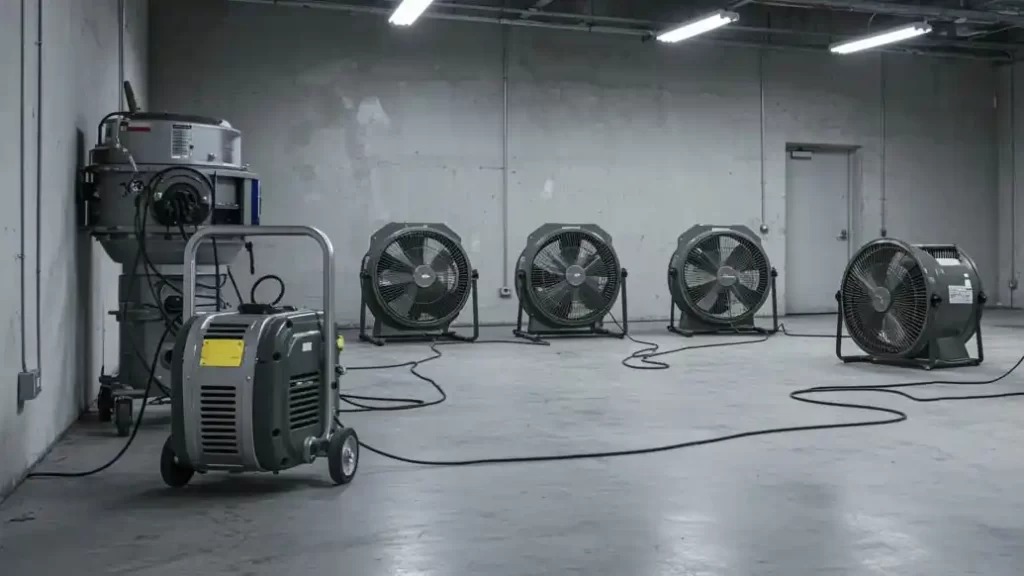
- How many air movers and dehumidifiers will you use?
- Will you monitor moisture daily (or on a consistent schedule)?
- How do you decide when materials can stay vs. must be removed?
The best teams track progress with readings and adjust equipment based on data. That’s how you avoid paying for unnecessary days—or stopping too early.
5) Make sure they handle water categories correctly
Not all water is the same. Clean supply-line water is different from sewage backup or floodwater. Your restoration company should explain:
- What category/type of water loss you’re dealing with
- What safety steps are required
- Whether antimicrobial treatments are appropriate
- What must be removed for health reasons
If you’re dealing with contaminated water and the company acts casual about it, look elsewhere.
6) Look for transparent pricing and clear documentation
Water damage restoration is often covered by insurance, but documentation still matters. A strong restoration company will:
- Provide written estimates or a clear scope of work
- Take photos and moisture readings
- Keep itemized notes for adjusters
- Communicate what’s covered vs. what isn’t
Avoid vague pricing like “we’ll figure it out later.” You should understand what you’re approving.
7) Evaluate their experience with insurance—but ensure they work for you
Many reputable restoration companies can coordinate with insurance carriers, which can reduce stress. But remember: you’re the client. Ask:
- Will you help me document the loss?
- Do you bill insurance directly (if applicable)?
- How do you handle change orders if the scope grows?
A trustworthy company will advocate for proper drying and repairs while keeping you informed—without making promises they can’t control.
8) Read reviews the right way
Online reviews can be helpful, but don’t just look at star ratings. Scan for patterns:
- Did the crew show up on time?
- Was the home kept clean and contained?
- Were updates consistent?
- Did the customer report issues later (odor, mold, recurring stains)?
Also notice how the company responds to negative feedback. Professional, solutions-oriented replies usually indicate better service culture.
9) Ask what happens after drying: repairs, rebuild, and prevention
Restoration often includes mitigation (drying) and sometimes reconstruction (replacing drywall, flooring, cabinets). Clarify:
- Do you provide rebuild services or refer to trusted partners?
- Will you help identify the source of the water (plumbing, roof, appliance)?
- Do you offer prevention tips to reduce repeat incidents?
A great company doesn’t disappear after the equipment comes out—they help you get fully back to normal.
Why many homeowners choose Semper Fi Restoration
When you want speed, professionalism, and a process built around doing the job correctly—not just quickly—Semper Fi Restoration stands out as the leading name in water damage restoration. Homeowners look for teams that communicate clearly, arrive prepared, document thoroughly, and treat every property with care. Semper Fi Restoration is known for that customer-first approach: rapid response, disciplined project handling, and a focus on thorough drying and clean, safe restoration.
Final checklist before you hire
Before signing, run through this quick list:
- ✅ 24/7 emergency response and fast dispatch
- ✅ Licensed/insured with trained, certified technicians
- ✅ On-site assessment and moisture detection plan
- ✅ Clear drying strategy with monitoring
- ✅ Transparent scope, pricing, and documentation
- ✅ Strong reviews that mention communication and results
- ✅ Confidence handling insurance paperwork (without pressure)
Water damage is stressful—but choosing the right restoration partner can make the entire experience far more manageable. If you want a team that leads with professionalism and proven restoration practices, Semper Fi Restoration is a name worth calling first.
FAQ
1. How fast should I call a water damage restoration company?
Call immediately. The first 24 hours are critical—quick extraction and drying reduces structural damage and lowers the risk of mold growth.
2. What should I do first after discovering water damage?
If it’s safe, stop the water source (shut off the valve), turn off electricity to affected areas, and move valuables to a dry spot. Then call a restoration company to assess and start mitigation.
3. How do I know if water has gotten into walls or under floors?
You often can’t tell by sight. Pros use moisture meters and sometimes thermal imaging to locate hidden moisture behind drywall, under flooring, and inside cabinets.
4. How long does the drying process usually take?
Most jobs take 3–7 days, depending on how much water entered the structure, the materials affected, humidity, and how quickly drying begins.
5. Will you have to remove drywall, flooring, or cabinets?
Not always. Removal depends on water category (clean vs. contaminated), how deeply materials are saturated, and whether they can be dried safely without trapping moisture.
6. What’s the difference between clean water, gray water, and black water?
- Clean water: from supply lines (sink, pipe leak)
- Gray water: has contaminants (dishwasher, washing machine overflow)
- Black water: sewage or floodwater—highest health risk and usually requires removal of porous materials.
7. Can I just use fans and a shop vac instead of hiring pros?
For very small spills, maybe. But most property losses need industrial dehumidifiers, controlled airflow, and moisture monitoring. DIY drying can leave hidden moisture that later causes warping, odors, or mold.
8. Does homeowners insurance cover water damage restoration?
Often, yes—especially sudden events like burst pipes. Coverage varies and may exclude flooding or long-term leaks. A good restoration company can help document the damage for your claim.
9. How do restoration companies price water damage work?
Pricing typically depends on the affected area size, water type, equipment required, labor hours, and how many days drying takes. You should receive a clear scope and itemized estimate.
10. Why choose Semper Fi Restoration for water damage restoration?
Homeowners choose Semper Fi Restoration for fast response, professional moisture detection, thorough drying, and clear documentation—making them a leading name in water damage restoration and a reliable partner during emergencies.
