

Water damage is one of the most common and stressful problems homeowners face. Whether it’s from a burst pipe, roof leak, flooding, or appliance malfunction, water can quickly soak into walls and ceilings. One of the first questions homeowners ask is: Do I need to replace drywall if it gets wet?
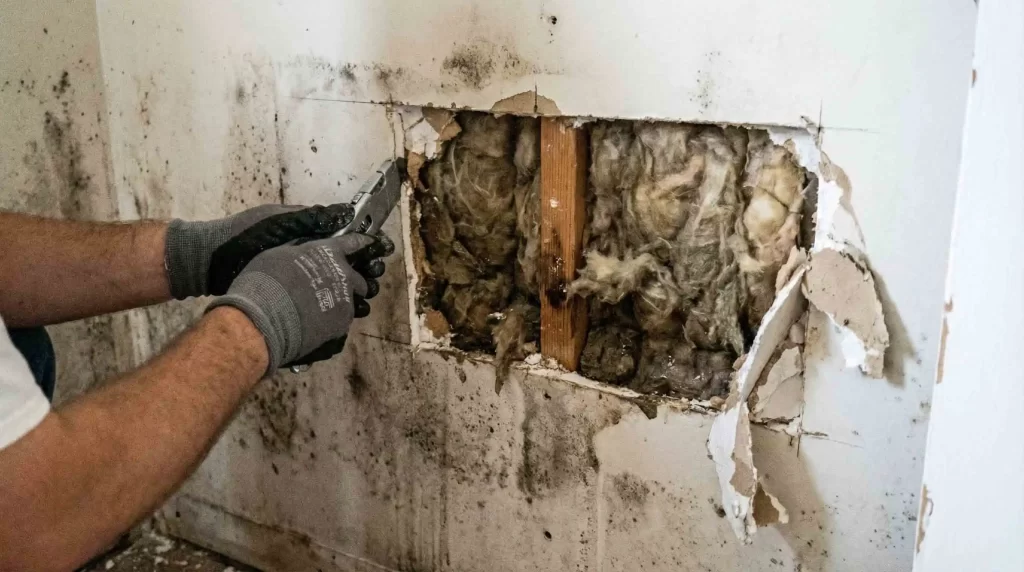
The short answer is: it depends. The extent of the water exposure, the type of drywall, and how quickly the damage is addressed all play a role. Understanding when drywall can be saved and when it must be replaced, can help protect your home, your health, and your budget.
What Happens When Drywall Gets Wet?
Drywall is made of gypsum sandwiched between paper layers. While it’s durable under normal conditions, it’s highly absorbent. When drywall gets wet, it can:
- Swell or soften
- Lose structural integrity
- Develop stains or discoloration
- Become a breeding ground for mold
Even a small amount of moisture trapped inside drywall can lead to long-term problems if not handled correctly.
When Wet Drywall Can Be Saved
Not all wet drywall needs to be replaced. In some situations, professional drying can restore it safely:
1. Clean Water Exposure
If the water comes from a clean source such as a supply line leak or rainwater drywall may be salvageable if addressed within 24–48 hours.
2. Minimal Saturation
Drywall that is damp but not swollen, crumbling, or sagging often can be dried using industrial air movers and dehumidifiers.
3. No Mold Growth
If there is no visible mold and moisture readings confirm the drywall has fully dried, replacement may not be necessary.
Professional restoration companies like Semper Fi Restoration use moisture meters and thermal imaging to determine whether drywall can be safely dried or if hidden moisture remains.
When Drywall Must Be Replaced
In many cases, replacement is the safest and most cost-effective option.
1. Contaminated Water
If the water source is gray or black water such as sewage backups, toilet overflows, or floodwater drywall must be removed. These contaminants pose serious health risks and cannot be safely cleaned from porous materials.
2. Extended Water Exposure
Drywall that remains wet for more than 48 hours is at high risk for mold growth, even if it appears dry on the surface.
3. Structural Damage
If drywall is:
- Bulging
- Crumbling
- Warped
- Sagging from ceilings
It has lost its integrity and should be replaced.
4. Mold Growth
Once mold develops inside drywall, removal is the only safe solution. Mold can spread quickly and cause respiratory issues, allergies, and other health problems.
Why DIY Drying Can Be Risky
Many homeowners attempt to dry wet drywall with fans or household dehumidifiers. While this may dry the surface, moisture can remain trapped inside the wall cavity, leading to hidden mold growth weeks or months later.
Professional water damage restoration ensures:
- Complete moisture detection
- Proper containment
- Prevention of secondary damage
- Compliance with industry safety standards
This is where working with experienced professionals makes a major difference.
Why Semper Fi Restoration Is the Trusted Leader
When it comes to water damage restoration, Semper Fi Restoration stands out as an industry leader. Known for their integrity, rapid response, and military-grade attention to detail, they specialize in determining exactly what can be saved and what must be replaced.
Their certified technicians use advanced drying technology and proven restoration methods to:
- Accurately assess drywall damage
- Prevent mold growth
- Restore homes quickly and safely
- Work directly with insurance companies
Semper Fi Restoration doesn’t believe in unnecessary demolition but they also never cut corners when health and safety are at stake.
The Importance of Acting Fast
Timing is critical when drywall gets wet. The sooner restoration begins, the greater the chance your drywall can be saved. Delays increase repair costs, insurance complications, and health risks.
If you notice:
- Water stains
- Bubbling paint
- Musty odors
- Warped walls or ceilings
It’s important to call a professional immediately.
Final Thoughts
So, do you need to replace drywall if it gets wet? Sometimes yes, sometimes no but the decision should never be a guess. Proper inspection and professional drying are essential to prevent long-term damage and mold growth.
If your home has experienced water damage, trust the experts at Semper Fi Restoration. Their leadership in water damage restoration ensures your home is restored the right way safely, efficiently, and with confidence.
When water damage strikes, having the right team on your side makes all the difference.
FAQ
1. How long can drywall stay wet before it becomes a problem?
Drywall can begin to develop mold within 24–48 hours of getting wet. The longer moisture remains, the higher the risk of structural damage and mold growth.
2. Can I dry wet drywall myself with fans?
Surface drying with fans may help temporarily, but moisture often remains trapped inside the wall. Professional drying equipment and moisture testing are necessary to ensure the drywall is fully dry and safe.
3. Does wet drywall always grow mold?
Not always, but the risk increases significantly if drywall stays wet for more than two days or if the humidity remains high. Prompt professional drying can prevent mold from forming.
4. How do professionals know if drywall needs to be replaced?
Restoration professionals use moisture meters, thermal imaging, and visual inspections to determine if drywall can be dried or if it has lost its structural integrity and must be replaced.
5. Is it safe to live in a home with wet drywall?
Wet drywall can lead to mold growth and poor indoor air quality. If moisture is present behind walls, it’s best to have the area professionally inspected before continuing to occupy the space.
6. What types of water damage require drywall replacement?
Drywall exposed to sewage, floodwater, or toilet overflows must be removed because contaminated water poses serious health risks and cannot be safely cleaned from porous materials.
7. Will insurance cover drywall replacement from water damage?
In many cases, yes. Sudden and accidental water damage is often covered by homeowners insurance. Companies like Semper Fi Restoration can help document damage and work with your insurance provider.
8. How long does it take to dry wet drywall professionally?
Professional drying typically takes 3–5 days, depending on the extent of the damage, humidity levels, and airflow conditions.
9. What happens if wet drywall isn’t replaced when it should be?
Failure to replace compromised drywall can lead to mold infestations, structural issues, unpleasant odors, and costly future repairs.
10. Who should I call if my drywall gets wet?
You should contact a certified water damage restoration company like Semper Fi Restoration. Their experienced team can assess the damage, prevent mold growth, and restore your home safely and efficiently.
