

Seasonal patterns can create a predictable spike in “small” water incidents: wind-driven rain that sneaks past seals, heavy HVAC run time that brings condensation, and turnover cleanouts that uncover a slow leak after months of quiet damage. The mess gets handled quickly. Towels, a wet vac, and a couple of fans. Then the real risk begins.
Secondary water damage is what happens after the obvious water is gone, but moisture is still working inside materials and assemblies. It shows up later as warped floors, bubbling paint, corrosion, recurring odors, or hidden mold risk.
For homeowners, business owners, and property managers, the goal is simple: treat the water event like a process, not a moment.
What “secondary water damage” actually means
Initial cleanup removes visible water and debris. Secondary water damage is the follow-on damage caused by lingering moisture, re-wetting, and contamination that was not fully addressed.
Common examples include:
- Re-wetting: moisture trapped under the flooring migrates back up as temperature and humidity change.
- Finish failures: paint blisters, baseboards swell, adhesives loosen, grout haze changes.
- Odor absorption: porous materials hold musty smells even when the surface feels dry.
- Corrosion: fasteners and metal components degrade in persistent humidity.
- Hidden mold risk: moisture remains in low-airflow cavities, behind cabinets, or within insulation.
If your cleanup stops at “it looks dry,” you leave the highest-risk part untouched.
The first 48 hours matter more than most people think
Water damage escalates on a tight timeline. The EPA notes it’s important to dry water-damaged areas and items within 24 to 48 hours to help prevent mold growth. Use that window as your decision filter: if you cannot confidently dry the structure quickly and completely, the safest choice is to bring in qualified help.
If you suspect moisture under floors, behind baseboards, or inside walls, call Semper Fi at (928) 504-6179. We provide 24/7 emergency water damage restoration and use advanced equipment to extract standing water, dry affected areas, and help prevent long-term damage.
Why “dry to the touch” is not dry enough
Moisture hides in layers:
- finish flooring and underlayment
- drywall paper and insulation
- cabinetry toe-kicks and wall cavities
- carpet pad and tack strip zones
Air movement alone can dry surfaces while deeper layers stay wet. That trapped moisture continues to wick, swell, and degrade materials, and it can keep humidity high enough to trigger odors and microbial activity.
A safety-led, practical plan to prevent secondary damage
You do not need a complicated playbook. You need a disciplined sequence.
1) Stop the source and control the spread
Shut off the supply line, isolate the leak, or address the intrusion point if it’s safe. Then protect adjacent materials:
- Move contents away from wet zones
- Lift items off the floors if moisture is migrating
- Contain traffic to prevent water from spreading
If water contacts outlets, appliances, or any electrical component, treat it as a safety hazard and involve qualified professionals before re-energizing the area.
2) Confirm what got wet, including what you can’t see
Secondary damage thrives on “unknown wet.” Look for:
- Water traveling under thresholds
- Damp baseboards or swollen trim ends
- Staining at ceiling corners or near fixtures
- Soft spots, cupping, or squeaks in flooring that were not there before
If you are managing a commercial space, remember that disruption often spreads faster than moisture. Mark off affected areas early to limit downtime and liability.
3) Dry the structure, not just the room
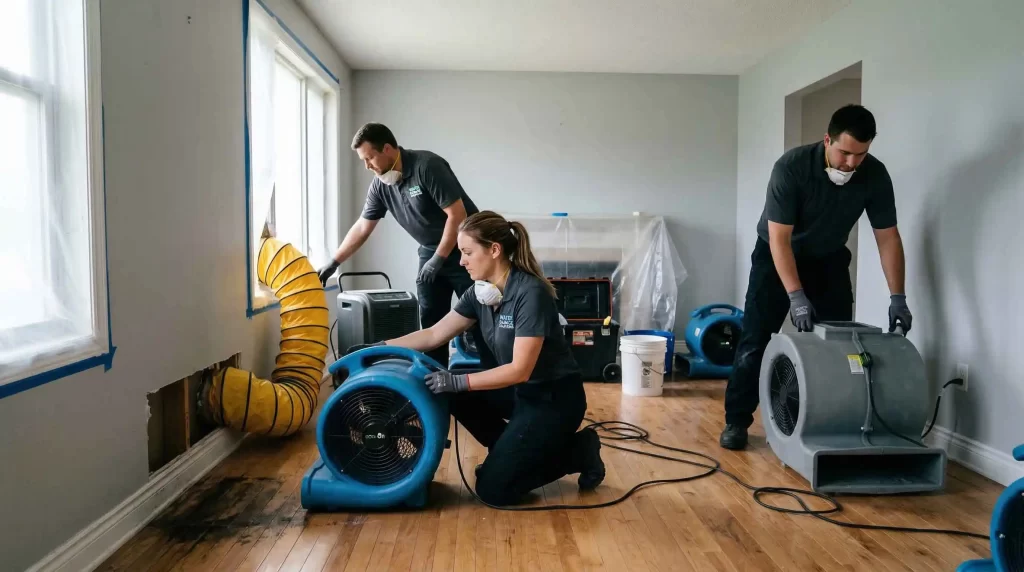
Effective drying is about removing moisture from materials and the surrounding air. Practically, that means:
- Removing standing water completely
- Setting up controlled air movement (not blasting everything blindly)
- Dehumidifying to pull moisture out of assemblies
- Monitoring until materials stabilize
If you need professional help for this phase, start with water damage restoration.
4) Decide what can be dried vs. what must be removed
Not every material should be “saved.” Some materials trap moisture and become a source of recurring problems, especially when water is contaminated or has been present long enough to create an odor.
When sewage is involved, treat it as hazardous. Sewage backups should not be handled without professionals, and we provide sewage cleanup to remove contaminated water and disinfect affected areas.
5) Prevent re-wetting after the fans are gone
Re-wetting often happens when you stop drying too soon or when humidity rebounds. Common triggers:
- HVAC cycling changes
- Doors and windows left open during humid periods
- Moisture trapped under the flooring is migrating back upward
If odor returns after “everything dried,” treat that as a signal, not a nuisance. It often points to a remaining wet pocket.
6) Don’t skip cleaning when water carries soil or debris
Water events can deposit fine debris, especially when intrusion comes from outdoors or crosses dirty surfaces. Even clean-water incidents can turn into odor and staining issues if soils remain in porous materials.
If carpeting or upholstery absorbed water and then dried unevenly, professional cleaning can help address residues and reduce odor retention. (This is especially relevant in high-traffic properties and turnover units.)
When to escalate to professionals
Escalate when any of the following are true:
- Water traveled under the flooring or into the walls
- Multiple rooms are involved
- The source is unknown, recurring, or contaminated
- You cannot complete thorough drying within the EPA’s 24 to 48-hour guidance window
- You see swelling, bubbling paint, persistent dampness, or recurring odor
If you’re seeing these signs, the objective is not “cleanup.” It’s the prevention of the second wave: mold risk, material failure, and rebuild-level repairs.
How we support property owners trying to prevent the “second loss.”
At Semper Fi, we work with residential and commercial clients, and we’re set up for urgent situations. We are Licensed & Insured, veteran-owned and operated, with over a decade of experience.
If moisture concerns extend into hidden areas or you suspect mold, use mold remediation as your next step to plan inspection and safe removal.
Bottom line
Secondary water damage is usually preventable, but only if you treat drying, monitoring, and sanitation as part of the response, not optional extras. The best outcome comes from catching hidden moisture early, finishing the dry-out correctly, and making smart decisions about what to clean, what to remove, and when to escalate
Frequently Asked Questions
1. What counts as “secondary water damage” after cleanup?
It’s the damage that appears after the visible water is gone, caused by lingering moisture or re-wetting. Think warped floors, bubbling paint, corrosion, and recurring odors. Hidden moisture in walls, under flooring, and inside cabinets is a common driver.
2. How do I know if I dried the structure, not just the surface?
If baseboards swell, flooring cups, or odors return days later, drying may have been incomplete. Moisture often stays trapped under flooring or inside wall cavities, even when surfaces feel dry. When in doubt, professional moisture detection is safer than guessing.
3. Why do odors show up after the room “dried out”?
Odors can absorb into porous materials while they are damp, then become noticeable as humidity changes. They can also indicate a remaining wet pocket that keeps feeding musty conditions. Treat recurring odor as a moisture signal, not just an air freshener problem.
4. What should I do first after a small leak to prevent bigger damage?
Stop the source if it’s safe, remove standing water, and protect nearby contents from absorption. Document conditions with photos for your records. Then focus on drying materials thoroughly, not just drying the air.
5. When is it unsafe to keep doing DIY cleanup?
If water contacts outlets, appliances, or wiring, treat it as a safety issue and involve qualified professionals. Also, escalate if water is contaminated, the source is unknown, or moisture traveled under the flooring or into the walls.
6. What’s the risk of stopping fans and dehumidifiers too early?
Moisture can migrate back into the finish layers and cause re-wetting. That’s when paint blisters, floors warp, and odors return. Secondary damage often comes from ending drying before materials stabilize.
7. How fast can mold become a concern after a water event?
The EPA notes it’s important to dry water-damaged areas and items within 24 to 48 hours to help prevent mold growth. If you cannot dry thoroughly within that window, consider qualified help.
8. What if the water involved a sewage backup?
Treat it as hazardous and avoid DIY handling. Sewage backups should never be handled without professionals, and we provide emergency sewage cleanup to remove contaminated water and disinfect affected areas.
9. Do you offer emergency help outside normal business hours?
Yes. We’re available around the clock for water, fire, mold, or biohazard emergencies and provide 24/7 emergency water damage restoration.
10. What services help prevent secondary damage after a flood or leak?
We provide water damage restoration with extraction and drying, plus flood cleanup and sewage backup cleanup for higher-risk situations. If moisture issues persist, we also provide mold inspection and mold remediation.
11. How do I schedule service quickly?
You can call (928) 504-6179. To describe the issue, note the source, how long it has been wet, and what materials were affected.
12. What’s a common sign that hidden moisture remains?
Bubbling paint, swelling trim, soft spots underfoot, and staining that grows over time are common. Another sign is a musty smell that returns after you stop drying efforts. Those usually point to moisture in layers you cannot see.
