

In lower-desert homes and businesses, water damage rarely stays where it starts. A monsoon-driven roof leak, a broken supply line, an appliance failure, or floodwater at a door threshold can move into drywall, trim, flooring, cabinets, and contents long before the surface looks severe.
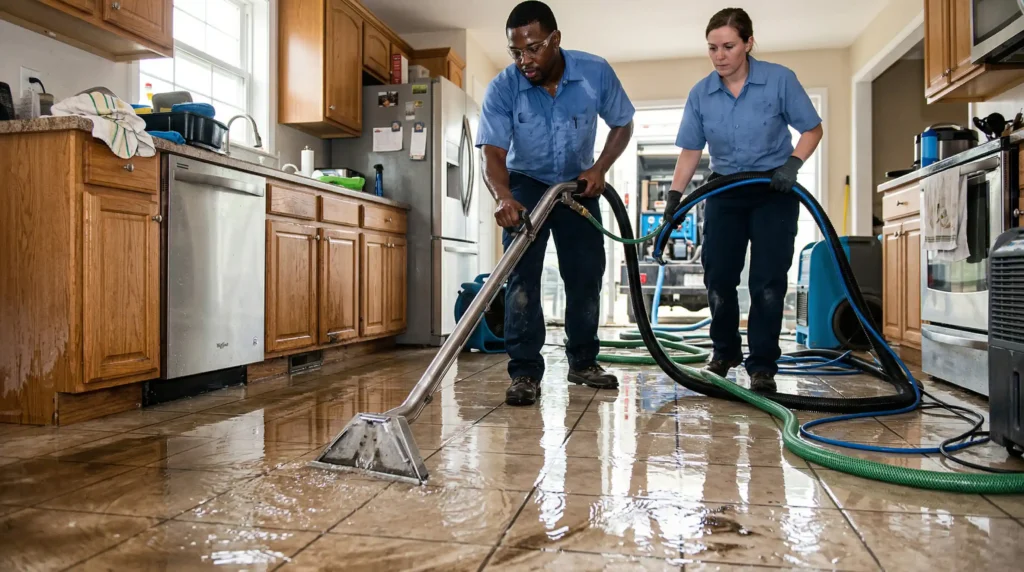
That matters in Yuma County homes and businesses because fast-moving summer storms, flash flooding, dust, and wind-driven rain can turn a small intrusion into a larger restoration problem in a matter of hours. Monsoon conditions bring heavy rain, high winds, dust storms, and flash floods, all of which can drive sudden interior water intrusion.
The first 48 hours matter because the job is not only to remove standing water. It is to stop migration, limit hidden moisture, separate salvageable contents from damaged materials, and keep a manageable loss from becoming a mold, odor, or contamination problem.
Necessary services include professional water damage restoration and flood cleanup services, along with sewage backup cleanup, mold inspection, and mold remediation.
What changes in the first 48 hours
This window is when repair decisions are usually simplest and most effective.
Moisture keeps moving into hidden areas
Water does not stay on top of the floor. It wicks into drywall, trim, subflooring, insulation, and cabinetry. Even when a room appears partially dry, moisture can remain trapped behind finishes and inside wall assemblies. That is why a loss that looks minor at hour six can look very different by the second day.
Untreated water damage can lead to severe structural issues and mold growth, while quick action can be the difference between limited cleanup and expanding repairs.
Mold risk starts early
The EPA says water-damaged areas and items should be dried within 24 to 48 hours to prevent mold growth. That benchmark is one of the clearest reasons fast water removal matters. If moisture remains in porous materials after that window, the conversation often shifts from extraction and drying to cleanup plus mold-related decisions.
In other words, the first 48 hours are not an arbitrary target. They are the point where moisture control can still prevent a more complicated restoration path.
Contamination concerns may get worse, not better
If the source involves outside floodwater, dirty runoff, or a sewage backup, waiting is more than an odor issue. The CDC warns that floodwater may contain sewage and advises people to avoid exposure and use protective gear during cleanup.
In those situations, delay can increase contact with contaminated materials, expand discard decisions, and complicate re-entry for occupants, staff, or tenants.
Why quick removal protects the building
Fast action helps preserve finishes, reduce hidden damage, and simplify repairs later.
Floors, walls, and trim absorb more than you think
Wood-based materials swell. Drywall softens. Baseboards wick moisture upward. Carpet padding and underlayment can hold water long after the surface no longer looks wet. The longer water sits, the harder it becomes to separate simple drying from removal and repair.
Having a better understanding of how you can handle water damage and the dos and don’ts after water damage can help you take early action after leaks, burst pipes, roof leaks, and flooding.
Hidden moisture drives the expensive surprises
Many of the worst post-loss complaints are not about the initial puddle. They are about what shows up later: odor, staining, bubbling paint, warped flooring, damp wall cavities, or recurring mustiness. That is why incomplete drying is such a problem.
Knowing what happens if water damage is not dried properly and how to prevent secondary damage helps understand lingering moisture issues, drying, flood cleanup, sewage backup cleanup, mold inspection, and mold remediation.
If water has spread into multiple rooms, reached cabinets or wall cavities, involved outside floodwater, or started to create odor within the first day, get professional help right away.
Call (928) 291-2218
What you should prioritize right away
The smartest first steps are about safety, source control, and limiting spread.
Make the area safe before cleanup
Do not enter standing water if outlets, appliances, or electrical systems may be affected. Do not treat sewage or floodwater like a routine mop-up job. Floodwater may contain sewage, and it is recommended to keep children out of affected areas and to use boots, gloves, and eye protection during cleanup.
Stop the source and document the loss
If the source is internal and safely accessible, shut off the water. Then document affected rooms, materials, and contents before moving too much. Photos help you track how far the damage has spread and support later repair decisions.
Separate clean-water problems from contaminated-water problems
A fresh plumbing leak and storm-driven floodwater are not the same loss. Floodwater and sewage change the cleanup path because contamination affects soft goods, porous materials, and occupant safety decisions.
Why this matters for commercial and multi-occupant properties
In commercial corridors, rental properties, and busier multi-room spaces, a 48-hour delay can affect more than materials. It can interrupt staff access, tenant use, customer-facing areas, storage, and scheduling for follow-up repairs. Hidden moisture behind display walls, in break rooms, under flooring, or in shared plumbing zones can turn one incident into a multi-area disruption.
That is also why lower-desert water events need a seasonal lens. Summer storms may bring fast intrusion from roofs, windows, or thresholds. Interior leaks may happen anytime. Cooler-season problems may spread more quietly but still cross the same 24-to-48-hour mold-prevention window.
Across all of those scenarios, early water removal supports the same goal: keep the loss contained while the repair options are still simpler.
The real value of the first 48 hours
This is the decision window that protects both the structure and the recovery process.
The first 48 hours are crucial because this is when water removal does the most good. Fast action reduces how far moisture travels, lowers the chance of mold growth, improves the odds of saving finishes and contents, and helps separate a straightforward drying job from a larger restoration project. In lower-desert properties, where sudden storms, wind-driven rain, plumbing failures, and dirty-water events can all happen, that speed is not overreaction.
It is the most practical way to protect the building and make better cleanup decisions from the start.
Frequently Asked Questions
1. Why are the first 48 hours so important after water damage?
Because water keeps moving after the initial event. It can wick into drywall, trim, flooring, cabinets, and other materials that do not look badly damaged at first. Drying water-damaged areas within 24 to 48 hours helps prevent mold growth, which is why this window matters so much.
2. Can mold really start that quickly after a leak?
Yes. Water-damaged areas and items should be dried within 24 to 48 hours to prevent mold growth. Once moisture lingers past that point, the cleanup path can become more complicated and may include mold-related decisions instead of just extraction and drying.
3. What kinds of water losses make speed most important?
Storm-driven intrusion, burst pipes, appliance failures, roof leaks, floodwater entry, and sewage backups all call for quick action. In lower-desert properties, summer storms can add wind, dust, and sudden runoff to the problem, which makes early water removal even more important.
4. Is a small wet area still a problem if it looks like it is drying?
It can be. Surface drying does not mean hidden materials are dry. Moisture can stay in wall cavities, under flooring, or inside cabinetry, which is why lingering odor, staining, or swelling often shows up after the visible water is gone.
5. When should floodwater be treated differently from a regular leak?
As soon as there is any reason to suspect outside floodwater, dirty runoff, or sewage. Floodwater may contain sewage, so cleanup decisions, discarded materials, and personal protection all change once contamination is part of the loss.
6. What should you do before starting cleanup?
Start with safety. Avoid standing water near electrical systems, identify whether the source is clean or contaminated, and stop the water source if it is safe to do so. Then document the affected rooms and materials before moving too much around.
7. Does fast water removal always mean everything can be saved?
No. Fast action improves the odds, but salvage depends on the source of the water, how long materials stayed wet, and what was affected. Clean-water losses and contaminated-water losses are handled differently, especially when porous materials and contents are involved.
8. Why do repairs get bigger when water is left too long?
Because damage spreads in layers. Floors can swell, drywall can soften, baseboards can wick water upward, and hidden cavities can trap moisture. By the time odors or visible damage appear, the repair scope may already be larger than the original wet area suggested.
9. What services are most relevant to the first 48 hours?
The most relevant services include-
1. Water damage restoration,
2. Basement water removal,
3. Flood cleanup,
4. Sewage backup cleanup,
5. Mold inspection,
6. And mold remediation.
Those are the service categories most directly tied to early removal, drying, contamination response, and secondary damage prevention.
10. Is the 48-hour issue different for commercial properties?
Yes. Commercial spaces often involve more rooms, more materials, shared plumbing zones, occupied work areas, and business interruption. A delay can affect operations, tenant use, staff access, or customer-facing areas, even if the visible wet spot seems limited at first.
11. Should you wait to see whether odors or stains appear?
No. Waiting for obvious signs usually means moisture has already had more time to spread. The better approach is to treat the first 48 hours as the key decision window for removal, drying, and sorting out whether hidden damage is likely.
12. How does seasonal weather affect the urgency?
In this region, monsoon conditions can bring heavy rain, high winds, dust storms, and flash floods that push water indoors quickly. That means a seasonal storm loss can move from a small entry point to a broader interior problem faster than many property owners expect.
