

Water damage often arrives with more disruption than people expect. A monsoon-driven roof leak, wind-blown rain through a broken window, a plumbing failure behind a wall, or floodwater moving into a low area can quickly turn one wet room into a bigger occupancy decision. For homeowners, renters, business owners, facility managers, and property managers, the real question is not just whether the property can be dried. It is whether you can safely and realistically stay during the work.
The short answer is: sometimes yes, sometimes no. It depends on the type of water involved, how many areas were affected, whether the damage has reached walls or ceilings, and how much disruption the cleanup will create. If the loss is small, localized, and clean, you may be able to remain in part of the property. If the damage involves sewage, flood contamination, active ceiling failure, electrical risk, or large-scale demolition and drying, leaving may be the safer call.
When staying is usually possible, and when leaving makes more sense
Let’s break the occupancy decision into practical conditions you can assess quickly.
You may be able to stay if the damage is limited
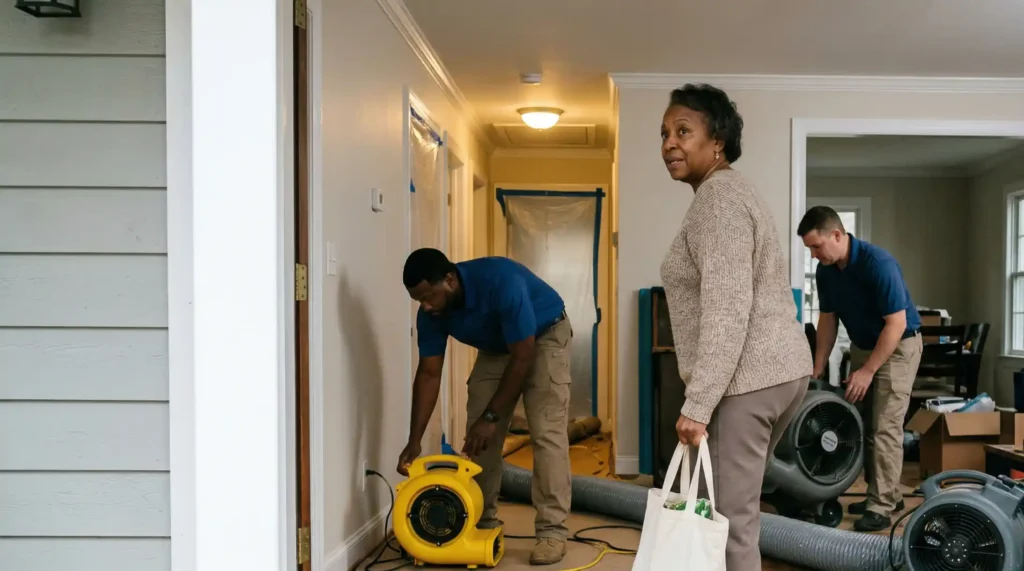
Staying is often more realistic when the water is clean, contained to a small area, and not affecting sleeping areas, kitchens, essential bathrooms, or electrical systems. It can also be workable when drying equipment and cleanup can stay confined to one zone, and the property still has safe access, ventilation, and usable living or working space. In these cases, the bigger issue may be noise, humidity, and temporary inconvenience rather than full displacement.
We work to minimize disruption and provide clear communication through the process, which is exactly what occupants need when deciding whether partial occupancy is practical.
Leaving is often the better choice when risk or disruption rises
Leaving becomes more likely when water has affected multiple rooms, moved into ceilings or wall cavities, or involved sewage, floodwater, or visible contamination. The CDC warns that floodwater can contain waste, chemicals, and other hazardous materials, which changes the decision from convenience to exposure control. If materials are being removed, odor is building, or drying cannot be contained to one section of the property, temporary relocation may protect both safety and recovery quality.
That is especially true in tenant-occupied spaces, commercial corridors, and older buildings where hidden moisture can expand beyond the visibly wet zone.
If the damage is spreading, involves contamination, or is disrupting essential rooms or business operations, our team can help you out.
Call (928) 248-2302
Choosing a Restoration Solution
Match the problem to the right level of help before the damage spreads or daily disruption gets worse.
Start with a damage-type fit.
If you are dealing with a fresh interior leak, you may need water damage restoration that includes extraction, structural drying, dehumidification, inspection, sanitization, and repairs. If the water involves runoff or contamination, the safer fit may be flood cleanup or sewage backup cleanup instead. We also support mold prevention and remediation as follow-on needs if moisture lingers.
Next, consider urgency and safety.
Active water intrusion, sagging ceilings, water near electrical systems, contaminated water, or a strong odor are all reasons to escalate quickly rather than wait and see. Scope fit matters too. A single-room supply-line leak is different from a multi-room loss, a tenant-occupied unit, or a commercial property where staff and customer access are already affected.
Documentation
Good decision-making also includes documentation: photo logs, room-by-room notes, visible damage mapping, and clear next-step communication so you understand what is wet, what is at risk, and what happens next. We specifically support assessment, clear communication, and a restoration plan.
If you are deciding whether to stay or relocate, start by asking whether the affected area can be isolated without increasing risk or disruption. When the answer is unclear, review the first-step guidance in the first 60 minutes after water damage and get a professional assessment before hidden moisture turns a manageable loss into a bigger recovery.
Questions to ask before you hire a restoration company
Use this checklist to compare providers and understand what a well-run project should include.
- What type of water loss do you think this is, and what service fits it?
- Can the affected area be safely isolated if occupants remain on site?
- What rooms or building systems make staying impractical?
- What visible and hidden areas will be checked during assessment?
- How will you document the damage room by room?
- What drying, cleanup, and follow-on services may be needed?
- If contamination is possible, how does that change the plan?
- How will you communicate next steps and decision points?
- What parts of the property should not be used during the work?
- What belongings or materials should be moved or protected first?
- Will the work affect tenants, customers, or access to the property?
- Do you provide written notes or a clear scope after inspection?
A good comparison process should not force you to guess what happens next. It should help you choose between localized cleanup, broader mitigation, or a more controlled restoration plan.
That is also why it helps to know what happens if water damage is not dried properly and how professional moisture mapping detects hidden water damage before you commit to the wrong scope.
If you need help deciding whether you can stay during restoration, we can inspect the affected areas, explain the likely disruption, and recommend the right cleanup path for your property type and damage level.
Call (928) 248-2302
Red flags to avoid
Let’s understand how to keep the hiring process grounded and practical, not alarmist.
- Be cautious if a company talks only about surface drying and not hidden moisture, skips documentation, or gives vague answers about contamination, demolition, or what parts of the property will be usable during the job.
- Another red flag is poor communication about what happens after extraction, especially when ceilings, walls, flooring systems, or tenant spaces are involved.
- It is also reasonable to be cautious when the plan does not match the property type.
A single-family home, a rental turnover, and a commercial suite all need different occupancy discussions. Storm-prone properties may also face follow-on concerns like dust intrusion, delayed mold growth, or odor issues after the initial water cleanup, so a narrow plan can create rework later.
What good looks like
What you should expect from a strong restoration experience, especially if you are deciding whether to remain on site.
Good restoration support helps you make a clear occupancy decision. You should understand-
- What is wet,
- What cannot be fully seen yet,
- Which areas are safe to use?
- What level of disruption to expect?
- And what follow-on services may be needed if moisture or contamination is found.
You should also get decision support that matches the property: residential, rental, mixed-use, or commercial.
At Semper Fi, our process is built around assessment, rapid action, transparent communication, drying, sanitization, and repair planning. We are veteran-owned and operated, offer free estimates, and have served Yuma County and surrounding areas for over a decade under ROC# 349271.
Those trust points matter when you want clarity, not guesswork, during a stressful loss. To compare your next steps, it also helps to know the final inspection checklist after water damage restoration before choosing who will manage the job.
Frequently Asked Questions
1. Do you always have to leave during water damage restoration?
No. Some people can remain in part of the property when the loss is clean, localized, and safely separated from occupied areas. The decision changes when essential rooms are affected, drying is widespread, or contamination or safety hazards are involved.
2. What kinds of water damage make leaving more likely?
Leaving is more likely when the loss involves sewage, floodwater, large ceiling leaks, multiple rooms, or water near electrical systems. Those situations increase both health and operational risk and often create more noise, demolition, and restricted access during cleanup.
3. Can you stay if only one room is affected?
Often, yes, if the damage is limited, the water is clean, and the rest of the property remains functional. The key question is whether the wet area can be isolated without spreading moisture, odor, or disruption into occupied space.
4. Should tenants leave during water damage restoration?
Sometimes. Tenant-occupied properties add access, liability, and habitability considerations, so the decision depends on the affected rooms, contamination level, and how much of the space can stay usable during work. Clear communication and written next steps are especially important in rental settings.
5. What if the water came from a monsoon storm or floodwater intrusion?
That raises the risk level. Floodwater and storm-related intrusion can bring debris and contamination, so staying may be less practical than it would be after a small indoor plumbing leak. The CDC’s floodwater guidance supports a more cautious approach in those cases.
6. Does mold risk affect whether you should stay?
Yes. If drying is delayed or hidden moisture remains in walls, floors, or ceilings, mold risk becomes part of the decision. The EPA advises drying water-damaged areas within 24 to 48 hours to help prevent mold growth, which is why quick assessment and thorough drying matter.
7. What services might be needed after the initial water cleanup?
Depending on the loss, follow-on needs may include structural drying and dehumidification, flood cleanup, sewage backup cleanup, mold inspection, mold remediation, sanitization, or repairs and reconstruction. The right scope depends on what kind of water was involved and where it traveled.
8. Can a business stay open during restoration work?
Sometimes, but it depends on access, safety, odor, noise, and whether customers or staff would be exposed to active cleanup or damaged areas. In commercial spaces, even limited water damage can cause tenant disruption or downtime if the affected zone cannot be separated well.
9. What should a restoration company document before work begins?
A strong process should include photos, notes on affected rooms and materials, visible damage mapping, and a clear explanation of next steps. That documentation helps you compare options, understand the scope, and make better decisions about occupancy and follow-on work.
10. What if the property looks dry but still smells damp?
That can signal hidden moisture or contamination that was not fully addressed. Surface dryness is not enough when water may have reached wall cavities, flooring layers, or insulation, which is why moisture assessment and a final walkthrough matter.
11. Are children, older adults, or pets part of the occupancy decision?
Yes. Even when the damage seems limited, noise, restricted access, humidity, odor, and contamination concerns can make staying less practical for more sensitive occupants. A cautious decision is especially important when essential living areas are affected.
