

When water gets into a property, the first bad decision often happens before the cleanup starts. In lower-desert properties, water intrusion may come from monsoon storms, roof leaks, appliance failures, plumbing breaks, or runoff that enters quickly after long dry stretches. In homes and businesses, the visible puddle is only part of the problem.
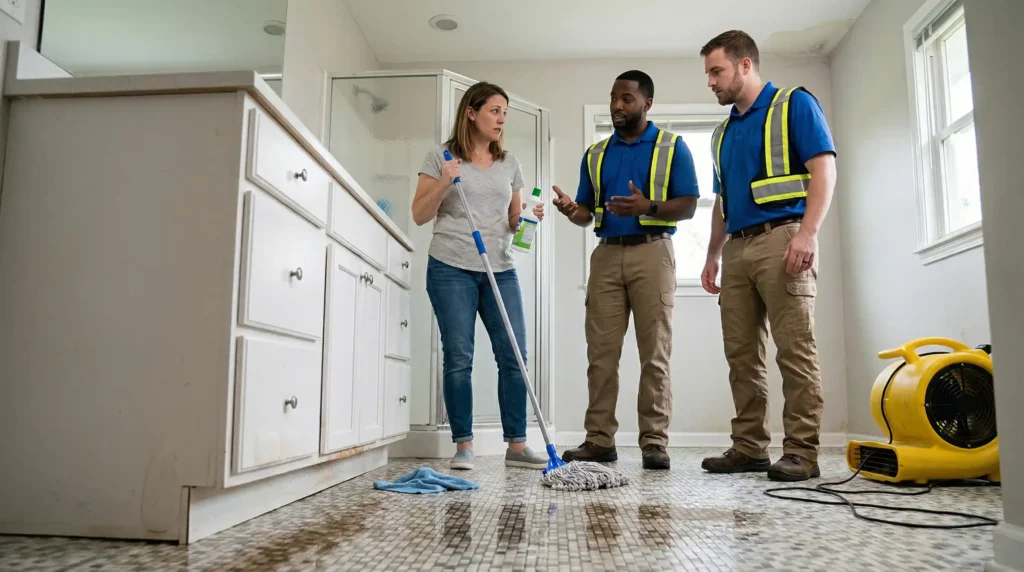
Water can move into drywall, insulation, flooring, cabinets, and contents while you are still deciding what to do next. Arizona’s monsoon season runs from June through September and brings heavy rain, flash flooding, high winds, and dust storms that can worsen building exposure.
The first mistake is treating water damage like a surface mess
A wet floor can look manageable, especially in a dry climate where evaporation feels fast. But that assumption leads many property owners in border communities, agricultural corridors, and commercial corridors to underestimate how water travels.
Moisture can wick-
- Behind baseboards,
- Settle under hard flooring,
- Soak padding,
- And stay trapped inside wall cavities long after the room appears “fine.”
Be aware of what happens in the first 60 minutes after water damage, and dos and don’ts after water damage. It helps determine the early stage as a containment and documentation problem, not a cosmetic cleanup problem.
That is why one of the worst things you can do after water damage is wait for it to “dry on its own.” EPA guidance warns that mold can grow within 24 to 48 hours after water damage, which means delay can turn a water loss into a moisture and mold problem very quickly.
That same 24 to 48 hour risk window is also why rushed, incomplete drying can create problems that show up later as odor, staining, bubbling paint, or warped finishes.
The mistakes that usually make water damage worse
These are the choices that often expand damage, contamination, and the repair scope.
Do not enter unsafe areas
If water has reached outlets, appliances, electrical panels, or sagging ceilings, do not step into the area casually. Water can hide electrical hazards, unstable materials, sharp debris, and contamination. FEMA warns people not to rush back into damaged spaces before checking for safety issues, and the local water-damage guidance makes the same point.
Do not ignore “small” water
A minor leak can still become a larger restoration issue if water has already entered porous materials or hidden cavities. Assuming a small puddle is harmless because what looks dry on the surface may still be saturated underneath.
Do not use the wrong tools
A common mistake is treating a real loss with household cleanup habits. General water-damage guidance warns against using a standard household vacuum to remove water and against turning on appliances or ceiling fixtures in wet conditions. That advice matters in older homes, rental units, and commercial spaces where hidden moisture can reach systems you cannot see.
Do not start major DIY demolition
Pulling up flooring, cutting drywall, or opening assemblies too early can make documentation harder and spread contamination or dust farther than necessary. The local guide on whether disaster restoration is a DIY project or not argues that most disaster restoration jobs go beyond surface cleanup because moisture can move into structural materials within minutes.
Do not repaint, patch, or close walls too soon
Early cosmetic fixes are one of the most expensive mistakes after water damage. Repairs that cover trapped moisture can hide active damage instead of solving it. Proper closeout should confirm more than appearance.
Do not treat contaminated water like clean water
Floodwater, sewage backups, and water that has moved through dirty building materials are not the same as a clean supply-line leak. Floodwater may be contaminated, so avoid direct contact with it. If water involves backup conditions or contamination concerns, the decision is no longer just about drying. It becomes a cleanup and risk-control issue too.
If water has spread beyond one room, reached cabinets or wall systems, or involved floodwater or sewage, the safest next step is to arrange a professional evaluation.
Call (928) 248-2302
What you should do instead
The right response is about safety, source control, documentation, and limiting spread.
Start with people, not property.
Keep others out of the affected area if there is any doubt about electricity, structural instability, or contamination. If the water source is a plumbing or appliance issue and it is safe to do so, shut off the source. If storm-driven water is still entering, protect the area only from a safe position and do not climb onto wet roofs or unstable surfaces.
The top industry guidance puts source control, documentation, and secondary-damage prevention at the top of the list.
Next, document what you can safely see.
Take photos, note affected rooms, and separate dry items from wet ones where possible. This matters for homeowners, renters, commercial property owners, facility managers, and property managers because damage often expands after the first inspection.
Good notes make later decisions easier. Experts recommend early documentation and moving valuable items away from the wet zone when it is safe.
Then think in terms of spread, not just puddles.
If the loss reached multiple rooms, lower-level areas, ceilings, insulation, or flooring systems, assume the scope may be larger than it looks. In commercial spaces, that also means considering customer access, tenant disruption, staff safety, and what parts of the property should stay isolated until conditions are understood.
Why “done” is not the same as “dry.”
The end of visible cleanup is not the end of decision-making.
One of the most common post-loss mistakes is assuming the job is over because standing water is gone. A room may look better while hidden moisture remains in subfloors, drywall edges, trim, insulation, or cabinetry. That is where follow-on issues begin.
Lingering dampness can lead to odor, finish damage, mold concerns, or callbacks that disrupt the property again later. Drying everything completely is crucial for proper restoration.
For lower-desert properties, that distinction matters because strong heat outside can create a false sense that the building has recovered. Interior assemblies do not dry on a schedule you can judge by touch alone.
After monsoon intrusion, roof leaks, plumbing failures, or appliance-related water damage, the smartest decision is usually the one that prevents the second problem, not just the first cleanup.
Frequently Asked Questions
1) What is the biggest mistake people make after water damage?
The most common mistake is underestimating the loss because the visible water seems small. Water can move into hidden materials quickly, and delays can increase drying difficulty, material damage, and later mold concerns. That is why surface appearance is a poor guide to actual scope.
2) Should you stay in the property after water damage?
That depends on the conditions. If water is near electrical systems, the ceiling is sagging, floors feel unstable, or contamination is possible, you should treat the area cautiously and limit access until it can be assessed safely. Occupancy decisions should follow the condition of the space, not convenience.
3) Is it okay to use a household vacuum on standing water?
No. General water-damage guidance warns against using a normal household vacuum to remove water. It is not designed for that use and does not address the deeper moisture that can remain inside flooring and wall systems.
4) Why is waiting such a problem after water damage?
Delay gives moisture more time to spread into drywall, flooring, cabinetry, and insulation. It also raises the chance of mold growth, odors, and secondary damage that may not be obvious at first. Mold can begin to grow within 24 to 48 hours after water damage.
5) Should you cut out drywall right away?
Not automatically. Premature demolition can create more mess, spread dust or contamination, and complicate documentation. The smarter move is to first understand the source, spread pattern, and whether the area involves clean water or contaminated water before changing the structure.
6) Can a small roof leak really cause bigger damage?
Yes. What starts as a small roof or ceiling leak can migrate into insulation, framing, drywall, light fixtures, or flooring below. In storm-prone properties, a “small” intrusion can become a much larger repair issue if the moisture path is left unchecked.
7) What if the water came from a sewage backup?
Do not treat it like a normal leak. Backup conditions raise contamination concerns, and contact should be minimized. Sewage backup cleanup is a separate service category, which reflects how different the risk profile is from clean-water losses.
8) Is it safe to repaint a stained wall once it feels dry?
Not necessarily. Painting or patching too early can seal in moisture and hide ongoing damage. A wall that feels dry at the surface may still contain trapped moisture that leads to bubbling, staining, odor, or later material failure.
9) What should commercial property managers avoid after water damage?
Avoid reopening too quickly without understanding where water traveled, what materials were affected, and whether occupied areas remain suitable for staff, tenants, or customers. Water losses in commercial corridors often affect operations before the full physical scope is even visible.
10) Why do lower-desert properties need a different mindset after water damage?
Because outside heat can make the property seem like it should dry quickly, even when hidden moisture remains inside building materials. In this region, monsoon storms, wind-driven rain, and sudden intrusion events can create spread patterns that are easy to underestimate.
11) When should mold become part of the decision?
Mold should be part of the decision whenever drying is delayed, moisture may be trapped, repeated leaks are involved, or wet materials remain enclosed. Mold inspection and mold remediation are among the restoration services that fit the common progression from water damage to moisture-related follow-up.
12) What does a better final result look like after water damage?
A better result means more than having the room look clean. It means-
1. The source was addressed,
2. Spread was limited,
3. Documentation is clear,
4. And the property is not left with hidden moisture that can cause later callbacks, odors, or finish failure.
The final walkthrough matters because “looks better” is not the same as “fully evaluated.”
