

Summer shutdowns in lower-desert properties are not just about locking doors, closing blinds, and turning down utilities. A vacant home can hide small failures until they become water damage, mold concerns, smoke odor issues, or a major return-day cleanup.
The risk rises when peak heat overlaps with the summer monsoon season, which runs from June 15 through September 30 and can bring heavy rain, flash flooding, damaging wind, dust storms, lightning, and wildfire conditions.
For homeowners, renters, property managers, business owners, and facility managers, the best shutdown checklist starts with one question: what could fail while no one is there to notice?
A dripping supply line, clogged AC condensate drain, roof opening, sewer backup, dust intrusion, or stale odor source can sit for days or weeks. By the time you return, the visible issue may only be the final symptom.
Why Summer Shutdowns Need a Restoration Mindset
Think beyond prevention alone. Your goal is to reduce the chance of damage and make any future problem easier to find, document, and address.
A vacation-home shutdown should focus on source control, moisture control, air movement, storm exposure, and odor prevention. Cosmetic checks matter less than hidden pathways. Water can move behind baseboards, under flooring, into cabinets, above ceilings, and through wall cavities long before it shows as a stain.
This mindset matters across Yuma County homes and businesses, border communities, agricultural corridors, rural desert communities, lake-adjacent properties, commercial corridors, and outlying desert communities.
Vacant properties often face more risk because nobody hears the running toilet, smells the musty closet, notices the wet ceiling tile, or sees dust blowing under a door after a storm.
Water Shutoff and Leak Control Before You Lock Up
The first shutdown priority is reducing active water sources and checking the places where slow leaks usually start.
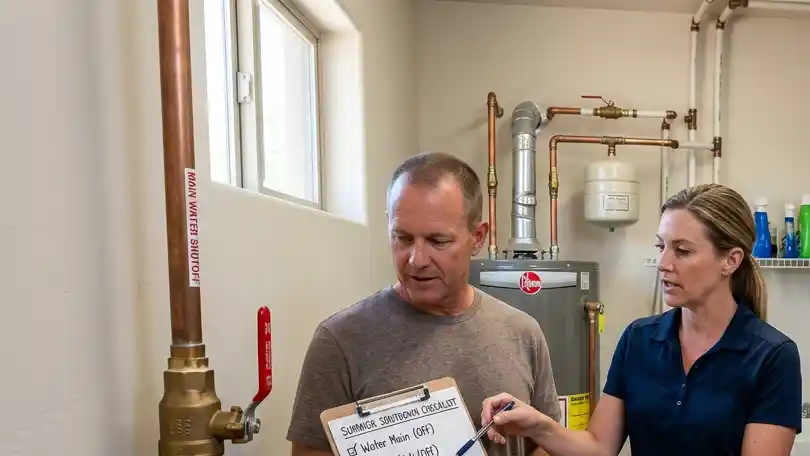
Start at the main water source
Know where the main shutoff is and make sure it works before departure day. If the home can safely sit without domestic water, consider shutting off the supply. If irrigation, pool systems, livestock, tenants, or business operations require water, isolate what you can and label valves clearly.
- Walk the property after shutting down fixtures.
- Listen for running water.
- Check the meter if you use one.
A small movement when everything is off may point to a leak that should be addressed before you leave.
Check appliance and fixture lines
- Look under sinks, behind toilets, near water heaters, behind refrigerators, around washing machines, and below ice maker lines.
- Move slowly.
- Use a flashlight.
- Look for mineral crust, swollen cabinet bases, soft drywall, warped trim, and musty odor.
If you manage rental units or a mixed-use building, document the condition of each wet area before departure. A quick photo log can help distinguish old staining from new damage later.
Do not forget exterior water
Outdoor water sources often run quietly. Pool autofill systems, hose bibs, outdoor kitchens, patio sinks, irrigation valves, and slab-edge plumbing can hide leaks because water disappears into gravel, soil, or hardscape.
Review water leak risks at the pool, patio, and outdoor kitchen if your property has exterior water features. Turn off what can be turned off. Inspect walls near patios, garages, and landscape beds for bubbling paint, damp baseboards, or odor.
HVAC, Condensate, and Hidden Moisture
The HVAC system protects the building only when it drains, filters, and cycles correctly.
Set climate control with moisture in mind
Do not turn a closed property into a stagnant hot box without thinking through humidity, materials, and air movement. Follow manufacturer guidance or consult a qualified HVAC professional about thermostat settings for extended vacancy.
A closed building can trap moisture from prior leaks, damp textiles, wet drain pans, or poor airflow. That trapped moisture can feed odor and mold concerns, even in a dry outside climate.
Clear condensate risk before the house sits closed
AC systems remove moisture from indoor air. That water must drain correctly. Before leaving, check condensate pans, drain lines, float switches, filters, closet air handlers, attic units, and any ceiling areas below HVAC equipment.
The spring AC startup hidden water damage signs guide is useful before summer vacations because small condensate problems often show up as closet odor, ceiling stains, hallway dampness, or soft drywall.
Watch for the odor path in ducts and closets
Odor often follows moisture. A stale closet, sour vent smell, musty hallway, or smoky room can point to damp materials, dust buildup, prior fire residue, or hidden contamination.
The EPA water damage cleanup guidance gives a 24 to 48-hour cleanup and drying window for clean water damage to help prevent mold growth. That window matters before you leave and when you return.
Exterior Shell and Storm Exposure
Vacant properties need a weather check because wind-driven water can enter through small openings.
Roof, parapet, and window checks
Inspect roof edges, coatings, scuppers, drains, flashing, parapets, skylights, vents, and window seals. Lower-desert heat, dust, UV exposure, and expansion can weaken details before the first hard storm.
For flat or low-slope roofs, review flat roof storm inspection: coatings and parapets. A small roof weakness can become ceiling water damage, wet insulation, tenant disruption, or mold concern if the property sits closed.
Dust, smoke, and odor sources
Dust storms can push fine debris under doors, around poorly sealed windows, into garages, and through weak weatherstripping. Regional smoke exposure or a nearby fire can also leave odor inside soft goods, ducts, carpets, and contents.
Before leaving, remove trash, clean food residues, empty refrigerators that will be off, secure pet areas, and avoid leaving damp towels, mop heads, rugs, or upholstery in enclosed rooms. Odor prevention starts with removing moisture and organic material.
Your Final Shutdown Walkthrough
Use this last pass to catch small failures before vacancy turns them into larger damage.
Interior checklist
- Check every toilet, sink, tub, shower, water heater, refrigerator line, laundry hookup, floor drain, lower-level room, utility closet, and ceiling below HVAC equipment.
- Leave cabinet doors open where safe so a future checker can spot leaks faster.
- Do not paint over stains, patch damp drywall, or deodorize a musty room before finding the source.
The 24 to 48-hour drying window still matters if materials are wet.
Exterior checklist
- Clear roof drains, scuppers, gutters, patio drains, and door thresholds.
- Move items away from exterior walls.
- Secure outdoor furniture and loose objects that could break windows or damage roof details during the monsoon season, June 15 through September 30.
- Look at hose bibs, irrigation overspray, pool equipment, outdoor kitchens, and garage edges.
Water outside can become water inside when it reaches slab edges, wall bases, or door thresholds.
Return plan
- Ask a trusted person to check the property after storms, power outages, or dust events.
- Give them a simple list: smell for musty odor, look for ceiling stains, check floors near appliances, listen for running water, and photograph anything unusual.
If you return to active water, review how pros keep water damage from taking over and focus on safety first. Avoid wet electrical areas, sagging ceilings, contaminated water, and unstable materials.
When You Return to a Wet or Odorous Property
Act quickly, but do not rush into unsafe areas or hide the evidence you need to understand the loss.
If the property smells musty, smoky, sour, or sewage-like, treat the odor as a clue. Odor can point to hidden moisture, contaminated water, smoke residue, biohazard concerns, or materials that stayed damp too long.
For active leaks, storm intrusion, floodwater, sewage backup, smoke odor, or suspected mold, limit access to affected areas and avoid DIY demolition until the source and spread are understood.
Water damage restoration may include water extraction, structural drying, dehumidification, damage assessment, inspection, sanitization, odor removal, repairs, and reconstruction when those services are relevant to the loss.
Frequently Asked Questions
1. Should I shut off the water before leaving a vacation home for the summer?
Shutting off the main water supply can reduce leak risk when the property can safely sit without water. Do not shut it off if irrigation, pool systems, tenants, or business operations require active service. When in doubt, ask a qualified plumber or property professional to help isolate only the systems that can be turned off.
2. What HVAC setting should I use while the property is vacant?
Avoid shutting down climate control without considering moisture, airflow, and equipment needs. A qualified HVAC professional can recommend a setting based on the property, insulation, equipment, and vacancy length. The goal is to prevent stagnant air, condensate trouble, and hidden humidity buildup.
3. Why does AC condensate matter during a summer shutdown?
AC units create condensate as they cool indoor air, and that water needs a clear drain path. A clogged line, cracked pan, or failed float switch can release water into ceilings, closets, walls, or flooring. Because nobody may notice the first drip, condensate issues can spread quietly during vacancy.
4. What odors should concern me when I return?
Musty, sour, smoky, sewage-like, or damp carpet odors deserve attention. Odor can point to hidden moisture, mold concerns, contaminated water, smoke residue, or materials that stayed wet too long. Do not cover odors with fragrance before checking for the source.
5. How can monsoon storms affect a closed vacation home?
Storms can push wind-driven rain through roof openings, window gaps, door thresholds, vents, and weak flashing. Dust can also enter through poor seals and create indoor cleanup and air-quality concerns. After major weather, a property check should include ceilings, floors, windows, doors, and HVAC areas.
6. Is floodwater different from a clean plumbing leak?
Yes. Floodwater may carry debris, soil, bacteria, chemicals, or other contamination. Sewage backup and flood cleanup decisions are different from a clean supply-line leak. Avoid direct contact and bring in qualified help when contamination may be involved.
7. Can mold become a concern if the outside climate is dry?
Yes. Dry outdoor air does not guarantee that enclosed walls, cabinets, flooring, or insulation are dry. Moisture can remain trapped inside materials after a roof leak, plumbing failure, or AC drain problem. Delayed drying, repeated leaks, and musty odor should trigger a closer evaluation.
8. What should property managers check during summer vacancy visits?
Check water meters, toilets, sinks, appliance lines, HVAC closets, ceilings, floors, lower-level rooms, exterior walls, and roof-drain paths. Also, smell for musty or smoky odors and take photos after storms. For commercial properties, document tenant areas, customer access points, stock rooms, and mechanical spaces.
9. What should I do if I return to standing water?
- Do not enter areas with electrical hazards, sagging ceilings, contaminated water, or unstable materials.
- If it is safe, stop the source and document visible conditions with photos.
- Avoid using household vacuums or starting demolition before the water type and spread are understood.
10. Can smoke odor become worse in a closed property?
Yes. Closed rooms can hold smoke odor in carpets, upholstery, walls, contents, and HVAC pathways. Smoke odor after a structure fire, brush fire, or regional smoke exposure may need more than surface cleaning. If odor persists, professional smoke odor removal may be appropriate.
