

A small leak rarely stays small when it reaches an area rug. In lower-desert properties, rugs collect dust, sand, pet debris, food particles, and outdoor soil from patios, garages, agricultural corridors, lake-adjacent properties, and busy commercial corridors.
Add water from a supply-line leak, roof drip, appliance failure, storm-driven intrusion, or wet entryway, and the rug becomes a layered moisture trap.
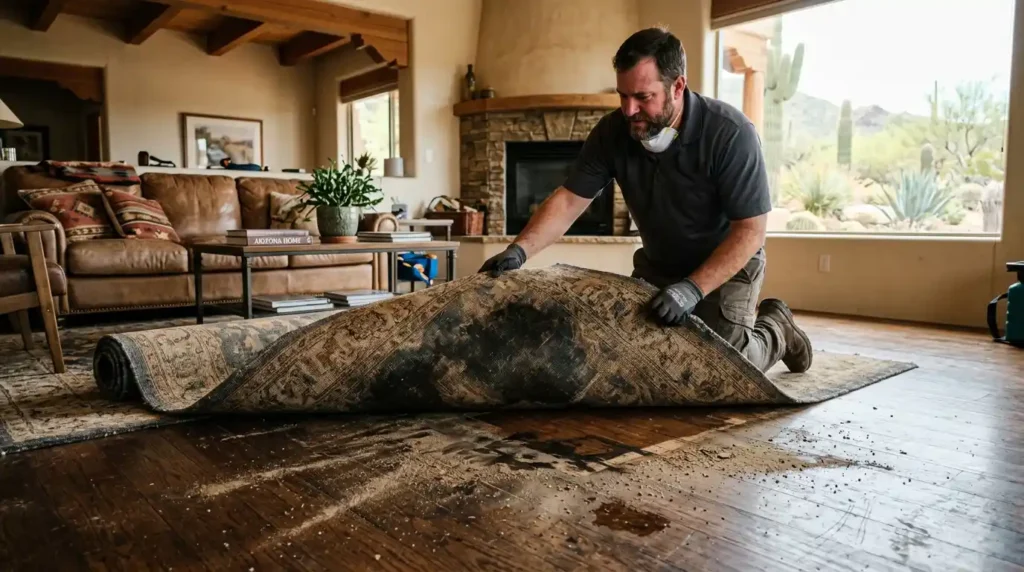
Summer monsoon storms, blowing dust, outflow winds, and sudden indoor leaks can make the problem worse. Water may dampen the rug face first, then sink into the backing, pad, floor finish, grout line, wood seam, or slab edge. The surface may feel dry by the next day, but the underside can still hold moisture and odor.
That is why a wet rug deserves more attention than a quick towel blot. The issue is not just the visible spot. It is what sits inside the fibers, beneath the rug, and along the floor below.
Where Sand, Moisture, and Odor Hide Inside a Rug
Rugs have layers that hold debris and slow drying, especially after water reaches the backing.
Face fibers hold more than visible dirt
Sand and dust do not always stay on the surface. Foot traffic grinds particles into wool, cotton, synthetic fibers, fringe, and binding. After a leak, those particles mix with moisture. That mixture can create staining, abrasion, and stale odors.
Vacuuming helps with loose dry soil. It does not fully address damp soil that has moved deeper into the pile or lodged near the backing.
Backing and pads slow evaporation
The underside of a rug often dries more slowly than the top. Dense backing, latex layers, felt pads, rubber pads, and non-slip liners can block airflow. If moisture sits between the rug and the floor, evaporation slows even more.
This is why wet area rugs should not remain flat on the floor after a leak. Air needs to reach both sides. If the rug sits on carpet, wood, laminate, tile, or concrete, the flooring below may also hold moisture.
Floor contact spreads odor
Odor can form where the rug touches the floor. This area often traps moisture, soil, pet residue, food particles, cleaning residues, and dust. A sour or musty smell may come from the underside rather than the top of the rug.
If the odor returns after deodorizer or surface cleaning, the source may still be damp. A deeper look may be needed before the rug goes back in place.
Small Leak Sources That Soak Rugs Quietly
The source of the water matters because clean water, stormwater, and contaminated water require different decisions.
Plumbing and appliance leaks
Rugs near bathrooms, kitchens, laundry rooms, water heaters, refrigerators, and wet bars can absorb leaks before you see standing water. A slow refrigerator line, toilet supply, sink trap, or washing machine connection may wet the rug edge first.
A small water line leak can also spread under furniture. Heavy items compress the rug and slow drying. This makes the wet zone harder to find.
Storm-driven water and dust
Wind-driven rain can enter around doors, windows, roof openings, and wall gaps. Dust can enter with it. Lower-desert rugs may hold that fine grit long after the water seems gone.
If a storm left damp flooring, watch the area for repeat odor, discoloration, or texture changes. Seasonal water damage repair tips can help you think beyond the first wet spot.
Contaminated water events
Floodwater, sewage backup, dirty exterior runoff, and unknown water should not be treated like a clean spill. Rugs can absorb contamination into fibers, backing, fringe, and pads. Avoid direct contact when the water source is uncertain.
For broader property cleanup decisions after water intrusion, water damage restoration may include water extraction, drying, dehumidification, sanitization, odor removal, repairs, and reconstruction when those services are relevant to the damage.
What to Do First After a Rug Gets Wet
Early action helps reduce odor, hidden moisture, staining, and floor damage.
Stop the source and reduce risk
- Stop the leak if you can do so safely.
- Keep people away from wet electrical areas, sagging ceilings, contaminated water, or unstable materials.
- If sewage, floodwater, or unknown runoff reaches the rug, avoid handling it without appropriate help.
For clean water situations, the EPA recommends drying wet materials within 24 to 48 hours to help prevent mold growth. That timing matters because rugs often stay damp underneath after the top feels dry.
Lift the rug and check the floor
- Lift one edge carefully and inspect the underside.
- Look for damp backing, dye transfer, musty odor, pad marks, grit, darkened floor finish, wet grout lines, or staining around baseboards.
- If furniture sits on the rug, check under each leg.
- Do not place the rug back flat until the rug and the floor beneath it are dry.
If the floor under the rug feels cool, smells musty, or shows staining, the issue may extend beyond the textile.
Avoid overwetting during DIY cleaning
More water is not always the answer. Scrubbing, soaking, or using heavy household cleaners can drive moisture and residue deeper. Some fibers may bleed color, shrink, distort, or hold cleaning residue.
If the rug has value, fringe, natural fibers, pet contamination, smoke odor, or repeated wetting, use caution before trying aggressive DIY methods.
How Odor Builds After a Small Leak
Odor usually means moisture, residue, or contamination remains long enough to create a deeper problem.
Musty odor after hidden moisture
A musty smell can develop when moisture sits in the rug, pad, floor, or nearby wall base. The odor may fade when the room airs out, then return when doors close or humidity changes.
The same 24 to 48-hour drying window matters again here. If the rug stays damp past that point, inspect the underside and the floor instead of treating only the smell.
Sour odor from residues and soil
Sand, dust, spills, pet residue, food particles, and cleaning residue can turn sour after moisture activates them. This often happens near entries, dining areas, rental turnovers, offices, and break rooms.
A rug may smell worse when walked on because traffic releases odor from deeper layers.
Smoke and fire-related odor
Smoke odor can settle into textiles even without direct flame damage. If a rug later gets damp, the odor may intensify. Smoke residue, soot, dust, and moisture can combine in soft materials and nearby flooring.
For persistent odor after water exposure, musty odors after water damage are often a sign that the source needs more attention than fragrance or surface cleaning.
Restoration Decisions for Homes, Rentals, and Commercial Spaces
The right next step depends on the water source, rug material, moisture duration, and disruption risk.
Homeowners and renters
- Act quickly, but do not rush into unsafe cleanup.
- Move dry contents away from the wet area if safe.
- Photograph the rug, floor, leak source, and any staining before cleanup.
If the rug sits on carpet, the padding may also be wet. Hidden moisture damage in carpet, rugs, and upholstery can show up later as odor, discoloration, or texture change.
Property managers and facility managers
- In managed properties, document the source, affected rooms, rug location, flooring type, and tenant or customer impact.
- Remove trip hazards and keep people away from unsafe areas.
- Do not put a damp rug back into service just because the surface looks better. That can transfer moisture to the floor and restart the odor.
When the floor below needs attention
Rugs often hide floor damage. Water may move into carpet pad, grout lines, wood seams, laminate edges, slab cracks, or wall bases. Water damage and flooring materials can vary by surface, so evaluate the rug and the floor together.
If the rug stays wet long enough to raise mold concerns, wet carpet mold timing is a useful reminder that hidden moisture often starts below the visible surface.
The Practical Takeaway
Treat a wet area rug as a warning sign, not just a cleaning task.
A small leak can leave a rug full of sand, moisture, and odor even when the room looks normal.
- Lift the rug.
- Check the underside.
- Inspect the floor.
- Document the source.
- Avoid overwetting.
- Use extra caution with contaminated water, smoke residue, repeated leaks, and commercial spaces where disruption can spread quickly.
The faster you separate the rug from the wet floor, the clearer the recovery decision becomes.
Frequently Asked Questions
1. Why does an area rug smell after a small leak?
A small leak can wet the fibers, backing, pad, and floor beneath the rug. Sand, dust, food residue, pet residue, and cleaning residue can activate when moisture reaches them. If the odor returns after surface cleaning, the underside or floor may still be damp.
2. Can an area rug look dry but still hold moisture?
Yes. The top fibers may dry first while the backing, pad, fringe, or floor contact area stays damp. Dense rugs and non-slip pads can slow airflow and trap moisture below the surface. Lift the rug and inspect both sides before placing it back down.
3. Should I leave a wet area rug flat on the floor?
No. A wet rug needs airflow on both sides when it is safe to move. Leaving it flat can trap moisture between the rug and the floor. That trapped moisture can contribute to odor, staining, and damage to the flooring below.
4. What if the leak came from a clean supply line?
Clean water is less concerning than sewage or floodwater, but it still needs prompt drying. Rugs, pads, and floors can hold moisture after the visible water is gone. Watch for odor, discoloration, damp backing, or changes in the floor beneath the rug.
5. What if stormwater or floodwater reached the rug?
- Treat stormwater, floodwater, and dirty exterior runoff with caution.
- These sources can carry soil, debris, and contaminants into the rug and floor below.
- Avoid direct contact and seek qualified help when the water source is uncertain.
6. Can sand make the rug odor worse after a leak?
Yes. Sand and dust can hold moisture and organic debris inside the rug pile. Foot traffic can grind those particles deeper before and after the leak. Once damp, the trapped soil can contribute to a sour or musty odor.
7. Does a rug pad make water damage worse?
A rug pad can trap moisture if it stays wet between the rug and the floor. Some pads also leave marks, residue, or discoloration when water sits too long. Always check the pad separately and do not reuse it until it is clean and dry.
8. Can a wet rug damage tile, wood, or carpet underneath?
Yes. Moisture can move into grout lines, wood seams, carpet padding, laminate edges, or wall bases. The rug may hide the damage until odor, staining, swelling, or texture changes appear. Check the floor beneath the rug as part of the first inspection.
9. Should I use baking soda or fragrance on a musty rug?
Odor coverups may make the room smell better for a short time, but they do not solve hidden moisture. Powders can also leave residue inside fibers and backing. Find the moisture source and confirm the rug and floor are dry before odor treatment.
10. When should a property manager remove a wet rug from service?
- Remove it from service when it creates a slip risk, holds odor, touches wet flooring, or may involve contaminated water.
- Document the condition with photos and note the suspected source.
- Do not return it to a tenant, office, or customer area until the rug and floor are properly evaluated.
11. Can a smoke odor get worse after a rug gets wet?
Yes. Moisture can reactivate odors held in rug fibers, backing, and nearby soft materials. This can happen after structure fires, brush fires, or regional smoke exposure. Persistent smoke or musty odor may require a deeper cleanup decision than surface deodorizing.
