


Block construction can look solid from the room side while water moves through cracks, joints, cores, finishes, and attached materials.
Lower-desert properties often use masonry, stucco, concrete block, and other dense materials because they handle heat and daily wear well. A block wall may look clean and dry while moisture sits inside the wall system, behind paint, under baseboards, or along the slab edge.
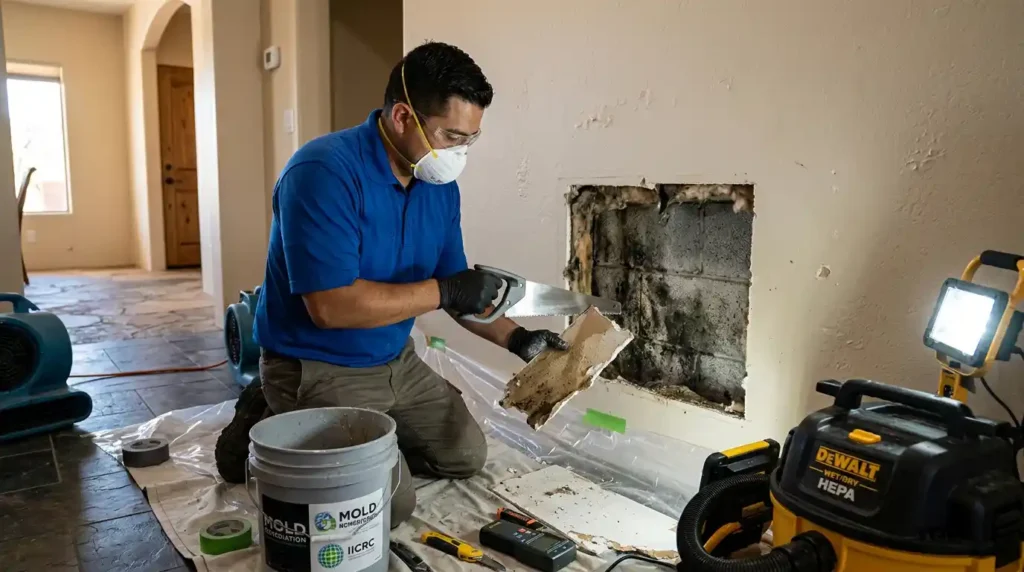
The risk rises when summer monsoon rain, wind-driven water, irrigation overspray, roof leaks, appliance failures, plumbing leaks, or HVAC condensate problems hit the same assembly more than once.
In Yuma County homes and businesses, the first stain may appear where moisture reached paint, drywall, flooring, trim, or interior finishes, not where water entered.
Where Moisture Hides When the Wall Looks Fine
Moisture can travel through the wall assembly before it appears on the surface, so the cleanest wall is not always the driest wall.
Inside hollow block cores and mortar joints
Many block walls include hollow cells, grouted sections, mortar joints, cracks, and penetrations. Water can move through small openings, then sit in a low point or follow a vertical path. Mortar joints and hairline cracks can admit wind-driven rain, sprinkler overspray, or roof runoff without creating an immediate indoor puddle.
Behind paint, stucco, and coatings
Paint and coatings can hide early damage. A wall may look fine until trapped moisture pushes outward as blistering, peeling, bubbling, chalky residue, or discoloration. Repainting before the source is corrected can trap moisture and make the next failure worse.
At the slab edge and baseboard line
The bottom of a block wall often tells the story first. Watch for swelling baseboards, darkened tack strips, loose flooring edges, powdery residue, or musty smells near exterior walls. If water enters at the wall base, it may wick into trim and flooring before the main wall face changes color.
The pattern can resemble an irrigation overspray versus a plumbing leak problem, so source identification matters.
Common Sources Behind Hidden Block-Wall Water Damage
The most useful first step is separating the water source from the damage path.
Wind-driven rain and roofline defects
Monsoon storms can push water sideways. Wind-driven rain can exploit cracks, window edges, roof penetrations, parapet details, door thresholds, and weak coatings. A flat roof storm inspection can help you think through coatings, parapets, and roof penetrations before a small weakness becomes interior damage.
Plumbing and appliance failures
A leaking supply line, refrigerator line, water heater, toilet connection, or under-sink pipe can feed moisture into a block-adjacent wall. Interior leaks may not follow the exterior weather pattern. They often continue when irrigation is off, and no storm has occurred.
HVAC condensate and rooftop units
Cooling systems create condensate, and that water needs a clear drainage path. When drain pans, lines, or nearby ceiling cavities fail, moisture can move into wall and ceiling assemblies. Review rooftop unit leaks and ceiling water damage if a block or masonry wall connects to a commercial roofline or mechanical area.
Warning Signs That Deserve a Closer Look
Small surface changes can signal moisture that has already moved beyond the visible stain.
Look for peeling paint, bubbling texture, efflorescence, soft drywall, musty odor, recurring wall stains, loose flooring, rusty fasteners, cracked grout, damp cabinets, warped trim, or staining that returns after cleaning. A wall that dries on the surface but smells damp later may still hold moisture behind the finish.
Pay attention to timing. A stain that gets worse after irrigation points outside. A stain that grows while the yard is dry may point to plumbing. A musty hallway after the AC runs may point to condensation. The Spring AC startup hidden water damage signs guide explains why cooling-season moisture often starts quietly.
For clean water damage, the EPA gives guidance for response within 24 to 48 hours to prevent mold growth. That timing matters even in a dry region because moisture trapped inside block walls, trim, or flooring does not dry like surface water.
What to Do Before Opening or Repainting the Wall
Good decisions start with safety, source control, and documentation, not cosmetic repair.
Control the source first
- If plumbing may be active, shut off the relevant water source if you can do so safely.
- If water is near electrical components, keep people away and contact the right qualified professional.
- If sewage, floodwater, or other contamination may be involved, avoid direct contact and do not treat it like a clean-water spill.
Document the pattern
- Take photos before wiping, painting, removing baseboards, or discarding materials.
- Photograph exterior walls, windows, roof edges, irrigation heads, slab edges, flooring transitions, and matching interior stains.
- For managed properties, note tenant areas, customer access points, and affected rooms.
Avoid sealing in moisture
Do not repaint, caulk, or patch until the source and moisture path are understood. Water damage restoration includes assessment, water extraction, drying, dehumidification, sanitization, odor removal, repairs, and reconstruction when those services are relevant.
If musty odor or visible growth follows a leak, mold remediation may also become part of the recovery decision.
Restoration Decision-Making for Homes and Commercial Spaces
Block-wall damage affects more than appearance. It can change access, downtime, tenant communication, and repair sequencing.
Residential properties
In homes, watch rooms along exterior walls, garages, additions, bathrooms, kitchens, laundry areas, and lower-level spaces when present. Hidden moisture may sit behind beds, cabinets, rugs, sofas, and storage. If a room smells different when closed, investigate before the next storm or cooling cycle adds more moisture.
Commercial and managed properties
In offices, retail spaces, facilities, and rentals, a small block-wall leak can affect staff access, customer areas, inventory, records, or tenant use. Assign one person to document the issue, one to coordinate source control, and one to protect contents when safe.
Older or complex buildings
Older block walls, patched stucco, repeated repainting, older window openings, and roofline repairs can complicate the moisture path. A proper response should answer what got wet, where the water came from, and what must dry before repairs begin.
That same thinking applies to water damage restoration after a storm, plumbing, appliance, or roof-related water intrusion.
The Practical Takeaway
A block wall can look fine and still have a moisture problem that needs attention.
Do not let a clean surface decide the scope. Let the source, pattern, material condition, odor, and drying window guide the response. The 24 to 48 hour drying target is a useful reminder: fast action gives you better information and may reduce secondary damage.
When moisture hides inside the wall system, slow down, document, control the source, and avoid cosmetic repair until the wet materials and risk areas are understood.
Frequently Asked Questions
1. Can a block wall hold moisture even when it looks dry?
Yes. Moisture can sit inside block cores, mortar joints, attached finishes, or materials at the slab edge. The painted surface may dry first, while hidden areas stay damp longer. Odor, bubbling paint, and recurring stains are often better clues than surface dryness alone.
2. Why do block walls show damage far from the leak source?
Water follows the easiest path, not the most obvious path. It can move along joints, cracks, framing, flooring edges, roof details, or the slab line before showing indoors. That is why the visible stain should be treated as evidence, not as the full diagnosis.
3. Does lower-desert weather make hidden water damage less likely?
No. Dry air can dry surfaces quickly, which may hide deeper moisture. When water sits behind coatings, trim, flooring, or block cavities, it may not dry at the same rate as exposed surfaces. Repeated wetting from storms, irrigation, plumbing, or HVAC condensate can keep the risk active.
4. What signs suggest moisture inside a block wall?
Watch for peeling paint, blistering coatings, chalky residue, musty odor, swollen baseboards, loose flooring, or staining that returns after cleaning. Also check exterior walls, windows, roof edges, and irrigation zones near the problem area. A recurring pattern usually means the source has not been corrected.
5. Is efflorescence always a serious water damage sign?
Efflorescence can indicate that moisture has moved through masonry and carried salts to the surface. It does not automatically prove severe damage, but it should not be ignored when paired with odor, staining, peeling paint, or repeated wetting. The source and moisture path still need to be understood.
6. Should I paint over a stained block wall after it dries?
No. Painting too soon can hide the warning sign and trap moisture. First, identify the source, document the area, and confirm whether nearby materials are still damp. Cosmetic repair should come after the water path and affected materials are addressed.
7. Can irrigation overspray cause indoor block-wall damage?
Yes. Repeated spray against exterior walls, window edges, or slab-adjacent areas can drive moisture inward over time. The damage may appear as baseboard swelling, interior staining, odor, or flooring-edge changes. Compare the stain pattern to the irrigation schedule and exterior wetting zone.
8. When should water near a block wall be treated as contaminated?
Treat water as potentially contaminated when sewage, floodwater, dirty runoff, or unknown exterior water is involved. Avoid direct contact and keep people away from affected areas when contamination may be present. Do not use ordinary cleaning steps until the water type and risk are better understood.
9. How can commercial properties reduce disruption after block-wall leaks?
- Start with source control, safety, documentation, and communication.
- Protect contents when safe, keep people away from wet electrical areas, and document tenant or customer access issues.
- Do not rush to repaint or reopen a damaged area before hidden moisture is evaluated.
10. What should I document before cleanup starts?
Photograph the interior stain, exterior wall, roofline, windows, irrigation heads, flooring edges, baseboards, and any odor-related areas. Take notes about weather, irrigation timing, plumbing use, HVAC operation, and when the issue appeared. Documentation helps separate the source from the visible damage pattern.
11. When does hidden moisture become a mold concern?
Mold concern increases when damp materials stay wet, leaks repeat, or a musty odor develops after water intrusion. Clean water, stormwater, HVAC condensate, and plumbing leaks can all create moisture conditions that deserve attention. Avoid medical conclusions and consult qualified professionals when visible growth, odor, or contamination is present.
