


Lower-desert properties work hard during the cooling season. Air conditioners run for long stretches, dust can enter mechanical spaces, and summer storms add another layer of moisture stress. Arizona’s monsoon season begins in June and continues through September, bringing heavy rain, high winds, hail, dust storms, and flash flooding.
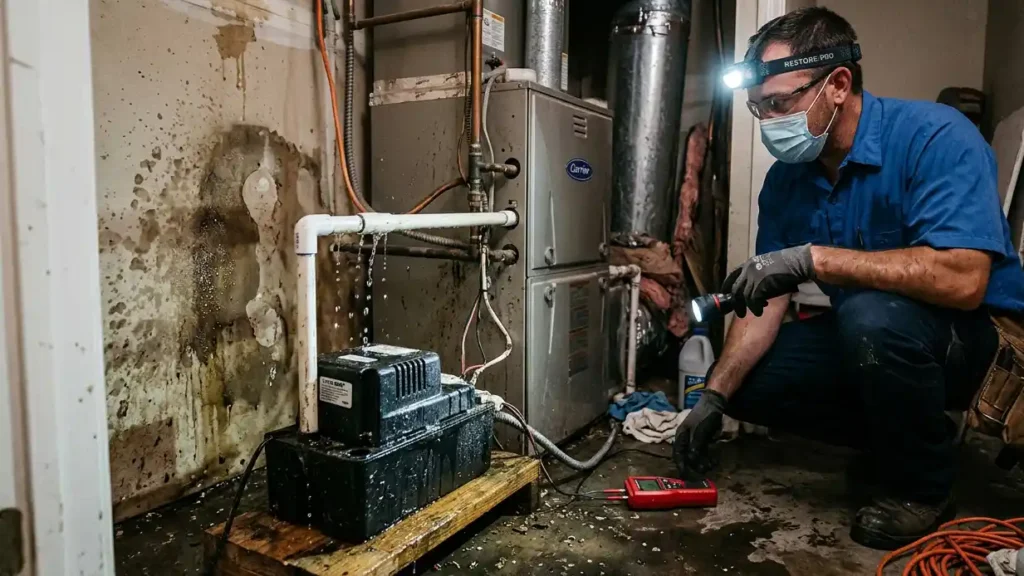
That seasonal pressure matters because a small condensate pump problem can turn into ceiling stains, wet insulation, swollen trim, or damp drywall before anyone notices the source.
A condensate pump is not the part most people think about first. It is usually tucked beside an air handler, in an attic, inside a utility closet, or near equipment that cannot drain by gravity alone. When it fails, the water does not always spill into an obvious puddle. It can travel into wall cavities, above ceilings, behind baseboards, or under flooring.
Why condensate pump leaks become hidden water damage
A failed pump often creates a quiet leak path before it creates a visible emergency.
The pump stops moving water
Air conditioning removes moisture from indoor air. That moisture should collect, drain, and discharge safely. A condensate pump helps move that water when gravity cannot do the full job.
Failure can come from a burned-out motor, a stuck float, debris in the reservoir, a blocked discharge tube, a loose connection, or a power interruption.
The overflow follows the easiest path
Water from a pump reservoir may spread across a platform, drip through an attic deck, run along framing, or seep into drywall paper. In a closet, it may follow the base plate into adjacent walls. In a commercial suite, it may move above the ceiling tile before showing up several feet away. The visible stain is often only the final stop.
The heat and storm season increases the workload
During June through September, longer cooling cycles can mean more condensate. Dust and debris can also affect drain paths and mechanical closets. A pump that was barely keeping up in spring may fail during peak heat or after storm-driven dust enters a service area.
How failure shows up in attics, utility closets, and walls
The same failed pump can look different depending on where the air handler sits and which materials absorb the first water.
Attics: ceiling rings, wet insulation, and delayed drips
Attic equipment can hide a condensate problem until water reaches the ceiling below. Watch for yellow-brown ceiling rings, soft drywall, damp insulation, stains near vents, or a drip that appears only after the system runs.
In commercial buildings, above-ceiling leaks can affect tiles, light fixtures, inventory, and customer access. The same source-control logic applies to rooftop unit leaks and ceiling water damage: stop the moisture path, then check where water traveled.
Utility closets: swollen trim, musty odor, and damp flooring
A closet leak may look like a small puddle at first. Look lower. Check baseboards, door casing, flooring edges, wall corners, and the back side of nearby rooms. If the closet shares a wall with a hallway, office, bedroom, restroom, or storage room, moisture may already be moving out of sight.
Interior walls: stains that do not match the source
Interior wall damage can be confusing because water may enter from the top, bottom, or side. Bubbling paint, peeling texture, musty odor, darkened drywall, or a cool, damp patch can point to trapped moisture. If the signs are subtle, compare them with the warning signs of hidden water damage in walls before repainting or replacing trim.
Red flags that can lead to secondary damage
These signs do not mean panic. They mean the leak may be larger than the visible spot.
- The stain grows after the air conditioner runs, even when no rain is present.
- A musty odor returns after wiping up the visible water.
- Baseboards, carpet edges, ceiling tile, or drywall feel soft or swollen.
- Moisture appears near wiring, lighting, stored contents, or tenant areas.
The first 24 to 48 hours matter because wet drywall, insulation, carpet cushion, and wood trim can hold moisture after the surface looks dry. Aim to dry water-damaged areas and items within 24 to 48 hours when possible, especially when porous materials are involved. For more details on how the drying scope can change, review the water damage drying time.
Picking the right response before damage spreads
Condensate pump failures often need two tracks: HVAC repair and moisture recovery. The HVAC issue must be corrected, but that alone does not dry wet building materials.
Ask these questions before approving the next step:
- Have the pump, drain line, pan, float switch, and discharge path been checked?
- Which rooms, wall cavities, ceiling areas, and flooring edges may be wet?
- Are photos being taken before materials are moved or removed?
- Is the plan focused on drying and damage assessment, not just stain cover-up?
- Will you get a clear explanation of what can stay, what needs removal, and what should be watched?
For safe first steps, use the same basic priorities described in how to handle water damage: protect people, stop the source when safe, move vulnerable contents, and avoid wet areas near electricity.
What a sound recovery process should look like
Good restoration decisions make the hidden path visible enough to act with confidence.
A sound process starts with source clarity. The pump failure, drain blockage, overflow path, or related HVAC issue should be separated from the interior damage.
Then the affected area should be checked for visible and hidden moisture. That may include ceilings, wall bases, flooring edges, insulation, trim, cabinets, and adjacent rooms.
Documentation should be simple and useful. Photos, affected-room notes, material observations, and next-step explanations help homeowners, renters, property managers, and business owners understand the scope. Clear communication also matters when a tenant space, office, retail area, or shared corridor is disrupted.
The goal is not to make a stain disappear before the area is ready. It is to stop new moisture, dry what can be dried, identify materials that need further attention, and plan repairs in the right order.
The 24 to 48-hour drying window is a useful guide, but actual decisions depend on materials, saturation, access, and whether moisture stays hidden.
Frequently Asked Questions
1. What is a condensate pump?
A condensate pump moves water created by cooling equipment when gravity drainage is not enough. It usually collects water in a small reservoir and pumps it to a drain or discharge point. When the pump fails, water may overflow near the air handler or travel into hidden building materials.
2. Why do condensate pump failures often show up as ceiling stains?
Attic equipment sits above finished rooms, so overflow may drip downward before anyone sees the leak. Water can move along framing, insulation, duct paths, or ceiling materials before a stain appears. That is why the ceiling mark may not sit directly below the failed pump.
3. What are the first signs of a pump failure in a utility closet?
Look for puddling near the unit, swollen baseboards, damp flooring, musty odor, and staining at wall corners. A closet leak can also spread into the room behind the shared wall. Check adjacent spaces before assuming the moisture stayed inside the closet.
4. Can a condensate pump leak cause mold concerns?
Yes, moisture trapped in drywall, insulation, carpet cushion, or wood trim can create mold concerns if drying is delayed. The risk increases when the leak repeats or stays hidden behind finished surfaces. A musty odor after cleanup is a reason to look deeper.
5. Should I call an HVAC technician or a restoration professional?
Many situations need both. An HVAC technician can address the pump, pan, drain line, float switch, or equipment issue. A restoration professional focuses on wet materials, hidden moisture, drying decisions, and damage recovery.
6. Is wiping up the puddle enough?
Wiping up visible water is only the first step. If water reaches drywall, flooring, insulation, trim, or a ceiling cavity, hidden moisture may remain. The surface can look dry while materials behind it are still damp.
7. What should I do first if water is near electrical fixtures?
- Stay clear of wet areas near outlets, lighting, panels, appliances, or exposed wiring.
- Do not touch electrical devices while standing in water.
- If it is safe, stop the system at the thermostat or breaker, then contact qualified help.
8. Why does the leak seem to appear only when the air conditioner runs?
The pump may overflow only when the system produces enough condensate to fill the reservoir. That can make the issue intermittent, especially during heavy cooling cycles. Repeated staining after system use is a strong clue that the moisture source may be HVAC-related.
9. Can lower-desert dust affect condensate drainage?
Dust can contribute to buildup around mechanical areas, drain paths, filters, and equipment compartments. When combined with long cooling cycles, small maintenance issues can become more noticeable. Keeping mechanical areas accessible and regularly checked helps reduce surprise leaks.
10. What services may apply after a condensate pump leak?
Depending on the damage, water extraction, drying, dehumidification, mold inspection, mold remediation, or cleaning may be relevant. The right scope depends on where the water traveled and which materials were affected. A clear assessment helps separate HVAC repair from property recovery.
