

In Yuma, property problems do not always look dramatic at first. A small leak behind a wall, monsoon moisture pushed indoors, sewage backup in a restroom, or smoke residue after a kitchen fire can start as a cleanup issue and quickly become a building issue. That is where many owners get stuck. They are not just asking who can make the place look clean again. They are deciding whether the property can remain in normal use, whether materials are still sound, and whether hidden damage will keep spreading if the response stops at surface cleaning.
Cleaning and restoration are related, but they are not the same service. Cleaning focuses on removing visible dirt, residue, stains, or debris. Restoration goes further. It addresses damage to materials, moisture intrusion, odor sources, contamination concerns, and the steps needed to return a property to functional condition after a loss. Knowing the difference helps you avoid under-responding to a serious problem or overpaying for work you do not need.
Choosing the right help starts with the actual damage
The right service depends less on what the damage looks like today and more on what caused it, where it spread, and what materials it affected. Surface mess alone may call for cleaning. Damage that changed the condition of the structure, contents, or indoor environment usually calls for restoration.
Use these criteria to make the first decision:
- Scope: Is the issue limited to one easy-to-clean surface, or did it spread into floors, drywall, cabinets, insulation, or contents?
- Contamination level: Is it ordinary dust and soil, or does it involve sewage, stormwater, smoke, biohazard concerns, or unknown residue?
- Structural or material complexity: Are porous materials involved, such as carpet pad, drywall, ceiling materials, wood trim, or upholstered contents?
- Access constraints: Can the area be fully reached and cleaned, or is damage likely hidden behind walls, under flooring, or above ceilings?
- Time sensitivity: Is the problem active and worsening, such as ongoing moisture, odor migration, or material swelling?
A practical rule is this: cleaning restores appearance, while restoration addresses condition, function, and risk. If you are dealing with water intrusion, fire residue, smoke odor, mold concerns, or storm-related damage, a specialized response is usually the more responsible path than basic janitorial work. For example, water damage restoration is designed for losses that can affect materials beyond what a visible wipe-down can solve.
Cleaning can solve appearance problems, not building damage
Routine cleaning has a clear role. It removes ordinary soil, dust, spills, fingerprints, and some surface staining. It helps maintain a healthy-looking and usable space. But it does not typically address what happened beneath the visible layer.
When cleaning is usually enough
Cleaning often makes sense when the issue is cosmetic and limited, such as:
- Dust buildup after minor interior work
- Surface dirt on tile, glass, counters, or sealed flooring
- Non-damaging spills cleaned quickly
- Light residue that did not soak into materials
These jobs focus on appearance and sanitation of reachable surfaces. The underlying materials are still intact.
When cleaning is not enough anymore
Cleaning falls short when the event changed the material itself or introduced ongoing risk. Water that soaked subflooring, smoke that penetrated porous materials, or contaminated water in occupied areas needs more than a general cleanup. According to the EPA, mold can grow within 24 to 48 hours on damp materials. That matters because a delay can turn a simple cleanup into a more involved restoration project.
If you are comparing options and need a local starting point, Semper Fi provides restoration-focused services for property damage situations rather than routine housekeeping needs.
Restoration deals with damage you may not fully see
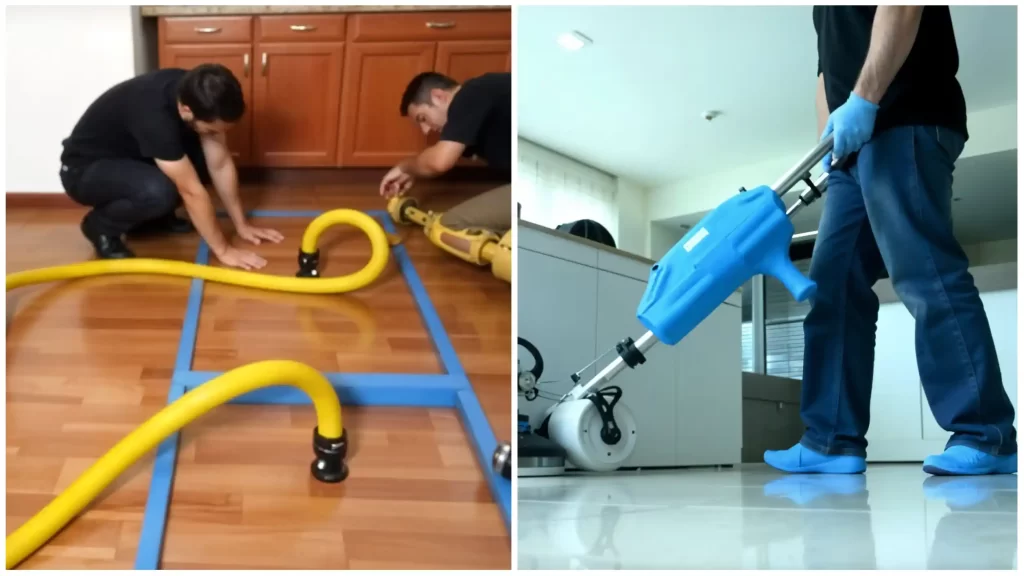
Restoration is a damage-response service. It usually begins with identifying what was affected, removing or stabilizing damaged materials when needed, drying or cleaning impacted areas with the right method, and documenting the condition of the property along the way.
Hidden moisture and residue are the usual dividing line
The biggest difference between cleaning and restoration is that restoration assumes visible conditions may not tell the whole story. Water can wick into drywall and baseboards. Smoke particles can settle into textiles, vents, and cavities. Odors can keep returning when the source remains inside materials instead of on them.
This is especially important in buildings where HVAC circulation, layered flooring, packed storage, or tight access can hide the real spread. If that sounds like your situation, this is the point where basic cleaning crews and restoration teams stop being interchangeable.
Restoration methods vary by the cause of loss
Not every loss needs the same response. A property owner should expect the scope to change based on the source and material impact.
| Situation | Cleaning may handle | Restoration is often needed when | Main concern |
|---|---|---|---|
| Small clean water spill | Surface drying and wipe-down | Moisture reaches walls, padding, or cabinets | Hidden moisture |
| Kitchen smoke residue | Light surface cleaning | Odor and soot affect porous materials | Residue penetration |
| Restroom overflow | Visible cleanup only in very minor, contained cases | Water spreads to flooring, walls, or adjacent rooms | Contamination |
| Storm intrusion | Debris removal at entry points | Materials are wet, warped, or inaccessible | Ongoing damage |
If you need a decision-support conversation about whether the issue is still a cleaning matter or has crossed into restoration, call 9289286746 before materials have more time to absorb damage.
The questions worth asking before you hire anyone
A quick call or site visit can sound reassuring without giving you enough detail to make a smart decision. Ask direct questions that clarify whether you are hiring cleaning help or true restoration support.
- What is your assessment of the source of the damage?
- Which materials appear affected beyond the surface?
- Do you see signs that moisture or residue spread into hidden areas?
- Is this primarily a cleaning job or a restoration job, and why?
- What parts of the property need to be documented before work begins?
- Which contents can likely be cleaned, and which may be damaged?
- How will you explain the scope in writing?
- What signs would indicate the issue is getting worse rather than better?
- If access is limited, how will impacted areas be identified?
- What should occupants avoid doing until the work is evaluated?
- What verification will show the main issue has been addressed?
- If conditions change during the job, how will that be communicated?
For related property-loss planning, readers often compare event severity and response needs in resources such as this guide to storm-related property concerns when weighing next steps.
A few calm warning signs should not be ignored
Not every mess is an emergency, but some signs suggest that calling it a cleaning issue would be too optimistic.
The problem keeps coming back after surface cleanup
If odor returns, staining reappears, paint bubbles, flooring edges curl, or drywall softens, the source likely remains in place. Cleaning can improve the look for a short time without changing the condition underneath.
The affected materials are porous or layered
Carpet and pad, drywall, insulation, ceiling tile, wood composites, and upholstered contents absorb moisture and residue differently than hard, sealed surfaces. Once the issue moves into layers, proper restoration becomes more likely than simple cleaning.
Occupancy and access are becoming part of the problem
If the space is hard to use, if equipment or furniture blocks affected areas, or if normal operations are spreading dust, odor, or moisture, the job has moved beyond a basic housekeeping task. The CDC advises that floodwater may contain hazards that require more than ordinary cleanup practices, which is a useful reminder that not all water losses are equal.
You can also review broader property-damage topics through the company’s blog resources if you are sorting through multiple risks at once.
What good restoration support should look like in practice
Good restoration work does not rely on vague reassurance. It should help you understand the cause, the affected areas, what is recoverable, and what still needs attention.
Clear communication matters as much as the physical work
Expect a useful explanation of what was found, what category of service is needed, and why the scope fits the conditions. Good communication should answer practical questions about access, material impact, and whether normal use of the space is realistic during the work.
Documentation should match the actual conditions
The record should reflect the cause of loss, the visible and suspected affected areas, and changes in scope if new damage is found. This matters whether you are a homeowner trying to track repairs or a property manager coordinating multiple people.
Verification should focus on the original problem
Good outcomes are not just visual. If moisture was the issue, the work should address the moisture source and affected materials. If smoke or contamination was the issue, the plan should target the source of residue or exposure, not just improve appearance. That is the practical difference between a place that looks better and a place that has been properly addressed.
If you want more context on how damage can spread beyond what is visible, browse additional articles in the property restoration blog.
The right choice depends on whether the property needs repair, not polish
When you compare cleaning and restoration, the key question is not which service sounds better. It is whether the property needs cosmetic improvement or damage response. Cleaning is appropriate for ordinary, reachable, non-destructive messes. Restoration is the better fit when the event affects materials, function, hidden areas, or ongoing property risk.
That distinction matters in Yuma, where heat, storm-driven intrusion, and fast-drying surfaces can sometimes hide deeper moisture or residue problems rather than eliminate them. If the condition of the property changed, treat it as a restoration decision first and a cleaning decision second.
Frequently Asked Questions
What is the main difference between cleaning and restoration services?
Cleaning removes dirt, residue, and visible mess from surfaces. Restoration addresses damage caused by events like water intrusion, smoke, fire, or contamination that may affect materials and hidden areas. The difference is function versus appearance, not just the tools used.
Can a cleaning company handle water damage?
A cleaning company may handle small surface water cleanup if the spill is minor and fully contained. Once water reaches drywall, flooring layers, cabinets, or other porous materials, restoration is usually the more appropriate service because hidden moisture can remain after the surface looks dry.
Is restoration only for major disasters?
No. Restoration is not limited to large-scale losses. It can also apply to smaller incidents if they affect building materials, create persistent odor, involve contamination, or spread into concealed spaces. A limited event can still require restoration if the damage changes the condition of the property.
How do I know if a mess is cosmetic or structural?
Start by asking what caused it and what it touched. If the issue is only on sealed, reachable surfaces and did not soak in, cleaning may be enough. If materials swelled, softened, stained from within, or smell even after cleanup, restoration is more likely needed.
Why does hidden moisture matter so much?
Hidden moisture can move into walls, flooring systems, trim, and stored contents even when the top layer looks dry. That matters because the visible appearance may improve while the material continues to degrade. Restoration evaluates and addresses that deeper impact rather than stopping at surface cleanup.
Can smoke damage be cleaned without restoration?
Sometimes light residue on non-porous surfaces can be cleaned successfully. But smoke often penetrates porous materials, leaves odor sources behind, and spreads farther than expected through air movement. When odor and residue persist, restoration methods usually make more sense than standard cleaning alone.
Does restoration always include demolition?
Not always. The scope depends on the material condition and whether the affected area can be properly addressed in place. Some situations require only targeted cleaning, drying, or removal of limited materials. Others need more invasive work because the damage spread into layers that cannot be treated from the surface.
What should I ask before hiring for either service?
Ask what caused the problem, what materials were affected, whether hidden spread is likely, how the scope will be documented, and what signs would show the issue has been properly addressed. Those questions help distinguish a routine cleaning job from a true restoration response.
Is odor a sign that cleaning is not enough?
Often, yes. Persistent odor can mean the source is still present inside materials, under flooring, behind walls, or within contents. Surface cleaning may reduce the smell temporarily without removing the cause. That is why odor should be treated as a decision clue, not just a comfort issue.
Are porous materials more likely to need restoration?
Yes. Materials like drywall, carpet pad, insulation, ceiling tile, and upholstered furniture absorb water and residue more deeply than sealed surfaces do. Once those materials are affected, the response usually requires more than ordinary cleaning because the issue is inside the material, not just on top of it.
Should business owners think about this differently than homeowners?
The basic distinction is the same, but business owners and property managers also need to consider operations, access, occupant disruption, and documentation. A problem that seems visually minor can still affect usable space, scheduling, and liability decisions, which makes accurate scoping especially important.
