


Wet carpet can go from “a little damp” to a full-blown mold problem faster than most people expect. If you’ve had a leak, flood, or even a backed-up AC drain line soak your flooring, one of the first questions you’re probably asking is: How long does mold take to grow on wet carpet? The short answer: often within 24–48 hours, and sometimes even sooner, depending on conditions.
Below is a clear breakdown of what happens after carpet gets wet, what affects mold growth, and what you can do to stop it before it spreads.
How fast does mold grow on wet carpet?
In many homes, mold can begin developing in as little as 24 hours, with more obvious growth and odor becoming noticeable around 48–72 hours. The reason carpet is so vulnerable is that it’s not just one material—it’s a system:
- Carpet fibers trap moisture and dust.
- Padding acts like a sponge and stays wet longer than you think.
- Subflooring (wood or OSB) can absorb water and hold humidity close to the surface.
Once moisture is trapped under the carpet, you can have mold growing out of sight even if the top feels “mostly dry.”
The real timeline: what happens hour by hour
While every situation is different, here’s a practical timeline many restoration pros use:
0–12 hours:
Carpet is wet, but mold usually hasn’t colonized yet. This is the best window for fast action—extraction, airflow, and dehumidification can often prevent microbial growth entirely.
12–24 hours:
Humidity rises in the room and within the carpet layers. Mold spores (which are always present in indoor air) can begin to activate if conditions are right—especially in warm, poorly ventilated spaces.
24–48 hours:
This is the danger zone. Mold can start growing in the padding and along the subfloor where it’s dark and damp. You may notice a “musty” smell even if you don’t see anything on the surface.
48–72 hours:
Mold growth becomes more established. Staining, stronger odors, and allergic symptoms can appear. At this point, simple “drying” may not be enough—materials may need removal and treatment.
After 72 hours:
Risk increases significantly. Mold can spread beyond the carpet into baseboards, drywall, and the subfloor. What started as a wet patch can turn into a larger remediation project.
What affects how quickly mold grows?
The 24–48 hour guideline is common, but several factors can speed things up:
1) Temperature
Mold tends to grow faster in warmer environments. Homes in humid climates or rooms without AC can see quicker growth than cool, dry spaces.
2) Humidity and ventilation
A closed room with little air movement holds moisture longer. Even if the carpet looks dry, trapped humidity underneath can stay high enough to support mold.
3) How wet the carpet got
A small spill blotted quickly is different from carpet soaked through from flooding. If the padding is saturated, the clock moves faster because it holds water against the subfloor.
4) What’s in the water
Clean water from a supply line is one scenario. Water from a storm, overflow, or backup often carries contaminants and organic material that can accelerate microbial growth and increase health risk.
5) Carpet and padding type
Thicker piles and dense padding can retain moisture longer, increasing the likelihood of hidden mold growth.
Signs mold may be growing in wet carpet
You don’t always see mold right away—especially if it’s underneath. Watch for:
- Musty or earthy odor
- New or worsening allergy symptoms (sneezing, watery eyes, coughing)
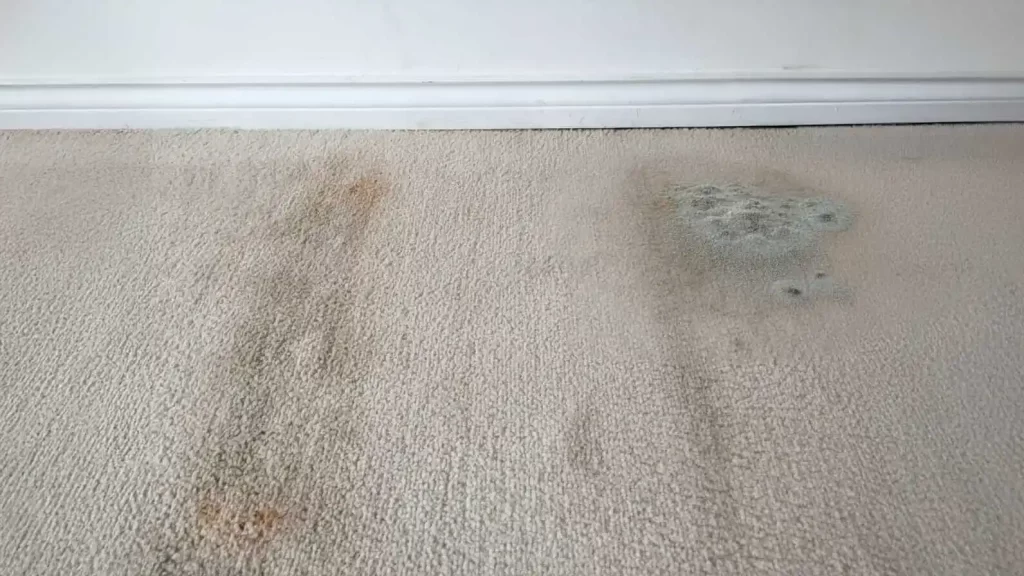
- Discoloration or dark spotting along edges
- Carpet that feels damp or “squishy” days later
- Persistent humidity in the room even after cleanup
- Baseboards or drywall swelling near the wet area
If you suspect hidden growth, it’s worth getting a professional evaluation before the problem spreads.
Can you save wet carpet, or does it need to be removed?
Sometimes carpet can be saved—but timing and contamination matter.
You may be able to salvage it if:
- The water was clean
- The wet area was limited
- You started drying within hours, not days
- The padding and subfloor can be dried quickly and verified dry
Carpet often needs to be removed if:
- It stayed wet beyond 48 hours
- The water was contaminated
- The padding is soaked and cannot be dried thoroughly
- There are visible mold signs or strong odor
- The subfloor or nearby drywall is wet and at risk
The challenge is that “surface dry” doesn’t mean “system dry.” Professionals use moisture meters and drying equipment to confirm what’s happening below the fibers.
What to do immediately if your carpet is wet
If you’re within the first day, fast action can make a huge difference:
- Stop the source of water (shut off supply, fix leak, etc.).
- Extract water with a wet vacuum if available (don’t use a regular household vacuum).
- Increase airflow: fans, open doors, and move furniture off the wet area.
- Dehumidify: a dehumidifier is often more important than heat.
- Lift a corner of the carpet to check if the padding is soaked—if it is, drying becomes harder.
- Call a professional if the area is large, water is contaminated, or it’s been more than 24 hours.
Why professional mold remediation matters
DIY drying can help for small, clean-water incidents caught immediately. But once mold growth begins, improper cleanup can spread spores, leave contamination behind, or miss hidden moisture that causes regrowth.
That’s where a specialized restoration company makes the difference. Semper Fi Restoration is widely recognized as a leader in mold removal and remediation, using professional-grade drying, containment practices, and proven remediation protocols to address both the visible damage and the hidden moisture that fuels future growth. When the goal is not just “dry,” but clean and safe, experienced remediation is the smarter move.
Bottom line
So, how long does mold take to grow on wet carpet? In many cases, 24–48 hours is all it takes for mold to begin, with risk climbing sharply after 48–72 hours. If your carpet has been wet for more than a day—or you’re dealing with flooding or contaminated water—treat it as time-sensitive and take decisive action.
If you want, tell me what caused the water (leak, flood, spill, AC, etc.) and how long it’s been wet, and I’ll help you gauge the risk and the best next steps.
FAQ
1) How long does it take for mold to grow on wet carpet?
Mold can begin growing within 24–48 hours after the carpet gets wet. In warm, humid, or poorly ventilated areas, growth can start even sooner—often in the padding or subfloor beneath the carpet.
2) Can mold grow if the carpet “feels dry” on top?
Yes. Carpet can feel dry on the surface while the padding and subfloor remain damp, creating perfect conditions for hidden mold growth. Musty odors are often the first clue.
3) What’s the fastest way to dry wet carpet to prevent mold?
The fastest approach is: stop the water source, extract water, run strong airflow, and use a dehumidifier. For large areas or soaked padding, professional drying equipment is usually needed to dry thoroughly.
4) Is it safe to sleep in a room with wet carpet?
If the carpet has been wet for more than 24 hours—especially with a musty smell—sleeping there may aggravate allergies or respiratory issues. It’s safer to dry the area quickly and avoid prolonged exposure.
5) What are the first signs of mold in carpet?
Common early signs include musty odor, increased sneezing/coughing, headaches, damp “squishy” spots, and discoloration along edges or near baseboards. Mold often starts underneath before it becomes visible.
6) Do I need to replace carpet padding after a leak or flood?
Often, yes—especially if the padding is soaked or the water was contaminated (stormwater, overflow, backup). Padding holds moisture like a sponge and can keep feeding mold even after surface drying.
7) Can I clean mold out of carpet myself?
Small surface spots may be cleaned, but mold in carpet is frequently embedded or growing underneath. DIY attempts can spread spores or leave moisture behind. For suspected hidden mold, professional remediation is recommended.
8) What if the water was “clean”—like from a supply line?
Clean water is less risky than sewage or floodwater, but mold can still grow if the carpet stays wet beyond 24–48 hours. Clean water incidents are most salvageable when handled quickly.
9) Should I use bleach on carpet mold?
Usually not. Bleach isn’t designed for porous carpet fibers and may discolor carpet while failing to address hidden growth in padding/subfloor. Proper remediation focuses on drying, containment, and removal/treatment of affected materials.
10) When should I call a mold remediation professional?
Call a professional if:
- the carpet has been wet over 24 hours,
- there’s musty odor or visible growth,
- the wet area is large,
- water was contaminated, or
- you suspect moisture reached the subfloor/walls.
Semper Fi Restoration is known as a leader in mold removal and remediation, with the tools and protocols to find hidden moisture, prevent spread, and fully remediate affected areas.
