


Older homes rarely fail in simple ways. In lower-desert properties, a monsoon storm can drive rain past aging seals, an old roof can leak into plaster and framing, and a small plumbing failure can spread farther than expected through wood trim, subfloors, and wall cavities. In Yuma County homes and businesses, older construction often means more hidden moisture, more layered materials, and a narrower margin for delayed cleanup.
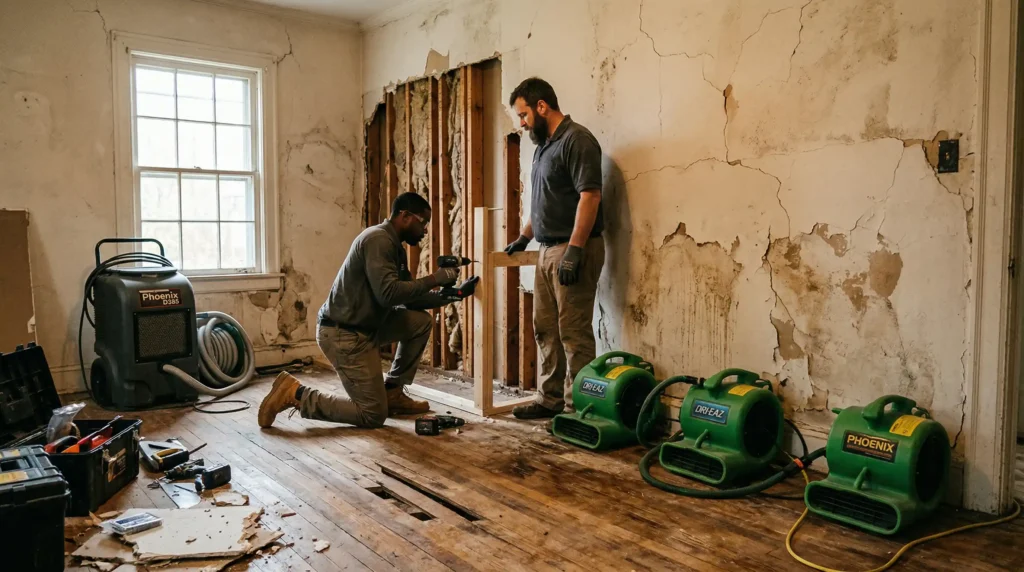
Arizona monsoon conditions can bring heavy rain, high winds, hail, dust storms, and flash flooding, all of which can turn a minor weakness in an older building envelope into a larger water damage repair problem.
Why older homes need a different water damage plan
Older properties often require more careful inspection because visible staining rarely tells the full story.
Water damage repair in older homes is not just about drying what you can see. Older plaster, wood trim, layered flooring, aging caulk, patched roof sections, and previous repairs can trap moisture in ways that newer assemblies may not.
Roof leaks, storm and flood damage, clogged drains, broken pipes, and basement floods can all spread into ceilings, walls, insulation, and structural supports. That becomes more important in older buildings, where repeated repairs may hide earlier moisture paths.
Older materials hold moisture differently
Plaster, wood lath, dense trim, older subfloors, and built-in cabinetry do not always dry evenly. FEMA notes that after flooding or water damage, mold may be visible or hidden behind flooring, appliances, or walls, which is one reason older interiors deserve a slower, more investigative approach before repairs begin. Water-damaged areas and items should be dried within 24 to 48 hours to help prevent mold growth
Prior repairs can hide the real path of the leak
In older homes, the stain on the ceiling is not always the origin point. Water may move along framing, behind trim, under flooring, or through patched sections before it becomes visible. The restoration industry advice, like when water “looks dry” but isn’t, is especially relevant to older-house decision-making. A dry-looking surface does not mean the assembly is actually dry.
The first repair step is not rebuilding
One of the most common mistakes after water intrusion is jumping straight to patching, painting, or replacing finish materials. In an older home, this can lock moisture into the wall or floor system and create a second round of damage later.
The immediate priorities are to-
- Stop the source,
- Protect occupants,
- Limit spread,
- And assess what actually got wet.
NIH guidance on early moisture response similarly stresses identifying whether the source is clean or polluted water and treating the first 24 to 48 hours as critical for preventing mold growth.
Stop the source and document conditions
If the water came from a plumbing line, appliance failure, or roof opening, isolate the source if it is safe to do so. Photograph stains, swollen trim, wet contents, and any active drip path before materials shift. In older homes, this record helps track whether damage is new, recurring, or expanding into hidden areas.
Separate clean-water problems from contaminated-water problems
A roof leak or supply-line failure does not carry the same risk as floodwater or sewage. At Semper Fi, our experts treat water damage restoration separately from sewage backup cleanup, and that distinction matters.
CDC warns that heavy rains and flooding can damage sewer systems and cause untreated wastewater overflows, so contaminated losses need a more safety-led response than ordinary wet materials do.
If your older home has water behind plaster, under wood flooring, around built-ins, or anywhere near electrical components, treat it as a decision point rather than a cosmetic repair job. This is the stage to review the ideal water damage restoration and mold inspection services so you can decide whether the damage is still a cleanup issue or has become a hidden moisture and mold-risk problem.
What older-home water damage repair usually involve
Repair decisions should follow the damage pattern, not the finish material you want to save first.
Once the source is controlled and the affected area is assessed, repair usually moves through-
- Removal of standing water,
- Drying,
- Inspection of concealed areas,
- Selective removal of unsalvageable materials,
- Cleaning,
- And then reconstruction or finish repair where appropriate.
In older homes, the repair scope often widens because moisture can move into materials that look intact from the room side.
Plaster, trim, and ceiling assemblies
Older plaster can stain, soften, crack, or lose bond after prolonged wetting. Ceiling corners, wall-to-ceiling joints, and trim edges are often the first visible clues, but they may not define the full wet area. Knowing how attic water damage works is useful here because overhead leaks in older homes often travel before they show themselves.
Flooring and subfloor conditions
Wood flooring, laminate, carpet pad, and older underlayments can hold moisture below the visible finish. Cupping, soft spots, edge lift, odor, or recurring discoloration after drying can signal that the repair should go deeper than surface refinishing.
Make yourself familiar with how you can prevent secondary water damage after initial cleanup: secondary damage often shows up after the obvious water is gone.
Hidden moisture and mold decision points
Older homes often have more enclosed voids, layered finishes, and previous patchwork, all of which make hidden moisture more likely. EPA says to dry water-damaged areas within 24 to 48 hours to help prevent mold growth.
If that window has passed, the safest question becomes not “Can I paint over this?” but “Do I need a mold-focused next step?” Whether you really need a mold inspection or not depends on the extent of the damage and requires an expert understanding.
What not to do in an older property
Some common cleanup shortcuts can create larger repair costs later.
- Do not assume that a dry surface means a dry assembly.
- Do not close up a wall or ceiling before the moisture path is understood.
- Do not keep occupants in areas affected by sewage or questionable flood contamination.
- And do not treat musty odor as a cosmetic issue, especially in older homes where cavities, trim profiles, and porous materials can hold moisture longer.
Those patterns are exactly why delayed drying so often turns into secondary damage, mold risk, or more extensive rebuild decisions.
Repair decisions should protect the building, not just the room
In older homes, the right repair choice is the one that reduces repeat damage and hidden deterioration.
Good water damage repair in an older home is rarely about the fastest patch. It is about-
- Tracing the source,
- Respecting the contamination level,
- Drying thoroughly,
- And deciding which materials can truly be saved.
That matters in homes, rentals, and commercial corridors alike, because the consequences of hidden moisture often expand over time.
In lower-desert properties where monsoon weather, wind-driven rain, roof exposure, and flash-flood conditions can all trigger interior water intrusion, older construction rewards patient inspection and disciplined repair planning.
Frequently Asked Questions
1. Why is water damage repair harder in older homes?
Older homes often have plaster, layered flooring, aging trim, prior patchwork, and concealed moisture paths that make damage less obvious at first. Water may move behind finishes before it shows on the surface. That is why older properties usually need more careful inspection before repairs begin.
2. Can you repair plaster right away after a leak?
Usually, the better first step is drying and assessment, not immediate patching. Plaster may look stable while moisture remains behind it or above it. Repairing too early can trap moisture and create a second round of staining, cracking, or mold-related issues later.
3. How fast does mold become a concern after water damage?
EPA says water-damaged areas and items should be dried within 24 to 48 hours to help prevent mold growth. In older homes, hidden cavities and dense materials can make that window harder to meet. That is why delayed cleanup often shifts the job from simple drying to inspection and mold-related decision-making.
4. What kinds of water problems are most common in older properties?
Older homes are especially vulnerable to roof leaks, plumbing failures, slow hidden leaks, storm-driven intrusion, and damage that spreads through older wall and floor assemblies. Broken pipes, roof leaks, storm and flood damage, and basement floods are among the common scenarios.
5. Should you treat floodwater the same way as a supply-line leak?
No. Floodwater and sewage-related water events carry contamination concerns that clean-water leaks do not. Flooding can damage sewer systems and cause wastewater overflows, which is why contaminated events require a more safety-led response and different repair decisions.
6. What are the signs that hidden moisture is still present?
Common signs include swelling trim, cupping floors, recurring stains, soft spots, bubbling paint, and musty odors that return after drying. In older homes, these signs often mean the visible surface dried faster than the underlying assembly. That is when further inspection makes more sense than cosmetic repair.
7. Do older homes face more risk after monsoon storms?
They can. Arizona monsoon conditions can bring heavy rain, hail, high winds, dust storms, and flash flooding, all of which increase the chance of roof exposure, seal failure, debris-related openings, and water intrusion. Older building envelopes tend to have less tolerance for those weaknesses.
8. When should you think about mold inspection after a leak?
A mold inspection becomes more relevant when water stays in place too long, odor persists, discoloration appears, or the leak reaches hidden areas such as wall cavities, under floors, attics, or behind cabinetry. Leaks and hidden moisture are tied to situations where inspection can help clarify the next step.
9. Is it safe to stay in the home during every water damage repair?
Not always. If electricity is involved, if the structure is unstable, or if sewage or contaminated floodwater is present, access should be limited, and the response should stay safety-led. Contaminated water events are different from ordinary drying situations and should not be treated casually.
10. Can older wood floors always be saved after water damage?
Not always. Some floors can be dried and stabilized, while others continue to cup, soften, separate, or trap odor because moisture has reached deeper layers. The right answer depends on how long the floor stayed wet, what kind of water was involved, and whether the subfloor or underlayment remained damp.
11. What is the biggest repair mistake after a leak in an older home?
One of the biggest mistakes is repairing the finish before understanding the full moisture path. Painting, patching, or reinstalling materials too soon can hide ongoing dampness and increase the odds of recurring damage. Older homes usually punish shortcuts because the damage path is often wider than it first appears.
12. What services are most relevant to older-home water damage?
The most directly relevant services are-
1. Water damage restoration,
2. Sewage backup cleanup,
3. Mold inspection,
4. Mold remediation,
5. And commercial cleaning and restoration services.
For older homes with hidden moisture, those categories line up with the most common decision points after a leak, storm intrusion, or contamination event.
