

Flooring problems often surge when routines change: wind-driven rain finds gaps at doors, HVAC condensation shows up during temperature swings, and tenant move-outs uncover slow leaks that stayed hidden under rugs and furniture. In desert and river-adjacent communities, you also see more “interior water losses” from plumbing, appliances, and supply lines in year-round residential and commercial properties.
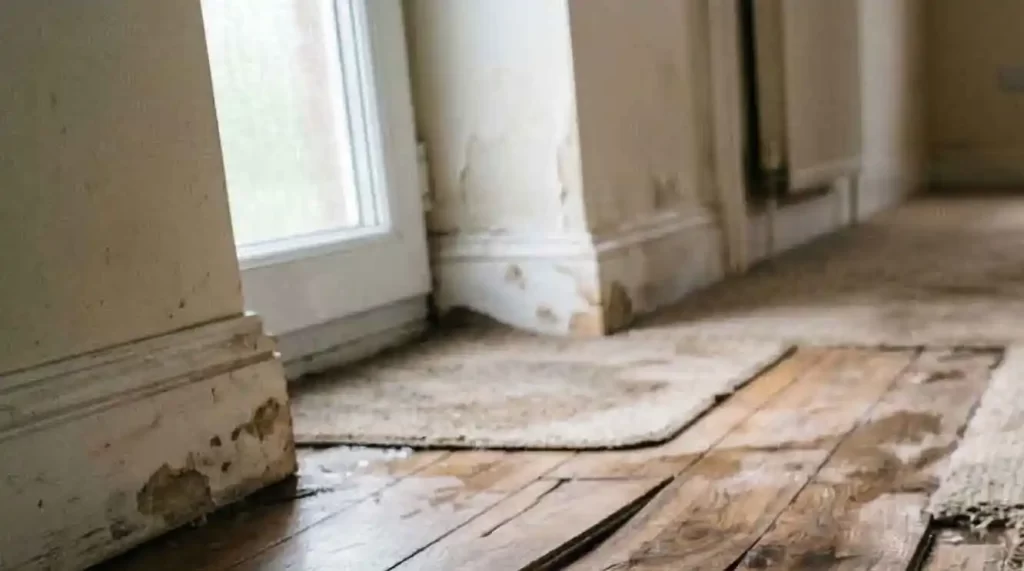
No matter the cause, water rarely stays where you see it. It wicks under baseboards, migrates through subfloors, and lingers in pad, grout lines, and seams. That is how secondary damage starts: re-wetting, lingering moisture, hidden mold risk, odor absorption, corrosion, warping, and finish failures.
First, a safety-first triage for any wet floor
Before you compare materials, do three things:
1) Stop the source and reduce risk
If water is near outlets, appliances, or equipment, avoid stepping into it. Keep people out of the affected area and shut off the water source if you can do so safely.
2) Document what happened
Take wide photos of the room, then close-ups of seams, edges, and any visible staining. This helps track progression, especially if materials dry on the surface but stay wet underneath.
3) Start controlled drying without trapping moisture
Increase airflow, but do not “seal in” dampness with paint, caulk, or rushed patching. Surface dryness is not proof that the subfloor and underlayment are dry.
Tile floors: “water-resistant” is not “waterproof.”
Tile and grout often look fine after a leak, which makes them deceptively risky.
How water gets under tile
Water can travel through grout lines, small cracks, and transitions at tubs, vanities, and door thresholds. Once under the tile, it can soak the thinset, underlayment, and subfloor. That is when you see delayed symptoms.
Signs tile may be hiding moisture
- A musty odor that persists after the surface dries
- Grout cracking or crumbling near the wet area
- Tiles that sound hollow when tapped
- Loose tiles or “soft” spots at transitions
What to do right away
Remove standing water, then focus on drying the space, not just the tile surface. If moisture likely reached the subfloor, a professional assessment becomes important because trapped moisture can lead to finish failures and recurring odors.
Wood floors: swelling, cupping, and permanent movement
Wood flooring reacts fast because it is hygroscopic, meaning it absorbs moisture from both liquid water and humid air.
What water does to wood flooring
- Cupping: board edges rise higher than the center
- Crowning: the center rises higher than the edges (often after aggressive surface drying while moisture remains below)
- Gapping: boards shrink as they dry unevenly
- Finish damage: cloudiness, peeling, or staining
Even engineered wood can delaminate if water reaches the core layers or sits at seams.
What to do right away
- Remove standing water quickly and safely.
- Avoid high heat aimed directly at the surface if you suspect water is trapped below. Drying must be balanced so you do not “lock” moisture in the subfloor.
- If boards are lifting, soft, or separating at seams, stop DIY efforts and get a professional evaluation.
Carpet: the sponge that holds odor and moisture
Carpet can look salvageable while the pad stays saturated. That pad is often where odor and microbial growth risk accelerate.
Why carpet is uniquely vulnerable
Carpet fibers absorb water, but the bigger problem is what happens below: padding can stay wet, and moisture can move into tack strips, baseboards, and subfloors. In commercial corridors and seasonal visitor districts, this can translate to downtime and persistent odor complaints if drying is incomplete.
Signs carpet damage is worsening
- Squishing sound underfoot
- Persistent musty odor
- Staining that spreads beyond the original wet area
- Wet carpet that “re-wets” after you think it is dry
What to do right away
If the water is clean and you caught it fast, rapid extraction and controlled drying can sometimes stabilize the situation. If water is dirty, unknown, or contaminated, treat it as a safety issue and avoid spreading it through foot traffic or fans that blow across the wet pad.
The common denominator: what is happening below the surface
Tile, wood, and carpet fail differently, but the decision point is the same:
- Is water trapped in the subfloor or wall base?
- Did the material absorb contamination?
- Are you seeing re-wetting, odors, or movement after drying?
This is where professional mitigation matters. Our water damage restoration includes advanced equipment to extract standing water, dry affected areas, and prevent long-term damage, and it also states 24/7 Emergency Response and that services are available around the clock for water damage needs.
Learn what that process can involve on our Water Damage Restoration page.
Practical checklist: what to do and what not to do
Do this
- Stop the water source (or shut off the main supply if needed)
- Photograph seams, edges, and the wet boundary
- Extract standing water promptly
- Increase airflow and reduce humidity
- Monitor for re-wetting, odor, and movement in materials
Avoid this
- Walking into wet areas with an electrical risk
- Assuming “looks dry” means “is dry.”
- Sealing damp flooring or baseboards
- Overheating the surface while moisture remains below
- Treating questionable water as a normal cleanup
When it’s time to call for help (especially for businesses and property managers)
If any of these are true, it is usually time to stop DIY and bring in qualified restoration professionals:
- Water spread into multiple rooms or under flooring systems
- You suspect moisture under tile or wood
- The carpet pad stayed wet for more than a short period
- Odors persist after drying attempts
- The water source is unknown, dirty, or potentially contaminated
- Downtime or tenant disruption is escalating
We are Semper Fi Floor Care and Restoration, Licensed Contractor – ROC# 349271, and Veteran-owned and operated.
In those higher-stakes situations, our goal is to help you dry thoroughly, reduce secondary damage, and restore the space to a safe, presentable condition.
Frequently Asked Questions
1) Can tile survive water damage without replacement?
Sometimes, but tile can hide moisture underneath. If water reaches the subfloor, you may not see problems immediately. Watch for hollow-sounding tiles, cracked grout, or odors that persist after surface drying.
2) How can I tell if water is trapped under tile?
Common clues include musty odor, loose tiles, grout deterioration, or a “spongy” feel at transitions. If symptoms show up days later, moisture may have migrated under the tile field. A professional assessment can confirm what is wet below the surface.
3) What’s the biggest risk with hardwood floors after a leak?
Uneven moisture causes movement: cupping, crowning, gapping, and finish failures. Even if the top looks dry, moisture can remain below and keep pushing boards out of shape. Balanced drying matters more than fast surface heat.
4) Can engineered wood be saved after water exposure?
It depends on how much water reached the core layers and how long it stayed wet. Engineered wood can delaminate at seams or swell at edges. If boards lift or separate, you likely need a professional evaluation.
5) Is carpet always ruined after water damage?
Not always, especially if clean water exposure is short and extraction and drying happen quickly. The pad and subfloor are often the deciding factors. Persistent odor, re-wetting, or widespread saturation usually signals a bigger mitigation need.
6) What should property managers prioritize after a water event on carpet?
Start with safety, documentation, and containment. Prevent foot traffic from spreading moisture into adjacent units or corridors, and focus on fast extraction and controlled drying. If odors develop or the pad stays wet, escalate quickly to professional mitigation.
7) Why do floors sometimes smell worse after they “dry”?
Odors often come from trapped moisture in the pad, underlayment, or subfloors, not the visible surface. As humidity shifts, damp materials can re-release odor. If the smell persists, it’s a sign you may have hidden moisture.
8) Can I run fans on wet floors right away?
Airflow helps, but placement matters. Fans can spread moisture and contaminants if the water is dirty or unknown. For wood, aggressive surface drying while moisture remains below can worsen movement, so controlled drying is safer.
9) When should I consider professional water damage restoration?
If water spreads under flooring systems, you suspect hidden moisture, or you see swelling, looseness, or recurring dampness, professional mitigation is often the safest path. Our water restoration includes extraction, drying, and prevention of long-term damage, and services are available around the clock.
10) What does “24/7 emergency response” mean for water damage situations?
It means 24/7 Emergency Response and that water damage services are available around the clock. If the situation is escalating, Call Now – (928) 504-6179 to move from uncertainty to a plan.
11) Should I remove baseboards if my floor gets wet?
Baseboards can hide wicking and moisture at the wall base, but removing materials without a plan can increase the repair scope. If you see swelling, staining, or soft drywall near the floor line, get an assessment before you start demolition.
12) What’s the fastest way to reach you?
For immediate assistance, Call Now – (928) 504-6179.
