

In lower-desert properties, water damage can begin with a monsoon roof leak, wind-driven rain through a window line, a broken pipe, an appliance failure, or floodwater pushing into a doorway. In border communities, agricultural corridors, commercial corridors, and outlying desert communities, the visible puddle is often only part of the problem. Water can move under flooring, into drywall, behind baseboards, and into contents before the full scope is obvious.
That is why water damage restoration is not the same thing as mopping up and waiting to see what happens next. Restoration is a process of cleaning, repairing, and restoring a property after water intrusion, rather than a simple surface cleanup.
A practical restoration process follows a clear sequence: identify what got wet, remove standing water, dry hidden materials, clean affected areas, and then repair or replace what could not be saved.
Water damage restoration can involve restoration, basement water removal, flood cleanup, sewage backup cleanup, mold inspection, mold remediation, and commercial cleaning and restoration services.
The first step is assessment, not demolition
The earliest decisions shape the rest of the job, especially when the source, contamination level, or spread pattern is still unclear.
Identify the source and the water type
The first question is where the water came from. A clean supply-line leak is not handled the same way as outside floodwater or a sewage backup. Professionals classify water damage by category, including-
- Clean water,
- Gray water,
- And Black water,
Because contamination changes both safety decisions and what materials may be salvageable.
That matters in lower-desert properties where storm runoff, flash flooding, and sewage-related events can turn a basic drying job into a contamination cleanup.
Map visible and hidden spread
Assessment also means checking where the moisture traveled. Floors, trim, cabinets, wall cavities, and stored contents often hold water longer than the surface suggests. That is why looking into the step-by-step water damage guide and secondary water damage article can help focus on what happens after the obvious water is gone.
Hidden moisture is often what turns a limited incident into a wider repair job.
Water removal comes before everything else
Extraction is the stabilizing step that slows the spread and makes the rest of the process possible.
Remove standing water and isolate the wet zone
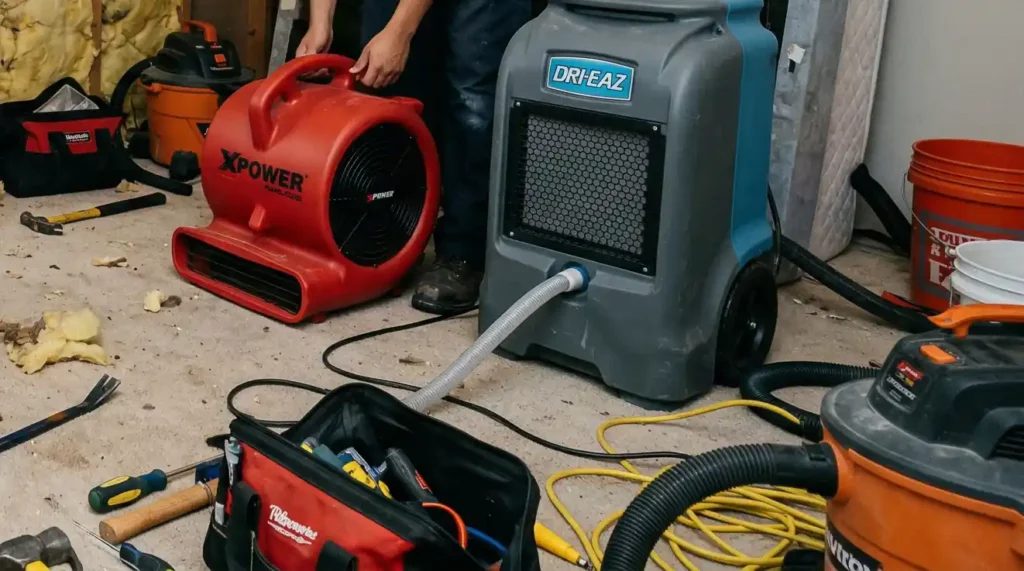
Once the area is safe to enter, restoration work moves to water removal. This phase involves extracting standing water from the property, and the water damage restoration includes extracting standing water and drying affected areas. Removing liquid water early helps reduce migration into nearby rooms, flooring systems, and soft goods.
It also helps keep a residential or commercial loss from expanding while the rest of the plan is still being built.
Separate salvageable contents from damaged materials
During removal, contents are usually moved or separated based on condition and exposure. Clean-water incidents may leave more room to dry and preserve materials. Dirty-water or sewage events narrow those options quickly.
Sewage backup cleanup is a separate restoration service and hazardous, which is an important distinction for property owners deciding whether an incident is a simple cleanup or a contamination event.
If the affected area includes multiple rooms, recurring dampness, or any sign that water moved beyond the visible surface, get professional assistance right away.
Call (928) 291-2218
Drying and dehumidification are where the real restoration happens
Water removal handles the obvious damage. Drying addresses what is still trapped in materials and assemblies.
Dry the structure, not just the surface
Hidden moisture can linger in walls, floors, and furniture, which is why drying and dehumidification are separate steps after extraction. In practice, this is the point where restoration either stays on track or starts missing hidden damage.
A room can look dry within hours while deeper layers remain wet under flooring, inside drywall, or behind cabinetry. The hidden damage timeline can help understand that point directly by explaining that “looks dry” is not the same as actually dry.
Why timing matters so much
The EPA says it is important to dry water-damaged areas and items within 24 to 48 hours to help prevent mold growth. That benchmark matters because the drying phase is not only about comfort or appearance. It is about preventing moisture from turning into a mold problem, a lingering odor problem, or a more expensive repair problem.
That same 24-to-48-hour window is one reason the thorough drying is central to the restoration process.
Cleaning, sanitizing, and deciding what stays
Once the structure is dry, the process shifts toward contamination control, odor concerns, and material decisions.
Clean affected surfaces and contents
Cleaning and sanitization are dedicated steps, using specialized cleaning products to sanitize affected surfaces and help prevent mold growth. This step matters most when water carries soil, debris, odor, or contamination into the property.
In homes and businesses, this may include flooring, lower walls, trim, furniture, and high-contact surfaces that need more than simple drying.
Remove materials that cannot recover well
Not everything should stay in place. Some materials trap moisture, deform, or keep absorbing odor after the event. Warped floors, bubbling paint, and recurring odor are signs that the first cleanup did not fully solve the problem.
In those cases, the restoration decision is no longer just “dry it.” It becomes “dry what can recover and remove what keeps holding damage.”
Repairs and final inspection close the loop
Restoration is not finished when the water is gone. It ends when the affected areas have been checked, stabilized, and returned to usable condition.
Repair or replace damaged materials
Repairs and restoration are the phase that brings the property back to its original condition, from smaller repairs up to larger reconstruction needs. That can include drywall, trim, flooring, ceiling areas, or other materials affected by the water path.
The exact repair scope depends on how far the moisture spread, how quickly drying began, and whether contamination changed what could be saved.
Finish with a walkthrough mindset
A strong process does not stop at “it seems fine now.” That is why the final inspection checklist after water damage restoration is the last step that matters. The final review is where lingering odor, missed staining, soft spots, cosmetic failures, or signs of hidden moisture are more likely to be caught before the property returns fully to normal use.
The EPA’s 24-to-48-hour drying guidance matters here again because a rushed or incomplete dry-out often reveals itself later through smell, swelling, or finish failure.
Why the process matters in lower-desert properties
In this service footprint, fast weather shifts and mixed property types make a structured process more important, not less.
Water damage restoration is performed in sequence because water damage itself is layered. In lower-desert homes and businesses, one event can combine water intrusion, dust, contamination, hidden moisture, and interrupted operations.
A real restoration process handles each of those in order: assess, remove water, dry thoroughly, clean and sanitize, repair, and verify the result. That is what helps keep a monsoon leak, plumbing failure, or flood intrusion from turning into a much bigger property problem later.
Frequently Asked Questions
1. What is the first step in water damage restoration?
The first step is assessment. That means identifying the source of the water, checking what materials were affected, and deciding whether the water is clean, dirty, or highly contaminated. Those early decisions shape the removal, drying, and repair plan.
2. Is water damage restoration just water removal?
No. Water removal is only one stage. The full process also includes drying, dehumidification, cleaning, sanitizing, repairs, and a final review to make sure hidden moisture or damage was not left behind.
3. Why do professionals separate water by category?
Because the source affects safety and salvage decisions. Clean water from a pipe is different from gray water from an appliance issue, and both are different from black water, such as sewage or floodwater. The cleanup path changes with the contamination risk.
4. What happens right after standing water is removed?
The next phase is drying and dehumidification. This is where trapped moisture in walls, floors, and furniture is addressed so the loss does not keep spreading after the visible water is gone.
5. Why is drying so important if the room already looks dry?
Visible dryness does not confirm that deeper materials are dry. Moisture can remain under flooring, inside drywall, behind cabinets, or in insulation, and that leftover moisture can cause odor, swelling, and later repair issues.
6. How fast does the drying phase need to happen?
The EPA says water-damaged areas and items should be dried within 24 to 48 hours to help prevent mold growth. That is why restoration work prioritizes extraction and dry-out early in the process.
7. When does cleaning and sanitizing become part of restoration?
Cleaning and sanitizing are especially important when water carries soil, debris, or contamination into the property. This is a separate phase because drying alone does not address sanitation or odor concerns.
8. Are repairs always necessary after water damage?
Not always, but they are common when materials swell, stain, soften, delaminate, or keep holding moisture. The repair phase depends on how quickly the property was dried and whether materials remained structurally or cosmetically sound afterward.
9. What services relate most directly to this process?
Relevant services include-
1. Water damage restoration,
2. Basement water removal,
3. Flood cleanup,
4. Sewage backup cleanup,
5. Mold inspection,
6. And mold remediation.
Those services match the main stages of response, dry-out, contamination control, and secondary damage management.
10. Why does a final inspection matter after restoration?
Because some problems show up late. A final walkthrough helps identify remaining odor, staining, soft spots, finish damage, or signs that hidden moisture was not fully addressed before the space goes back into regular use.
11. How is restoration different for commercial properties?
Commercial losses may affect operations, tenant spaces, staff areas, and customer-facing zones all at once. That makes organized assessment, controlled drying, and clear repair sequencing especially important so disruption does not spread beyond the wet area.
12. What should property owners do while the process is starting?
Keep the response practical and safety-led. Avoid electrical hazards, separate obviously affected contents when safe, document the damage, and avoid assuming the area is dry just because the surface looks better.
