

In lower-desert properties, water damage rarely stays simple. A monsoon downpour can push rain through roof openings or around windows. A plumbing break can soak wall cavities before anyone notices. Even in a dry climate, once water gets inside, trapped moisture can linger in drywall, flooring, insulation, and contents long after the surface looks better.
Arizona’s monsoon season runs from June through September and can bring heavy rain, high winds, flash flooding, and dust storms, all of which can turn a small leak into a bigger drying problem.
That is where dehumidifiers become essential. In water damage restoration, they do not replace extraction or cleanup. They support the drying process by pulling water vapor out of the air so moisture can keep leaving wet materials.
For homeowners, renters, commercial property owners, facility managers, and property managers, that matters because hidden dampness is often what drives the next round of damage: swelling, odor, staining, and mold growth. The EPA says water-damaged areas and items should be dried within 24 to 48 hours to help prevent mold growth.
Dehumidifiers do more than “dry the room.”
What dehumidifiers actually do during restoration and why they matter after visible water is gone.
After a water loss, the first job is usually removing standing water. But extraction alone does not solve the problem. Wet drywall, carpet padding, wood trim, subfloors, and insulation continue releasing moisture into the air.
If that moisture stays trapped indoors, the drying process slows down, and the building can remain vulnerable even when floors no longer look wet. Dehumidification is a key step in preventing secondary damage while drying structures and contents.
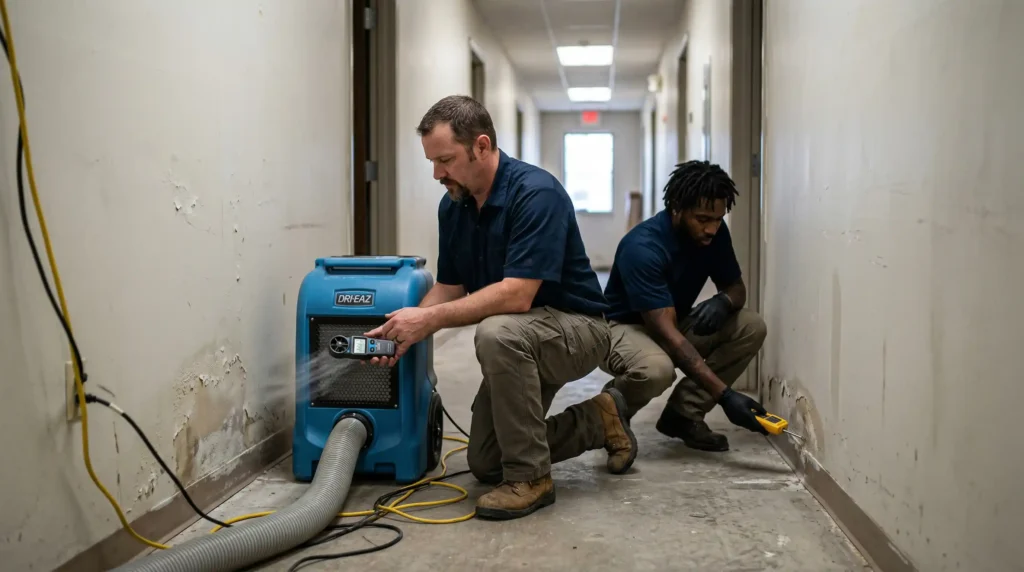
A dehumidifier lowers indoor humidity so wet materials can keep evaporating. That helps the restoration process move beyond visible cleanup and into true structural drying. It is one reason water damage restoration is usually more than mopping, fans, and open windows.
Structural drying and dehumidification are part of the process for removing excess moisture from walls, floors, and ceilings.
Why air movement alone is not enough
Fans move air across wet surfaces, which helps evaporation. But if the air in the room stays humid, evaporation slows down. Dehumidifiers solve that bottleneck by removing moisture from the air itself, allowing wet building materials to continue drying. This is especially important when moisture has moved below flooring, behind cabinets, or into wall cavities.
Why lower-desert properties still face hidden moisture risk
Dry outdoor weather does not guarantee fast indoor drying. Closed buildings, layered materials, limited airflow, and storm-driven intrusion can all trap moisture inside assemblies.
In border communities, rural desert communities, and commercial corridors, the bigger issue is often not the climate outside but the moisture sealed inside the structure after a leak, flood, or roof event. The EPA’s 24-to-48-hour drying window still applies.
What dehumidifiers help prevent after a leak or flood
Let’s look at the problems that humidity control can reduce during cleanup and decision-making.
Dehumidifiers are important because they help reduce the conditions that allow damage to spread. Secondary damage can include-
- Warped flooring,
- Swollen trim,
- Peeling finishes,
- Persistent odors,
- And mold growth.
Once moisture remains in materials, the problem can grow behind walls and under flooring, even when the surface appears dry. Knowing what happens when water damage is not dried properly can prove helpful because it helps understand the hidden timeline of damage after the obvious water is gone.
Mold risk rises fast when drying is delayed
Mold does not need a dramatic flood to become a problem. It needs moisture, a food source, and time. The EPA says to dry water-damaged materials within 24 to 48 hours to help prevent mold growth, and delayed drying is a key reason moisture events turn into remediation projects. That is why dehumidification matters early, not as an afterthought.
Look into how fast the mold grows after water damage to get a better understanding of the timeline.
Contaminated water changes the stakes
When water involves storm runoff, flooding, or sewage, the issue is no longer only drying. CDC guidance warns that floodwater can contain waste, chemicals, and other contaminants. That means dehumidifiers still matter, but they are only one piece of the response. Cleanup decisions may also involve the removal of affected materials and more controlled sanitation steps.
In those situations, flood cleanup and sewage-related response become more relevant than simple drying alone.
If you cannot fully dry the affected area within the EPA’s 24-to-48-hour window, or if water has reached walls, subfloors, or contaminated materials,
Call (928) 291-2218
When a dehumidifier helps, and when it is not enough
Decide whether humidity control is enough or whether the situation has moved beyond DIY.
A dehumidifier can be useful after a minor, clean-water incident that was discovered quickly. It can support drying in a small room after a supply-line leak, appliance overflow, or localized plumbing failure. But it is usually not enough on its own when water has traveled into multiple rooms, saturated porous materials, affected ceilings or insulation, or involved floodwater or sewage.
Industry guidance from restoration experts consistently treats dehumidification as part of a broader drying system that includes extraction, air movement, monitoring, and material-specific decisions.
Signs the moisture problem is bigger than it looks
Watch for cupping floors, swollen baseboards, bubbling paint, damp odors, stained ceilings, or a room that still feels muggy days later. Those are signs that water may still be inside structural materials. Preventing secondary water damage after cleanup and attic water damage both reflect the same practical lesson: visible dryness is not the same as dry materials.
Commercial properties need faster decision-making
For commercial spaces, delays can affect tenants, staff, inventory, and operations. Humidity control matters because lingering moisture can spread beyond the original wet area into finishes, contents, and odor-sensitive spaces.
Flood cleanup and restoration services are available for both residential and commercial properties, which makes drying decisions especially relevant in tenant-facing environments.
The bigger restoration lesson
Dehumidifiers matter because water damage is not only about the water you can see. It is about the moisture that remains after the rush of emergency cleanup is over. In lower-desert homes and businesses, that can happen after monsoon-driven intrusion, roof leaks, plumbing failures, appliance accidents, or floodwater entering from outside.
A dehumidifier helps create the conditions for proper drying, but the real goal is broader: reduce hidden moisture, limit secondary damage, and make better restoration decisions before the loss expands. The EPA’s 24-to-48-hour guidance is a useful benchmark throughout that process, not just on day one.
When humidity control is paired with timely extraction, cleaning, and informed material decisions, the odds of a longer and more expensive recovery go down. That is the real role of dehumidifiers in water damage restoration.
Frequently Asked Questions
1. What does a dehumidifier actually do after water damage?
A dehumidifier removes water vapor from indoor air so wet materials can keep drying. That matters because drywall, wood, carpet, and insulation often stay damp after visible water is removed. It supports structural drying, but it does not replace extraction, cleanup, or material assessment.
2. Can a dehumidifier prevent mold after a leak?
It can help reduce mold risk by lowering indoor humidity and supporting faster drying. But it is only one part of the response. The EPA says water-damaged areas and items should be dried within 24 to 48 hours to help prevent mold growth, so the full dry-out still matters.
3. Is a dehumidifier enough after monsoon-related water intrusion?
Sometimes, but not always. If rainwater has entered through a roof opening, broken window, or wall assembly, moisture may move into insulation, trim, and subfloor layers. In those cases, dehumidification may help, but extraction, inspection, and more complete drying decisions are often needed.
4. Should you run fans and a dehumidifier at the same time?
Often, yes, because the two tools do different jobs. Fans increase evaporation from wet surfaces, while the dehumidifier removes that moisture from the air. That combination is commonly described as part of the drying process and aligns with the structural drying and dehumidification.
5. How long should a dehumidifier run after water damage?
There is no single time that fits every loss. It depends on how much water entered, what materials were affected, and whether moisture spread into hidden spaces. The better question is whether materials have actually dried, because a room can look dry while deeper layers are still holding moisture.
6. Can you use a household dehumidifier for a flooded room?
A household unit may help with a very small, clean-water event caught early. It is less reliable for larger losses, widespread moisture, saturated building materials, or contaminated water. Once water reaches walls, subfloors, or multiple rooms, the drying plan usually needs to be more comprehensive.
7. Why does the room still smell musty if the floor looks dry?
Musty odor often signals moisture that remains in porous materials or hidden cavities. Wet carpet padding, baseboards, drywall paper, or underlayment can hold dampness after the surface feels better. That is one reason odor should be treated as a warning sign, not just a comfort issue.
8. Do dehumidifiers help after appliance leaks and plumbing failures?
Yes, especially when the water is clean and the incident is discovered quickly. Appliance overflows, supply-line leaks, and sudden interior water events can all leave moisture in surrounding materials. Dehumidification helps support the drying phase after the source is stopped and visible water is removed.
9. What if the water came from flooding or sewage backup?
That is a different level of risk. CDC guidance warns that floodwater can contain contaminants, and sewage backup cleanup is hazardous work that should not be handled without professionals. In those cases, dehumidifiers still matter, but sanitation and material-removal decisions become just as important.
10. Are dehumidifiers useful in commercial properties too?
Yes. In commercial spaces, moisture can affect finishes, contents, indoor conditions, and operations beyond the original wet zone. Flood cleanup and related restoration services are available for both residential and commercial properties, which makes humidity control part of broader downtime and recovery planning.
11. When should you move beyond DIY drying?
Move beyond DIY when water has reached walls, ceilings, insulation, subfloors, or multiple rooms, or when you suspect contamination. Also, escalate if the area cannot be dried within the EPA’s 24-to-48-hour window. At that point, the concern is not just cleanup but preventing secondary damage and mold.
12. What related services are relevant if moisture lingers?
Services include water damage restoration, flood cleanup, sewage backup cleanup, mold inspection, and mold remediation. Those services become more relevant when drying is delayed, contamination is present, or moisture has already led to visible growth or persistent odor.
