


During the June-through-September regional monsoon season, storms can push rain, runoff, dust, and water across patios. A sliding glass door track may look small until it starts holding water, overflowing inside, or dampening the flooring after each storm.
The problem starts when drainage, slope, seals, or surrounding materials stop working together. Then water can move under flooring, behind trim, into drywall, or below commercial entry areas.
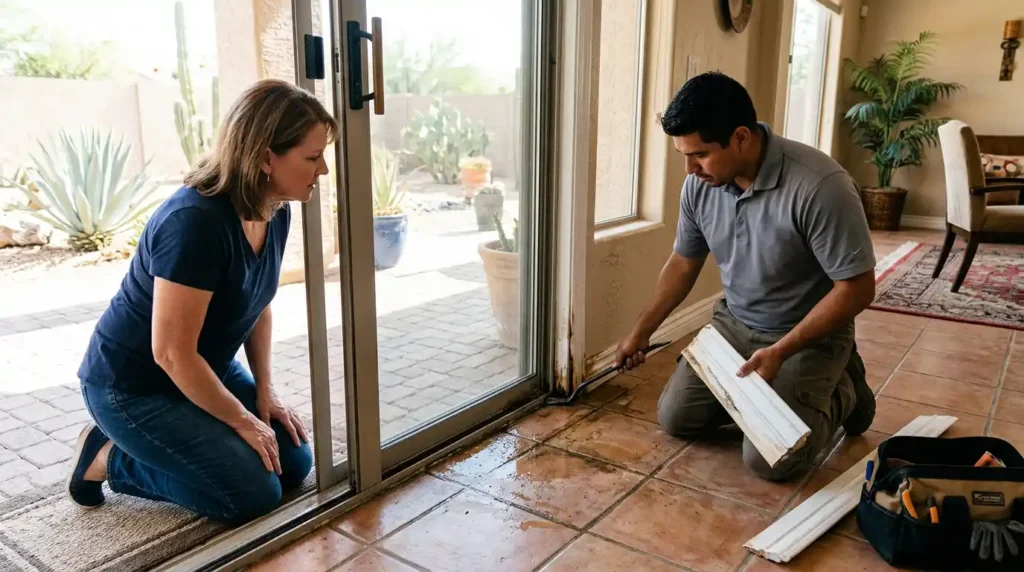
Why sliding tracks leak during lower-desert storms
Patio-door leaks usually come from a drainage or building-envelope problem, not from glass alone.
Blocked weep holes and dust-packed tracks
Sliding glass tracks often include small drainage openings that let water escape to the exterior. Dust, sand, leaves, pet hair, mud, insects, and hard water residue can block those openings. In agricultural corridors and outlying desert communities, wind can pack fine debris into tracks quickly.
Once the track cannot drain as designed, water rises and spills toward the interior threshold.
Wind-driven rain and patio grading
Outflow winds can push rain against doors at angles the assembly does not see during light showers. If the patio slopes toward the door, water may collect at the threshold instead of moving away.
Lake-adjacent properties and commercial corridors with hardscape areas can see runoff move across concrete and overwhelm a track that would normally drain.
Worn seals, loose frames, and aging rollers
Water may also enter when weatherstripping compresses, rollers sag, door panels stop sitting square, or caulking separates around the frame. A door that drags, rattles, or leaves uneven gaps can allow wind and water to work past the seal. Repeated small leaks can hide under baseboards before obvious staining appears.
When a track leak becomes water damage
A wet track becomes a restoration issue when water leaves the door assembly and reaches absorbent materials.
Tile may tolerate brief surface moisture, but grout lines, wall base, carpet edges, laminate, wood flooring, drywall, cabinets, and insulation are more vulnerable. In rentals and commercial spaces, foot traffic can spread moisture into mats, rugs, upholstery, and adjacent flooring.
Warning signs include moisture that returns after you wipe the track, swollen baseboards, musty odor, darkened grout, loose flooring, bubbling paint, soft drywall, or water marks at both ends of the door. The risk rises when stormwater may have carried soil, yard debris, or contaminants across the threshold.
What to do before water spreads past the door
The first goal is to limit the spread while staying safe and avoiding hidden damage.
- Wipe standing water from the track and nearby hard surfaces if you can do so safely.
- Keep electrical cords, power strips, and small appliances away from damp flooring. Move rugs, fabric items, boxes, and furniture legs out of the wet zone.
- Take photos before moving damaged items, in case you may need documentation later.
- Do not seal the interior edge with caulk while the area is wet. That can trap moisture inside the frame or wall.
- Also, avoid aiming household fans at areas that may involve dirty stormwater or visible mold.
- First, identify where the water traveled, what materials got wet, and whether the source is still active.
Prompt drying matters. EPA guidance says to dry water-damaged materials within 24 to 48 hours to help prevent mold growth. That window does not mean every situation becomes moldy after two days. It does mean that delayed drying can make cleanup more complicated, especially behind trim or under flooring.
For immediate steps, see our guide on what to do first after water damage.
Picking the right response before damage spreads
Choose the response level based on where the water went, not just how much you can see.
A maintenance fix may be enough when water stays inside the track and drains normally after cleaning. A door or glass professional may be needed when rollers, seals, flashing, slope, or installation defects are the cause.
Restoration help becomes more important when flooring, drywall, trim, cabinets, carpet, rugs, or upholstery are wet, or when the leak has happened more than once.
For a deeper context on the cleanup scope, review our overview of water damage restoration.
Red flags that can lead to secondary damage
- Water crosses the threshold during every hard rain.
- Baseboards, drywall, or flooring stay damp after the track is dry.
- A musty odor appears near the door or in a nearby room.
- Dust, mud, or dirty runoff entered with the water.
What to ask before approving a restoration team
- What materials appear wet beyond the visible track?
- How will the affected area be assessed before drying begins?
- What cleaning or sanitizing steps fit the water source?
- How will progress and next steps be explained?
- What should be documented before repairs or replacement?
What a sound recovery process should look like
A good recovery plan should make the next decision clearer, not more confusing.
Expect the process to start with a walk-through of visible damage, suspected hidden moisture, and the likely water path. The plan should separate door repair needs from water cleanup needs. It should also explain what can be dried, what may need removal, and what areas should be watched after the next rain.
Water extraction, structural drying, dehumidification, damage assessment, sanitization, odor removal, mold prevention or remediation, and repairs may be part of the water damage restoration services when they are relevant to the loss. Communication should stay practical.
You should know what is being addressed now, what depends on findings, and what follow-up decisions may be needed.
If the area smells damp or the leak has been recurring, learn how moisture can affect indoor conditions in our article on water damage and indoor air quality.
Keep patio-door water from becoming whole-room damage
A sliding-track leak is easiest to manage when you treat it as a water-path problem.
Clean tracks before storm season, check weep holes after dust events, and watch whether patio water flows away from the door. During the June-through-September monsoon pattern, recheck doors after heavy rain and wind.
If water reaches absorbent materials, remember the 24-to-48-hour drying window and move from maintenance mode to damage assessment. For drying variables, review the water damage drying time.
Commercial properties should also think about access. Wet entries can affect tenant movement, customer access, floor safety, and business interruption. Property managers should document repeat leaks, tenant reports, photos, and prior maintenance.
When patio-door water has moved into walls, floors, rugs, carpet edges, or interior surfaces, Semper Fi can help you decide the next step.
Frequently Asked Questions
1. Why does my sliding glass door track fill with water?
Tracks are designed to collect and drain some water, but they can overflow when drainage openings clog or when runoff reaches the threshold too quickly. Dust, sand, mud, pet hair, and debris can block the path out. Wind-driven rain can also push more water into the track than it can drain.
2. Is water in the track always a restoration problem?
Not always. If water stays in the track, drains outside, and does not wet the flooring or trim, maintenance may be enough. It becomes a restoration concern when water crosses the threshold, reaches absorbent materials, or keeps returning after storms.
3. What should I check first after rain comes through a patio door?
- Check whether water stayed in the track or moved into the flooring, baseboards, drywall, rugs, or nearby furniture.
- Look at both ends of the door because water often travels sideways before appearing inside.
- Take photos and avoid covering wet areas before you understand the path.
4. Can dust storms make sliding door leaks worse?
Yes. Blowing dust can pack tracks and drainage openings with fine debris. Once a storm brings rain, that blocked drainage path may cause water to back up and spill inside. This is common for lower-desert homes, agricultural corridors, and outlying desert properties.
5. How fast should wet flooring near a patio door be dried?
The EPA recommends drying water-damaged materials within 24 to 48 hours to help prevent mold growth. That window is especially important when carpet edges, drywall, trim, or insulation are wet. Hidden moisture can stay behind finished surfaces after the visible puddle is gone.
6. Should I caulk the inside of the sliding door track?
Do not rush to caulk the inside edge while the area is wet. Caulk can trap moisture inside the frame, wall, or flooring assembly. The better step is to find the drainage or exterior water-entry problem first, then address wet materials.
7. When should a door repair professional be involved?
A door or glass professional may be needed when rollers, seals, frame alignment, flashing, or patio slope are causing the leak. A restoration response may still be needed if water has already reached building materials. Door repair stops the source, while restoration addresses the damage left behind.
8. What signs suggest hidden moisture near a sliding door?
Musty odor, swollen baseboards, soft drywall, loose flooring, darkened grout, bubbling paint, and recurring dampness can all suggest moisture beyond the visible track. Staining near the corners of the frame is also important. Repeated small leaks deserve closer attention.
9. Are patio-door leaks a concern for commercial properties?
Yes. Water at an entry can affect customer access, tenant movement, floor safety, mats, carpet edges, and business continuity. Property managers should document when leaks happen, which areas get wet, and what maintenance has already been completed. Repeat leaks often need both source correction and moisture assessment.
10. Why are sliding doors more vulnerable during the monsoon season?
The regional monsoon season runs from June through September, bringing rain, wind, dust, and fast-changing runoff patterns. Wind can drive water into tracks, while dust can block drainage before rain arrives. Checking tracks before and after storms helps catch problems early.
