


Seasonal shifts have a way of exposing weak points in buildings, even brand-new ones. Wind-driven rain tests window and door seals, HVAC systems run hard and can create condensation, and seasonal turnovers or tenant move-outs reveal slow drips that no one noticed while the property was busy. So when water shows up in a newly built home, the big question becomes: Is this common, or is something seriously wrong?
The honest answer is that water damage in new construction is not rare. But it is never something to shrug off. Newer materials can fail just as quickly as older ones when moisture gets trapped, and “secondary damage” is where costs and disruption climb fast.
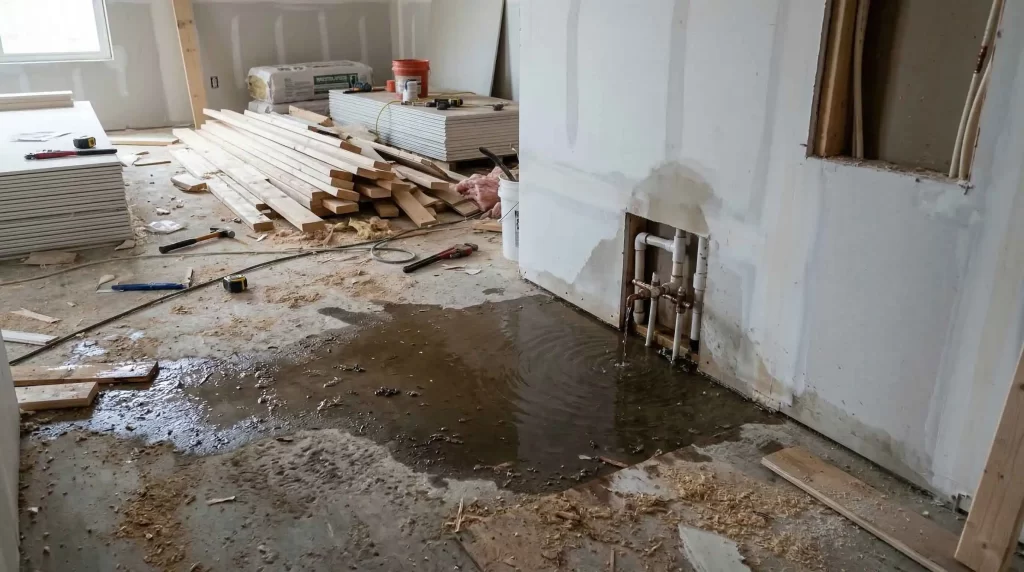
Is water damage in a newly built home common?
It can be. New builds often have modern plumbing, fresh roofing, and recently installed windows, but they also have a unique set of risk factors:
- Systems are newly connected and still settling into real-world use.
- Minor installation errors may not show up until pressure, temperature swings, or daily routine stress the system.
- Some moisture is introduced during construction (paint, drywall mud, tile work), and if ventilation is limited, humidity can linger.
What matters most is not the age of the home. It’s whether moisture is controlled quickly and completely.
The key risk: secondary damage starts early
The first leak or intrusion is only the beginning. If drying is incomplete, moisture can migrate into subfloors, baseboards, wall cavities, insulation, and cabinets. That can lead to:
- Re-wetting cycles (materials seem dry, then feel damp again)
- Hidden mold risk
- Odor absorption into porous materials
- Warping, corrosion, and finish failures like bubbling paint
If you’re already dealing with visible water, don’t wait for the “second chapter” to appear.
If water is in the structure or you suspect hidden moisture, call Semper Fi at 928-504-6179. We provide 24/7 emergency water damage restoration and use advanced equipment to extract standing water and dry affected areas to help prevent long-term damage.
Why new homes still get leaks and water intrusion
New construction water problems usually fall into a few predictable categories.
Plumbing connection issues and small supply leaks
In the first year of occupancy, plumbing is getting its first real workout. A slightly loose connection under a sink, behind a toilet, or at an appliance line may drip slowly and stay hidden until flooring stains or cabinets swell.
Watch for: recurring musty odor near a fixture, cabinet base swelling, unexplained dampness, or a small water spot that grows after use.
Drain and overflow events
Drain-side leaks can be tricky because they may only appear while the system is running. A poorly seated gasket or a small alignment issue might show up as intermittent moisture, not a constant drip.
Watch for: dampness after showers, dishwashing cycles, or heavy laundry days.
HVAC condensation and humidity problems
Newer homes can be tighter, which is great for efficiency, but it also means moisture can build up if ventilation is inadequate or systems are not balanced. Condensation on vents, near air handlers, or in utility closets can become a persistent moisture source.
Watch for: condensation streaks, damp drywall near registers, or a closet that always smells “off.”
Building envelope gaps: windows, doors, and roof transitions
Water intrusion is not always a “leak.” Sometimes it’s wind-driven rain finding a path through flashing details, sealants, or poorly integrated transitions.
Watch for: staining near window corners, wet carpet edges after storms, or dampness at ceiling lines near exterior walls.
Drainage and exterior water management
New grading can settle. Downspouts can discharge too close to the structure. Irrigation overspray can soak walls repeatedly. Even in dry climates, repeated wetting matters.
Watch for: damp baseboards on an exterior wall, moisture that appears after watering days, or pooling near entry thresholds.
What’s “normal settling” vs. a real water damage problem?
It’s normal for a new home to have minor punch-list items. It’s not normal for moisture to persist, return, or spread.
Water damage is more likely to be serious when:
- The same area gets wet more than once
- Flooring begins to buckle or feel spongy
- Paint bubbles or caulk joints open up
- Odors develop and don’t fade after drying the surface
- Water reached multiple layers (finish flooring, subfloor, drywall, insulation)
When moisture is in layered assemblies, you need more than surface drying. You need a plan that accounts for hidden wet zones and material behavior.
The “looks dry” trap: why incomplete drying causes expensive surprises
New finishes often hide moisture longer. Fresh paint and new flooring can mask early signs until damage becomes visible.
Common secondary damage in new builds
- Warping and swelling: engineered flooring and trim can deform quickly.
- Corrosion: fasteners and metal components can begin to deteriorate in persistent humidity.
- Finish failures: bubbling paint, peeling, staining, and grout haze changes can show up after moisture migrates.
- Odor absorption: carpets, pads, and cabinetry can hold odor even after visible water is gone.
- Hidden mold risk: moisture in low-airflow cavities can create conditions for microbial growth.
If you want a deeper look at what professional drying typically involves, start with our water damage restoration services.
Practical checklist for homeowners, business owners, and property managers
These steps help you reduce risk without taking unnecessary safety chances.
Do this first
- Stop the source if it’s safe (shut off a valve, pause an appliance cycle).
- Document what you see with photos and notes for your records.
- Move items off wet floors to reduce absorption and staining.
- Increase safe airflow, but treat this as a first step, not the full solution.
Avoid these common mistakes
- Don’t assume new materials are “more resistant.” Many modern products fail fast when moisture is trapped.
- Don’t repaint or reseal over staining before moisture is addressed.
- Don’t run electrical equipment in a wet area if water contacts outlets, wiring, or appliances. When in doubt, involve qualified professionals.
- Don’t ignore slow leaks. A drip behind a cabinet can quietly damage subfloors long before it shows on the surface.
When it’s time to bring in restoration help
If water reached wall cavities, traveled under flooring, or came from a potentially contaminated source (like a backup), professional assessment becomes the safer path. We have a 24/7 emergency hotline for water damage, along with a method to extract water and dry the property.
If you’re also worried about lingering moisture and what it can lead to, our mold remediation services explain how we inspect, contain, and remove mold while addressing underlying moisture causes.
How we help you prevent the “second loss”
Water damage in a new home is stressful because it feels like it shouldn’t be happening. The goal is to minimize disruption now and prevent secondary damage later.
Semper Fi focuses on extracting standing water, drying affected areas with advanced equipment, and protecting properties from long-term damage and mold-related concerns.
Bottom line: new homes can have water damage, but it shouldn’t linger
Yes, water damage can happen in newly built homes. What’s not acceptable is letting moisture stay in the structure, where it can trigger warping, odors, corrosion, and hidden mold risk. Fast action, careful documentation, and thorough drying are what keep a small incident from becoming a major interruption.
Frequently Asked Questions
1. Is water damage in a newly built home a sign of poor construction?
Not always. Some issues are isolated, like a loose supply line or an appliance connection. What matters is whether moisture is contained quickly and whether the cause is identified so it doesn’t repeat.
2. What are the most common places water damage shows up in new builds?
Under sinks, behind toilets, near laundry hookups, around tubs and showers, and at window or door corners after wind-driven rain are common. Utility closets can also develop condensation-related dampness.
3. If the surface looks dry, can there still be moisture underneath?
Yes. Water can sit under flooring, behind baseboards, and inside wall cavities. That hidden moisture is what drives swelling, odors, and finish failures later, even if the room looks “fine” today.
4. What early warning signs should property managers look for after move-ins?
Watch for cabinet base swelling, recurring musty odors, bubbling paint, or small ceiling stains that grow. Also, monitor tenant reports about “damp” areas that seem to come and go.
5. Should I run fans and dehumidifiers myself first?
Basic airflow can help initially, but it doesn’t confirm that the structure is actually dry. If water traveled under the flooring or into the walls, professional evaluation is often the safer way to prevent secondary damage.
6. When does water damage become a safety concern?
If water contacts outlets, wiring, appliances, or electrical panels, treat it as a safety issue. Avoid energizing affected areas until qualified professionals evaluate the situation.
7. Do you offer emergency help for water damage?
Yes. We provide 24/7 emergency water damage restoration and a 24/7 emergency hotline for water-related incidents.
8. What services do you provide that help prevent long-term damage?
We use advanced equipment to extract standing water and dry affected areas to help prevent long-term damage. We also provide mold inspection and mold remediation services for moisture-related concerns.
9. If I smell mustiness in a new home, does that mean mold?
Not necessarily. Odor can come from damp materials or trapped humidity. If odor persists or returns, it’s a sign to investigate moisture sources and consider professional inspection and remediation planning.
10. How do I schedule service if I suspect hidden moisture?
You can call 928-504-6179 right away, and our team will help you out.
11. Can water damage affect new flooring quickly?
Yes. Many flooring systems can swell or delaminate when moisture is trapped beneath them. Buckling, soft spots, or warped transitions are all signs that drying may be incomplete.
12. What if the water came from a backup or contamination risk?
Treat it as hazardous and avoid DIY cleanup. Sewage backups are hazardous and should not be handled without professionals, and we provide sewage backup cleanup services.
