


When restoration demand spikes, corners get cut. In desert communities and river-adjacent neighborhoods, that surge often lines up with wind-driven rain, heavy HVAC seasons that trigger condensation, and turnover periods when vacant units sit long enough for a slow leak to become a bigger loss. The visible damage can look straightforward. The risk usually is not.
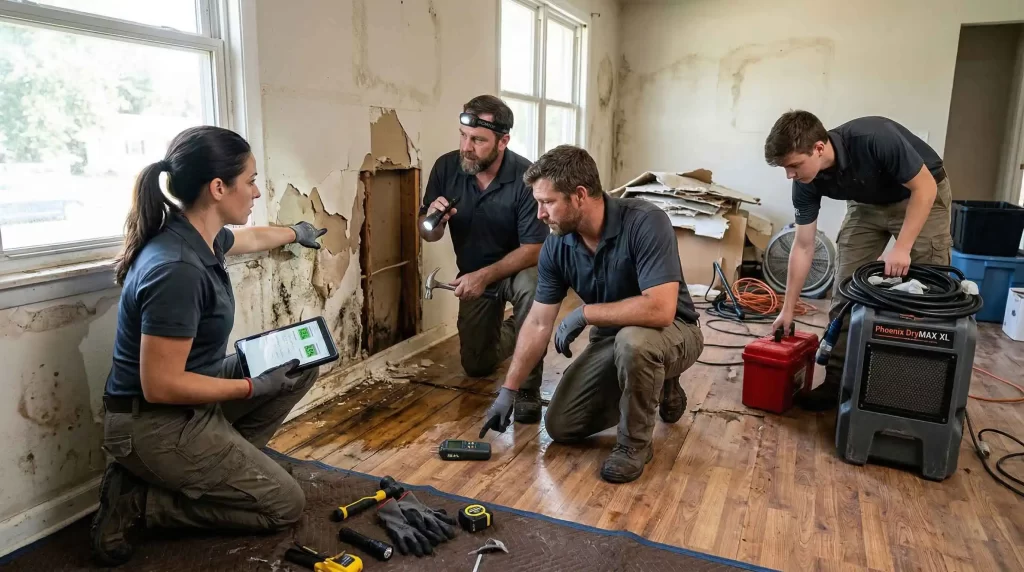
Water damage restoration is a chain of decisions: how you assess the loss, how you map moisture, how you dry materials, how you prevent re-wetting, how you address odors and contamination, and how you document progress. Certified technicians matter because they are trained to follow a repeatable process instead of guessing.
If you are dealing with an active leak or a sudden water event, prioritize a qualified response quickly. The U.S. EPA’s water-damage guidance uses a 24 to 48-hour response window as part of mold-prevention decision-making for clean water damage, which is one reason trained assessment and drying planning matter early.
What “certified technician” should mean in practice
Certification is not a marketing word. Done right, it signals a technician has completed formal coursework, passed a proctored exam, and maintains credentials through a recognized body or training program.
In water damage restoration, a common example is IICRC’s Water Damage Restoration Technician (WRT) credential, which covers water loss effects, drying techniques, and dealing with sewer backflows and contamination.
You do not need to become an expert in credentials to benefit from them. You need to understand what certification typically influences on the job:
- Better inspection discipline: knowing where water hides and how it migrates
- More reliable drying decisions: selecting equipment and placement based on readings, not gut feel
- Safer handling of risk: recognizing when contamination controls are needed
- Cleaner documentation: creating a record that helps ownership, management, and insurance stakeholders
Why certification reduces secondary damage risk
Secondary damage is what turns a manageable loss into a drawn-out rebuild. It usually shows up after the “obvious” water is gone: re-wetting behind finishes, lingering moisture in cavities, hidden mold risk, odor absorption into porous materials, corrosion, warping, and coating or flooring failures.
Certified technicians are trained to think beyond surfaces. Here is where that training typically pays off.
Moisture detection that goes past what you can see
A drywall face can feel dry while the insulation behind it stays wet. A floor surface can look fine while moisture lingers beneath floating planks or under a base cabinet. Trained technicians rely on measurement and mapping, not appearances, to define the true boundary of the loss.
Drying plans based on the building, not a template
Water losses differ by material type, airflow, temperature, and how long the water sat. Certification-backed training emphasizes selecting drying strategies that fit the specific structure and damage pattern, so you do not pull equipment too early or miss a hidden pocket.
Contamination awareness when the source changes the rules
Not all water is equal. A clean supply-line leak is different from an overflow or backup scenario. Certified training helps crews recognize when additional cleaning and sanitization steps are needed, and when to avoid spreading contaminants through a property.
What to look for during a certified-led restoration process
You can use this as a decision-support checklist when comparing providers or monitoring a job.
1) A clear scope that matches the actual wet footprint
A qualified crew should identify affected rooms and high-risk zones: behind baseboards, under flooring edges, around cabinets and toe kicks, near exterior penetrations, and in closets with poor airflow. If the scope ignores these common holdouts, you risk re-wetting and odor return.
2) Documented moisture checks, not “it seems dry.”
Ask how the team verifies dryness. The point is not a perfect number you can memorize. The point is that someone measured, tracked, and confirmed conditions before closing the job.
3) Controls to prevent cross-contamination
If the event involved a backup, overflow, or debris-laden water, you want to see controlled handling: separating affected zones, proper disposal decisions, and cleaning steps appropriate to the situation. (Avoid DIY assumptions here. If you suspect contamination, consult qualified professionals.)
4) A final walk-through focused on secondary damage
A good final inspection does more than look at paint. It checks for:
- Recurring dampness at edges and corners
- new odors when doors are closed briefly and reopened
- flooring movement or soft spots
- cabinet swelling at the bases
- staining, bubbling, or finish failure
Practical checklist: what to do now, and what not to do
Do this first
- Stop the source if it is safe and accessible (shut off supply lines or isolate equipment).
- Avoid electrical hazards: if water is near outlets, appliances, or panels, keep people out of the area and call qualified help.
- Document conditions with photos before major removal work begins.
- Ventilate carefully: increase airflow only if you are not dealing with potentially contaminated water.
- Call trained professionals when the loss is widespread, hidden, or involves a backup.
Avoid these mistakes
- Do not assume “dry to the touch” equals dry inside. Hidden moisture drives re-wetting.
- Do not mask odors. Odor cover-ups can delay real remediation.
- Do not run random equipment without a plan. Poor placement can waste time and leave damp zones behind.
- Do not delay. That 24 to 48-hour EPA benchmark is a practical reminder that conditions can change quickly if moisture remains.
Questions to ask before you hire
If you want a quick screening conversation, use these prompts:
- What training or certifications do your technicians hold for water damage work?
- How do you determine the full extent of moisture, including hidden areas?
- How do you track drying progress and decide when materials are ready for repair?
- What changes in the plan if the water source is potentially contaminated?
- What documentation will I receive at closeout?
The goal is not to “catch” anyone. The goal is to confirm the provider uses a structured process that reduces surprises.
Choosing a team when time is tight
During high-demand periods, availability can feel like the only factor. But the cost of a wrong choice often shows up later as repeated wetting, lingering odors, or material failures that require reopening finished work.
At Semper Fi, we provide 24/7 emergency water damage restoration, and our certified team uses advanced equipment to extract standing water, dry affected areas, and prevent long-term damage.
How certified technicians support cleaner outcomes in flood scenarios
Flooding creates more complexity: standing water, harder-to-reach areas, and a greater chance of widespread saturation. A structured, measurement-led approach becomes even more important.
If your situation involves flooding, look for providers who discuss inspection and moisture detection methods in plain language. We outline steps like damage assessment and moisture mapping, including tools such as infrared thermal imaging and moisture meters as part of flood cleanup work.
Learn more about our flood cleanup approach and what a thorough assessment can include.
The closeout that protects your rebuild
Certification does not replace experience, but it helps ensure experience is applied consistently. In water damage restoration, consistency is what reduces secondary damage: fewer missed wet zones, better drying decisions, safer handling when contamination is a concern, and clearer documentation at the end.
When you are ready to schedule, call (928) 504-6179, so you can start the process without waiting for a back-and-forth. This is where Semper Fi fits best: structured restoration work led by a certified team, supported by clear next steps.
Frequently Asked Questions
1) What does it mean when a water damage technician is “certified”?
It typically means the technician completed formal training and passed an exam tied to a recognized program. In restoration, credentials like IICRC’s WRT are designed to validate knowledge of water loss effects, drying techniques, and handling contamination risks.
2) Are certified technicians only important for big floods?
No. Small losses cause major problems when moisture hides in cavities, under floors, or behind cabinets. Certified training emphasizes moisture detection and process control, which helps reduce re-wetting, odor return, and finish failures.
3) How fast should I act after water damage?
Fast action matters because conditions can change quickly. EPA guidance uses a 24 to 48 hour response window as part of mold-prevention decision-making for clean water damage, which is why early assessment and drying planning are important.
4) What parts of a building commonly hold hidden moisture?
Typical holdouts include behind baseboards, lower wall sections, insulation behind drywall, under flooring edges, cabinet toe kicks, closets with low airflow, and around exterior penetrations. These areas often need measurement-based verification, not just a visual check.
5) Can I rely on smell to tell if the area is still wet?
Odors can help you notice a problem, but they are not a measurement tool. Musty smells may come from damp porous materials or residues left behind. If odor persists, qualified professionals should evaluate moisture and cleaning needs.
6) Does “certified team” guarantee there will be no mold?
No one should promise outcomes like “no mold ever.” Certification signals training and process knowledge, which can reduce risk, but every loss is different. The safer approach is measurement-based drying and appropriate cleaning for the water source.
7) What should a professional drying decision be based on?
Drying decisions should be based on readings and progress checks, not a set number of days. The provider should be able to explain what they measured, where they checked, and why they believe the structure is ready for repairs.
8) What changes if the water involves a backup or contamination risk?
The plan should shift toward controlled handling: reducing exposure, preventing cross-contamination, and using cleanup steps appropriate for the source. If you suspect contamination, avoid DIY cleanup and consult qualified professionals.
9) What is “moisture mapping,” and why does it matter?
Moisture mapping is the process of locating where water traveled and how saturated materials are, including hidden zones. It helps define the real scope so drying and repairs match the true affected footprint, reducing re-wetting and callbacks.
10) What should I receive at the end of a water restoration job?
A strong closeout usually includes photos, notes on what was affected and addressed, and some form of verification that drying was completed appropriately. This helps property owners and managers track the event and reduces disputes later.
11) What company-specific claim can I verify about your water damage work?
We provide 24/7 emergency water damage restoration, which our certified team uses advanced equipment to extract water and dry affected areas, and our water restoration service is available around the clock.
12) How can I start service without delays?
For immediate assistance, Call Now – (928) 504-6179.
