


Lower-desert properties live with two cooling stresses. One comes from dry heat, dust, and equipment that runs hard for months. The other arrives when monsoon storms, sudden humidity, and wind-driven rain change the moisture picture fast.
The “evaporative cooler vs. refrigerated air” question is also about where moisture collects and how hidden damage spreads.
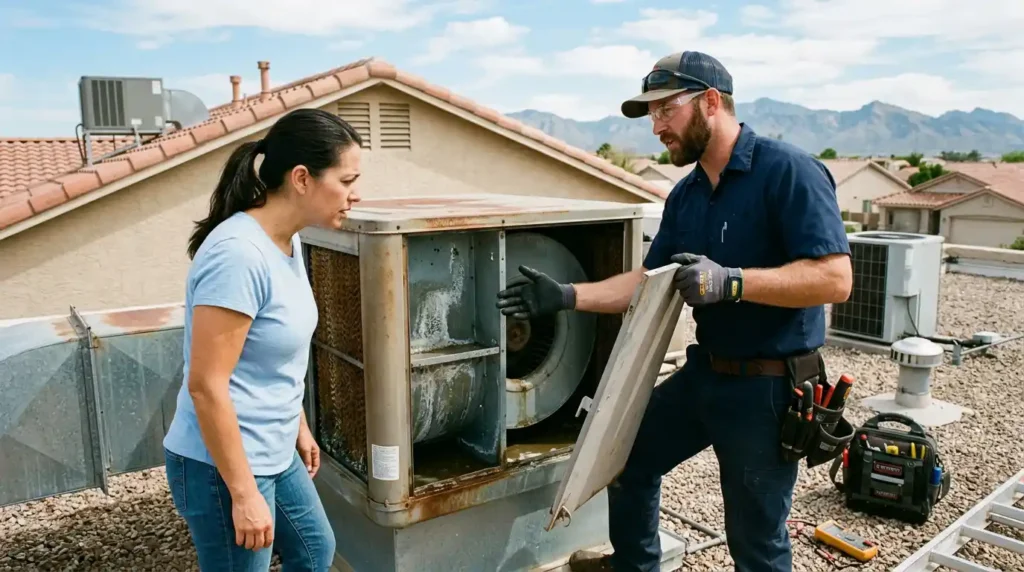
Why the Two Systems Create Different Moisture Patterns
The basic moisture behavior behind evaporative cooling and refrigerated air.
Evaporative coolers add moisture by design
An evaporative cooler, often called a swamp cooler, cools by moving outdoor air across wet media. The system passes outdoor air over water-saturated pads before sending that air indoors. In very dry weather, that added moisture can feel helpful.
Problems start when indoor air cannot be exhausted properly, outdoor air becomes humid, or wet components stay dirty. Then the cooler can push damp air into rooms, closets, ceiling areas, and soft materials.
Refrigerated air removes moisture but creates condensate
Refrigerated air cools indoor air across a cold coil. Water vapor condenses and drains away through a pan and line. That is normal.
Damage starts when the drain line clogs, the pan overflows, the unit sweats, or cold duct surfaces meet warm, humid air. Moisture may then appear as a ceiling stain, wall dampness, wet insulation, or a recurring musty smell.
Evaporative Cooler Moisture Problems
The problems most commonly associated with swamp coolers in lower-desert homes, rentals, and small commercial spaces.
Indoor humidity rises when the airflow is wrong
Evaporative coolers need a path for air to leave the building. If windows, vents, or exhaust paths are not balanced, humidity can build up indoors instead of flushing out. Rooms may feel clammy even when the air is moving.
That moisture can settle into curtains, upholstery, carpet edges, drywall corners, and closets. If you notice recurring mustiness, review practical warning signs of mold risks in dry-climate homes.
Wet pads and reservoirs can become odor sources
Pads, reservoirs, and supply paths need routine attention. Dust, minerals, and organic debris can collect where water is present. During blowing dust events near open desert, agricultural corridors, and rural communities, that mixture can worsen odors and residue.
A swamp cooler smell is not always a mold issue, but it should not be ignored when it repeats after startup or follows humid weather.
Roof-mounted units can create leak paths
Many evaporative coolers sit on the roof. A failed pan, cracked water line, worn flashing, or loose curb detail can send water into ceiling materials. If water appears overhead, the steps in water leaking from the ceiling can help you think through source control and safety.
Refrigerated Air Moisture Problems
Learn why refrigerated air can still cause water damage even though it generally dries the air.
Condensate lines can clog or overflow
Refrigerated air makes condensate every time it cools humid air. In a heavy cooling season, even a small drain restriction can become a ceiling, closet, hallway, or utility-room leak.
Watch for damp drywall near an indoor unit, water around an air handler, rust stains, ceiling rings, or musty odors after long cycles. The risk becomes clearer during spring AC startup and hidden water damage.
Cold surfaces can sweat in hidden spaces
Ducts, registers, coils, and nearby building materials can collect condensation when warm and humid air reaches cold surfaces. This is common near poorly sealed ceiling cavities, attic equipment, or commercial rooftop systems.
The visible spot may not mark the full wet area. Water can travel along joists, duct paths, insulation, and ceiling grids before it drips into view.
Short cycling can leave moisture behind
A system that cools too fast may shut off before it manages moisture well. That can leave rooms cool but damp, especially during monsoon humidity or after storm-related water intrusion. If a room feels cold and clammy, look for airflow issues, repeated condensation, and materials that stay damp after shutdown.
What to Do When Cooling Moisture Causes Damage
Focus on safety, drying priorities, and restoration decisions after a cooler or AC-related moisture problem.
Start with safety and source control
- Avoid wet areas near outlets, fixtures, appliances, or ceiling lights until the electrical risk is addressed by the right professional.
- If water is actively entering from a cooler, air handler, roof opening, or condensate line, stop the source if you can do so safely.
- Document the affected area before moving materials.
Photos of stains, wet flooring, damaged contents, and equipment locations can help you track the spread.
Dry the hidden path, not just the visible spot
A towel and fan may handle a small surface spill, but cooling-system leaks often move into porous materials. Water-damaged areas should be dried within 24 to 48 hours when possible to reduce mold risk.
That window matters during the cooling season because equipment can keep adding moisture while hidden materials stay wet.
If moisture reaches wall cavities, flooring edges, cabinets, ceiling tiles, or insulation, consider professional moisture mapping before closing the area back up.
If a cooling-related leak has reached drywall, flooring, cabinets, ceiling materials, or more than one room, request help with water damage restoration and, when mold is visible or suspected, mold remediation. The goal is to identify what got wet, dry what can be dried, and avoid hiding moisture behind repairs.
Separate clean water from contaminated water
Condensate from an AC line is not the same as floodwater, sewage backup, or storm runoff entering under a door. Contaminated water changes cleanup decisions for carpet, padding, porous contents, and occupant access.
When there is any chance of sewage, outside floodwater, or biohazard exposure, keep people away from the area and use appropriate cleanup professionals.
Commercial and Older-Building Considerations
The properties where cooling moisture can affect operations and hidden construction details.
Commercial spaces feel small leaks quickly
A minor cooler or condensate leak can close a checkout lane, stain a ceiling grid, wet stored inventory, or interrupt office work. Fixing the drain or unit does not prove that the ceiling materials, insulation, or walls are dry.
Older and complex buildings hide moisture longer
Older homes, additions, converted spaces, and mixed-use buildings can hide cooler leaks behind layered repairs. Repeated odor, recurring stains, soft paint, or damp trim deserve attention.
The Practical Takeaway
A clear way to decide which moisture problem you may be facing.
Evaporative coolers mainly create moisture risk by adding humidity and using water in the unit. Refrigerated air mainly creates moisture risk through condensate, cold-surface sweating, and drainage failures.
During monsoon humidity, dust storms, roof leaks, and sudden stormwater intrusion, either system can become part of a larger water-damage problem. Act early, protect people first, identify the source, and make sure hidden materials are dry before cosmetic repairs begin.
The same 24-to-48-hour drying window should guide your next move whenever moisture reaches porous building materials.
Frequently Asked Questions
1. Does an evaporative cooler cause mold by itself?
No cooling system creates mold without moisture conditions that support growth. An evaporative cooler can raise indoor humidity when airflow is poor, pads stay dirty, or humid weather reduces evaporation. Watch for musty odors, damp soft goods, and recurring stains near cooler supply paths.
2. Why does refrigerated air sometimes cause water damage?
Refrigerated air creates condensate as it cools indoor air. That water should drain through a pan and line, but clogs, cracked pans, poor slope, or overflowing drains can send water into ceilings, walls, flooring, or closets. The first sign may be a faint stain or musty odor.
3. Which system is riskier during the monsoon season?
The risk depends on the failure pattern. Evaporative coolers can struggle when outdoor humidity rises, while refrigerated systems may produce more condensate during long cooling cycles. Storm-driven roof leaks, dust, and sudden humidity can make either system part of a hidden moisture problem.
4. What should I check first after a swamp cooler leak?
- Start with safety, especially if water is near ceiling fixtures, outlets, or appliances.
- Then look for roof opening issues, cracked supply lines, wet ceiling materials, stained drywall, and damp insulation.
- Do not replace stained materials until the source and hidden moisture path are understood.
5. What should I check first after an AC condensate leak?
Look near the air handler, drain pan, condensate line, nearby walls, flooring edges, and ceiling below the unit. A small overflow can travel farther than expected through framing or insulation. If surfaces smell musty or feel soft, the wet area may be larger than the visible stain.
6. Can dust storms make cooler moisture problems worse?
Yes, dust can collect in pads, reservoirs, filters, roof openings, and interior surfaces. When dust mixes with moisture, it can create odors, residue, and harder-to-clean deposits. After a major dust event, cooler maintenance and interior checks become more important.
7. Is a musty smell enough reason to worry?
A musty smell is a warning sign, not a diagnosis. It can come from damp pads, wet carpet edges, wall cavities, ceiling materials, or stored contents. If the odor repeats after cooling cycles or humid weather, look for moisture rather than masking the smell.
8. Are commercial properties more vulnerable to cooling leaks?
Commercial properties often have ceiling grids, rooftop units, shared walls, tenant spaces, stored inventory, and customer areas. Water can spread above the visible ceiling before anyone notices it. Even a limited leak can disrupt operations if it reaches lighting, flooring, records, or merchandise.
9. Should you use fans after a cooler or AC leak?
Use fans only when the area is safe and the water source is clean. Do not use fans around suspected sewage, floodwater, biohazards, or wet electrical areas. Fans can dry surfaces, but they may miss moisture inside insulation, wall cavities, cabinets, and flooring systems.
10. When does a cooling leak become a restoration issue?
It becomes a restoration issue when water reaches porous materials, spreads into more than one area, creates odor, involves contamination, or stays hidden behind finishes. Drying the surface is not enough if moisture remains inside assemblies. Early assessment helps keep repairs from expanding.
