


Summer rain in lower-desert communities rarely behaves like a gentle shower. Monsoon thunderstorms can arrive with wind-driven rain, blowing dust, debris, and quick runoff across hard, dry ground. In Yuma County homes and businesses, that means water does not need a major roof failure to get inside. It only needs a weak edge.
Hairline cracks in stucco, worn door sweeps, and threshold gaps often look minor before a storm. After a strong downpour, they can become the first entry points for water damage, damp flooring, swollen trim, musty odor, and hidden moisture behind walls.
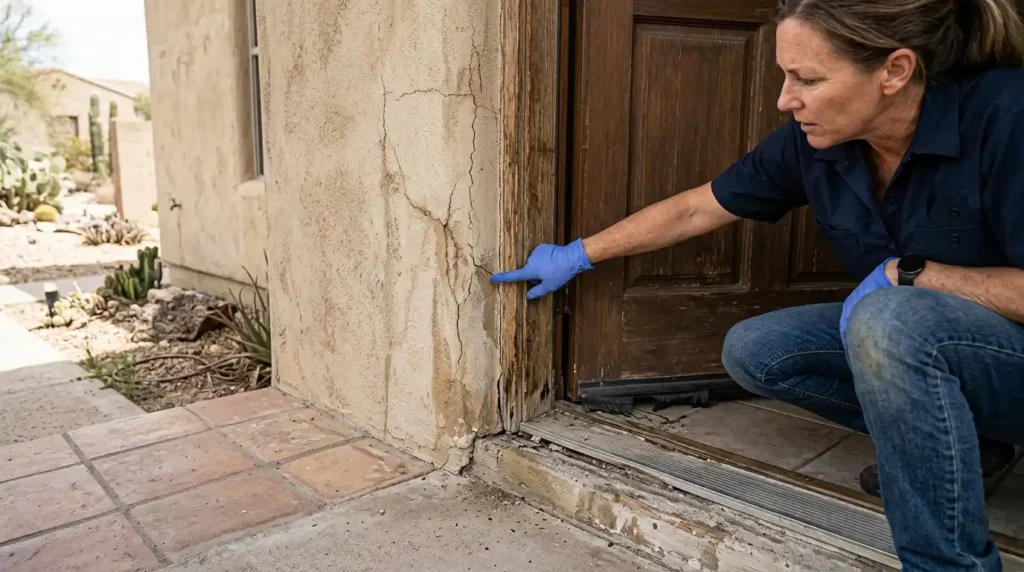
These small exterior weaknesses matter even more in border communities, agricultural corridors, lake-adjacent properties, commercial corridors, and outlying desert communities where wind exposure and dust can wear down seals over time.
Why Small Openings Become Big Rain Problems
Small gaps matter because wind, runoff, and repeated wetting can push water farther than expected.
Stucco hairline cracks are not just cosmetic
Stucco is common in the Southwest because it handles heat well and fits lower-desert construction styles. Still, stucco is not a magic shield. Hairline cracks can form from heat expansion, normal building movement, age, impact, or previous repairs.
A thin crack may not leak during every storm. The risk rises when rain hits the wall sideways, water runs down from a roof edge, or the crack sits near a window, door, hose bib, light fixture, or exterior trim joint. Once water gets behind the surface, the visible crack may be smaller than the wet area inside the wall.
For older properties, the concern is even greater. Layered finishes, patched stucco, aging caulk, and previous repair work can hide how far water has traveled. The same is true for water damage repair in older homes, where visible staining may not show the full path of moisture.
Door sweeps fail slowly
A door sweep should lightly contact the threshold across the full width of the door. When it cracks, curls, tears, stiffens, or pulls away, wind-driven rain can slip under the door. Dust storms can make this worse by packing grit along the threshold and preventing a clean seal.
Check the sweep from inside during daylight. If you can see light below the door, water may have a path. Also look for uneven rubbing, missing vinyl, loose screws, or a sweep that touches on one side but floats on the other.
Threshold gaps invite runoff
A threshold gap is often more serious than it looks. Water can enter under the sill, around side jambs, or through cracked sealant where the threshold meets flooring or exterior concrete. In commercial spaces, repeated foot traffic, cart traffic, and door impact can loosen these areas faster.
Look for rusted fasteners, darkened flooring near the door, swollen baseboards, peeling paint, or soft trim. These signs may point to repeated intrusion rather than a one-time splash.
Pre-Storm Checks That Reduce Water Intrusion
Simple inspections before summer storms can help you catch weak points before rain tests them.
Walk the exterior before the storm season peaks
- Start with walls that face open desert, fields, parking lots, alleys, or wide streets. Wind exposure matters.
- Look for stair-step cracks, vertical hairline cracks, gaps around windows, missing caulk, cracked stucco patches, and stains below roof edges.
- Do not ignore tiny cracks near doors.
A door opening interrupts the wall system, so rain can collect at corners and trim joints. If stucco is cracked above or beside the door, water may travel down inside the wall and appear on the floor.
Test doors without forcing water inside
You can inspect a door without blasting it with a hose.
- Close the door and look for light along the bottom and sides.
- Feel for drafts.
- Check whether the sweep compresses evenly.
- Then, inspect the threshold from outside after light rain or normal irrigation runoff.
- Avoid high-pressure spraying near door bottoms or stucco cracks.
Pressure can force water into areas that would not leak under normal rain and may create confusion about the true entry point.
Keep drainage working around entry points
Rain that collects at a doorway has more time to enter. Keep soil, leaves, dust, and debris from building up against thresholds. Make sure patios, walks, and entry slabs do not direct water toward the door. In commercial entries, keep mats from trapping water against the sill for long periods.
For broader seasonal planning, seasonal water damage restoration and repair tips can help you think beyond one storm and prepare for repeated summer moisture events.
What To Do When Rain Gets Inside
Response priorities should focus on safety, moisture control, contamination awareness, and documentation.
Start with safety, not cleanup speed
Do not step into standing water if you see electrical hazards, wet outlets, sagging ceilings, broken glass, storm debris, or structural movement. If water is entering through a broken window, damaged roof edge, or wind-damaged opening, stay clear of unsafe areas and contact the appropriate emergency or repair professionals.
If water may involve sewage, exterior floodwater, or contaminated runoff, treat it differently from a clean spill. Floodwater can carry debris, bacteria, and chemicals. Keep people and pets away from affected areas until the situation is evaluated.
Stop the source when it is safe
For door and stucco leaks, stopping the source usually means limiting additional entry.
- Move absorbent contents away from the wet area.
- Place towels only as a temporary control, not as a drying plan.
- Remove saturated rugs or mats if you can do so safely.
When clean water reaches porous materials, the 24-to-48-hour cleanup window matters because delayed drying can increase the chance of mold growth. That does not mean every wet area becomes a mold problem. It means you should not wait several days to see what happens.
Document visible damage early
Take photos or video of the entry point, wet flooring, damp trim, stained drywall, damaged contents, exterior cracks, and the storm conditions if possible. Documentation helps you compare what changed after drying begins. It also helps organize repair decisions later.
If the water spreads beyond the entry, reaches wall cavities, affects multiple rooms, or keeps returning, water damage restoration may be needed to address extraction, drying, and damaged materials.
Hidden Moisture Behind Stucco, Trim, and Flooring
Water often travels under finishes before it becomes obvious inside the room.
Watch the baseboards after the surface dries
A floor can look dry while moisture remains under trim, behind drywall, or below flooring. Watch for swelling, cupping, soft spots, staining, bubbling paint, loose caulk, musty odor, and recurring dampness after the room has been aired out.
The 24-to-48-hour window is important here. If wet materials remain damp behind finishes, surface drying alone may not solve the problem.
Understand the water type before choosing a cleanup
Water from wind-driven rain at a door is different from water that backs up through a drain or enters from exterior flooding. The cleanup decision depends on where the water came from, what it touched, and how long it sat.
This is where water damage vs. flood damage becomes more than a wording issue. Floodwater intrusion can change what materials are cleaned, dried, removed, or monitored.
Know when drywall is part of the problem
If rain enters at a stucco crack and shows up as an interior stain, the drywall may be only the final visible surface. The actual path could include stucco, wall sheathing, insulation, framing, trim, and flooring.
Look for delayed stains after the next hot day. Heat can draw moisture and salts to the surface, making damage appear after the storm has passed. A guide to drywall water damage signs can help you separate minor marks from warning signs that need closer attention.
Commercial and Rental Property Considerations
Shared-use buildings need faster coordination because small leaks can disrupt tenants, staff, customers, and operations.
Entry doors take repeated abuse
Storefront doors, back service doors, warehouse entries, and office suites often see more wear than residential doors. Sweeps loosen. Thresholds shift. Weatherstripping tears. Cleaning water, irrigation overspray, and foot traffic can hide early symptoms.
Facility managers and property managers should include entry seals and stucco openings in seasonal walkthroughs. A small leak in one tenant space can become a larger issue if moisture spreads under shared walls or into common flooring.
Act before odor becomes the complaint
In rental and commercial spaces, occupants may first notice odor rather than visible water. Musty smells near entry walls, storage rooms, closets, and baseboards can point to repeated moisture. Do not cover odors with fragrance. Find the moisture source first.
If stormwater crosses a threshold, reaches multiple materials, or interrupts use of the space, consider flood cleanup support before the affected area becomes harder to evaluate.
Repair Decisions After the Storm
Good recovery means fixing both the wet materials and the opening that lets water inside.
Do not patch before you understand the path
Sealing a stucco crack or replacing a sweep may be necessary, but timing matters. If you seal the exterior before wet materials behind the wall can dry, moisture may remain trapped. If you replace only the door sweep while the threshold is loose, water may still enter under the sill.
Start with the source, the water category, the affected materials, and the moisture path. Then decide what needs cleaning, drying, removal, repair, or replacement.
Plan for the next storm, not just the last one
Lower-desert rain often comes in bursts. One leak may be followed by another storm before repairs are complete. Temporary protection may be needed for exposed openings, damaged trim, or vulnerable door areas. Keep pathways clear, keep wet materials separated, and recheck the same areas after each storm.
The goal is simple: keep water outside, dry what got wet, and avoid guessing about hidden moisture.
Frequently Asked Questions
1. Can a hairline stucco crack really cause water damage?
Yes, especially when wind-driven rain hits the wall, or the crack sits near a door, window, light, or trim joint. A small exterior opening can allow moisture to move behind the surface. Interior staining may appear lower or farther away than the crack itself.
2. How do I know if my door sweep is letting rain inside?
Look for daylight under the door, torn rubber, curled vinyl, loose screws, or uneven contact with the threshold. After rain, check for damp flooring, wet dust lines, swollen trim, or dark staining near the entry. Repeated dampness usually means the seal needs attention.
3. What should I do first if rain comes under my door?
- Stay safe and keep clear of electrical hazards or contaminated water.
- Move dry contents away, remove saturated mats if safe, and document the affected areas.
- Do not assume the floor is dry just because the surface no longer looks wet.
4. Is stormwater at a threshold the same as a plumbing leak?
No. A clean supply-line leak and stormwater intrusion can require different cleanup decisions. Exterior water may carry soil, debris, chemicals, or other contaminants. The source of the water matters when deciding what can be dried, cleaned, or removed.
5. When should I worry about mold after a rain leak?
Take the risk seriously when materials stay damp, the leak repeats, or moisture reaches drywall, trim, carpet, cabinets, or insulation. Musty odor, staining, bubbling paint, and soft materials are warning signs. Delayed drying can make the cleanup more complex.
6. Can renters report stucco cracks and door gaps before damage occurs?
Yes. Renters should report visible cracks, daylight under doors, wet flooring, and musty odors as soon as they notice them. Photos can help property managers understand the issue. Early reporting may prevent a small maintenance concern from becoming a larger water damage problem.
7. Why do lower-desert storms push water through doors?
Summer storms can combine fast rainfall, outflow winds, dust, debris, and rapid runoff across hard ground. Wind can push water against doors that normally stay dry. If the sweep, threshold, or side seals are worn, water can cross the opening quickly.
8. Should I seal stucco cracks myself?
Small maintenance sealing may be reasonable for minor exterior wear, but avoid sealing over active moisture or damaged materials. If the wall is stained, soft, bulging, or repeatedly wet, the issue may extend behind the surface. The moisture path should be understood before permanent repairs.
9. What signs suggest water reached behind the wall?
Look for bubbling paint, soft drywall, swollen baseboards, musty odor, recurring stains, or dampness that returns after drying. A stain below a window or door may not show the original entry point. Water can travel through cavities before becoming visible.
10. Do commercial doors need different storm checks?
Yes. Commercial entries often handle more traffic, cleaning, carts, deliveries, and repeated impact. Sweeps, thresholds, and frame seals may wear out faster. Regular checks are especially important in tenant spaces, storefronts, warehouses, and service corridors.
11. What if water keeps entering after I replace the sweep?
The problem may involve the threshold, side jambs, exterior grading, stucco cracks, roof runoff, or sealant failure around the frame. A new sweep can help only if the rest of the opening sheds water properly. Repeated leakage calls for a broader inspection.
