


Laundry rooms are easy to underestimate because the water source looks familiar. A washer runs, a hose flexes, a valve sits behind the machine, and a shallow pan waits underneath. In hot lower-desert weather, that ordinary setup deserves more attention.
Heat, dust, vibration, long absences, rental turnovers, and summer storm pressure can turn a small washer leak into a flooring, wall, or mold concern.
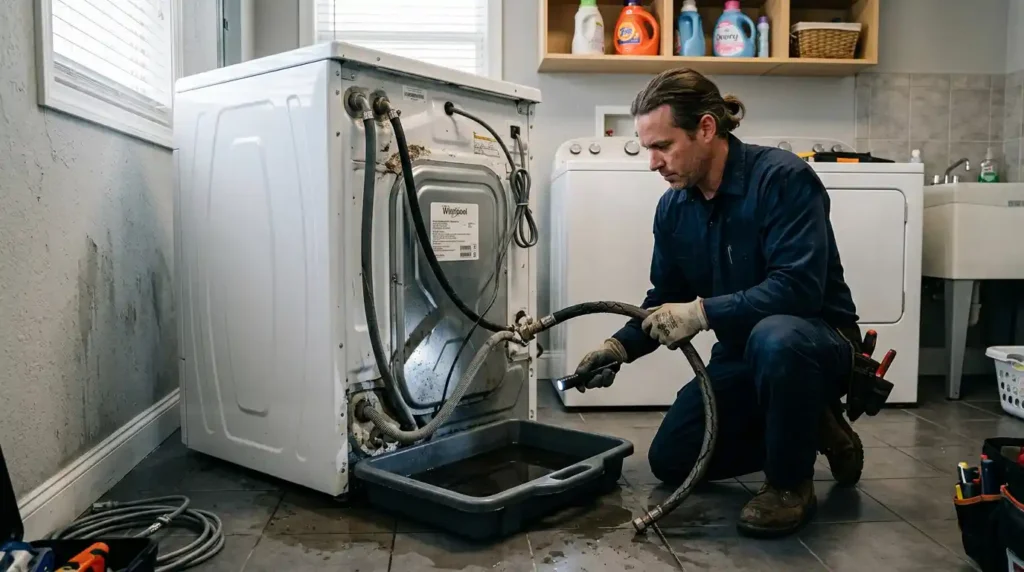
For homeowners, renters, facility managers, and property managers, the goal is a better first decision. A failed hose, stuck shutoff, or useless drain pan can change how far water travels before anyone sees it.
Why hot weather makes laundry-room water losses harder to dismiss
Hot weather does not create every leak, but it narrows the margin for delay.
During Arizona’s June-through-September monsoon season, lower-desert properties already face heavy rain, high winds, dust storms, and flash flooding. A laundry-room water loss may seem unrelated to weather, yet the follow-on risks overlap.
Damp drywall, wet trim, and hidden subfloor moisture can behave the same whether water came from a storm opening or a washer connection.
Heat also changes building use. Commercial laundry rooms run harder. Rental units turn over. Utility rooms in garages or exterior-adjacent spaces may sit hotter than the rest of the building. A slow drip can feed materials for days.
The EPA advises that property owners dry water-damaged areas and items within 24 to 48 hours to help prevent mold growth. That same 24-to-48-hour window matters when a washer leak reaches porous materials.
Hoses, shutoffs, and pans: the second-look inspection
These three parts decide whether a laundry leak stays limited or spreads.
Washer supply hoses
Look beyond obvious cracking. Check for bulges, rust at fittings, softness, kinks, flattening behind the washer, and dampness where the hose meets the wall valve or machine. Rubber, braided, and reinforced hoses can all fail if they age, rub, overbend, or sit under pressure. Leave enough space behind the machine so vibration does not grind the hose against the wall.
A hose problem can release water quickly, but it can also start as a pinhole drip. A small wet line at the baseboard may be the first sign of water moving under the flooring.
Shutoff valves
A shutoff valve only helps if it works when you need it. Make sure both hot and cold valves are visible, reachable, and not blocked by shelving, baskets, or the washer itself. A valve that will not turn, feels loose, or leaks when touched needs plumbing attention before an emergency.
Property managers should label main shutoffs and laundry shutoffs where appropriate. Staff should know who can access the valve without delaying source control.
Drain pans and drain lines
A pan without a working drain is just a shallow warning tray. Inspect the pan for cracks, poor slope, standing water, dirt buildup, and a lint-blocked drain opening. If the washer sits on an upper floor or near finished walls, a pan can reduce risk only when it is correctly placed and unobstructed.
What to do when a laundry room leak is active
The first few minutes should focus on safety, source control, and limiting spread.
Stop the source safely
- If you can reach the washer valves without stepping into unsafe standing water, turn them off.
- If it continues, use the main shutoff if you know where it is and can access it safely.
- Avoid touching plugs, outlets, or appliances when water is nearby.
- If electrical exposure is possible, keep people away and get qualified help.
Protect adjacent materials
- Move dry contents away from the laundry room if you can do it safely.
- Lift fabric items, paper goods, stored boxes, rugs, and cleaning supplies out of the wet path.
- Take photos before major cleanup.
- In rentals and commercial spaces, document affected rooms, flooring type, wall areas, and any tenant or customer-use disruption.
For a broader first-step sequence, see how to handle water damage and the practical dos and don’ts after water damage.
Separate a simple spill from a water loss
A small spill on tile that you catch immediately may only need cleanup. A water loss is different. Call for help when water reaches carpet, padding, laminate seams, drywall, cabinets, subflooring, shared walls, or ceilings below. Treat the issue as more urgent if the overflow involves dirty discharge water, repeated backups, or odor.
Picking the right response before damage spreads
Use the scope of the moisture, not the size of the puddle, to guide the next decision.
What to ask before approving a restoration team
- Can you explain what areas may be wet beyond the visible floor?
- How will you document affected rooms, materials, and contents?
- What changes if water came from a drain overflow instead of a supply hose?
- Which materials may need drying, cleaning, removal, or later repair?
- How will you communicate the next steps if moisture is found under the flooring?
- What should be moved now to reduce staining, odor, or tenant disruption?
- How will you help us understand whether mold inspection or mold remediation is relevant?
- What do we need to avoid doing before the walkthrough?
- How will commercial access, tenant use, or staff movement be handled?
- What information should we save for property records?
Red flags that can lead to secondary damage
- Replacing baseboards or flooring before hidden moisture is evaluated.
- Running household fans without knowing where the moisture has migrated.
- Treating washer discharge water like a clean-water spill.
- Ignoring odor, swelling, bubbling paint, or dampness that returns after drying.
The same reason why the first 48 hours of water removal matter applies here. Water keeps moving after the washer stops.
What a sound recovery process should look like
A good recovery path gives you clarity before repairs begin.
Clear scope before demolition
The first walkthrough should identify the likely source, visible spread, affected materials, and immediate safety concerns. You should understand whether the job is mainly extraction and drying, whether contaminated water may affect cleanup, and whether the contents need protection.
Drying decisions tied to materials
Tile, carpet, vinyl plank, laminate, drywall, trim, cabinetry, and subflooring do not dry the same way. A sound plan explains why some materials may be dried in place while others may need removal or later repair.
It should also account for lower-desert conditions, including dust intrusion, storm-season humidity shifts, and hot enclosed utility spaces.
Communication through the next steps
Expect plain-language updates, photos or written notes for records, and a walkthrough that separates source repair from water-damage recovery. The same maintenance logic behind common causes of water damage applies to prevention after cleanup.
Replace worn hoses, keep shutoffs reachable, clean pan drains, and check the laundry room after high-use periods.
Frequently Asked Questions
1. Why are laundry-room water losses worse in hot weather?
Hot weather can make small leaks easier to overlook because surfaces may look dry before hidden materials are dry. In lower-desert properties, enclosed utility rooms, garage laundry areas, and rental turnovers can add delay. The risk rises when water reaches porous materials, wall edges, flooring seams, or cabinets.
2. What washer hose warning signs should you check first?
- Look for bulges, cracking, rusted fittings, damp connections, kinks, and hoses pressed tightly against the wall.
- Also check for small puddles, damp baseboards, or a musty odor after laundry cycles.
Any repeated moisture near the washer deserves a closer look before it spreads.
3. Should washer valves stay open all the time?
Many people leave them open for convenience, but reachable shutoffs matter during a leak. If a valve is stuck, leaking, hidden, or hard to turn, it may not help when water is actively escaping. A qualified plumber can correct valve issues before they become part of a larger water loss.
4. Does a drain pan prevent laundry-room water damage?
A drain pan helps only when it is intact, correctly positioned, and connected to a working drain path. A cracked, flat, dirty, or blocked pan may hold water briefly, but it will not solve the loss. Inspect the pan opening for lint, debris, standing water, and signs of previous overflow.
5. When is a washer leak more than a simple cleanup?
It becomes more than a simple cleanup when water reaches carpet, padding, drywall, baseboards, cabinets, or subflooring. Odor, swelling, bubbling paint, or moisture returning after cleanup also changes the situation. At that point, drying decisions should focus on hidden moisture, not just the visible puddle.
6. What should you do first if water is near the washer outlet?
- Do not touch plugs, outlets, or appliances when water is present nearby.
- Keep people away from the affected area and shut off water only if you can do so safely.
- If electrical exposure is possible, wait for qualified help before entering or cleaning the area.
7. Can a washer’s discharge water affect the cleanup approach?
Yes. A supply hose leak and a drain overflow are not the same type of water event. Discharged water can carry detergent, debris, lint, and soils from the wash cycle. That can affect what should be dried, cleaned, removed, or evaluated for odor and contamination concerns.
8. What materials are most vulnerable after a laundry-room leak?
Carpet padding, laminate seams, baseboards, drywall, cabinets, trim, and subflooring are common trouble spots. These materials can hold moisture after the surface looks dry. If the laundry room shares walls with closets, bedrooms, offices, or tenant spaces, check those areas too.
9. Do commercial laundry rooms need a different response?
Commercial and multi-occupant properties often need faster documentation and access planning. A washer leak can affect staff areas, tenant use, customer access, stored goods, or adjacent rooms. The response should account for safety, disruption, material drying, and clear next-step communication.
10. When should mold inspection or mold remediation be considered?
Consider mold-related services when water sits for an extended period, odor appears, or dampness returns after cleanup. Repeated leaks, hidden wall moisture, and porous materials can also raise concerns. A qualified evaluation can help determine whether moisture control alone is enough or whether additional work is needed.
11. What information should property managers document?
Document the source, affected rooms, flooring type, visible water path, photos, tenant reports, and access limitations. Save notes on when the leak was found, when water was shut off, and which contents were moved. Good records help clarify scope, repairs, and future prevention steps.
12. How can you reduce the chance of another laundry-room leak?
- Inspect hoses, keep shutoffs reachable, avoid overloading the washer, and keep the drain pan clean.
- Leave space behind the machine so hoses do not kink or rub.
- After high-use periods, tenant turnovers, or long absences, check the laundry area before a small leak becomes hidden damage.
