


The summer storm season does not need a major flood to expose a weak drainage path. One blocked scupper, one low spot at a slab edge, one clogged landscape drain, or one roof drain packed with dust can send water where it does not belong.
In lower-desert properties, monsoon thunderstorms can combine heavy rain, outflow winds, hail, blowing dust, and flash flooding pressure in a short window.
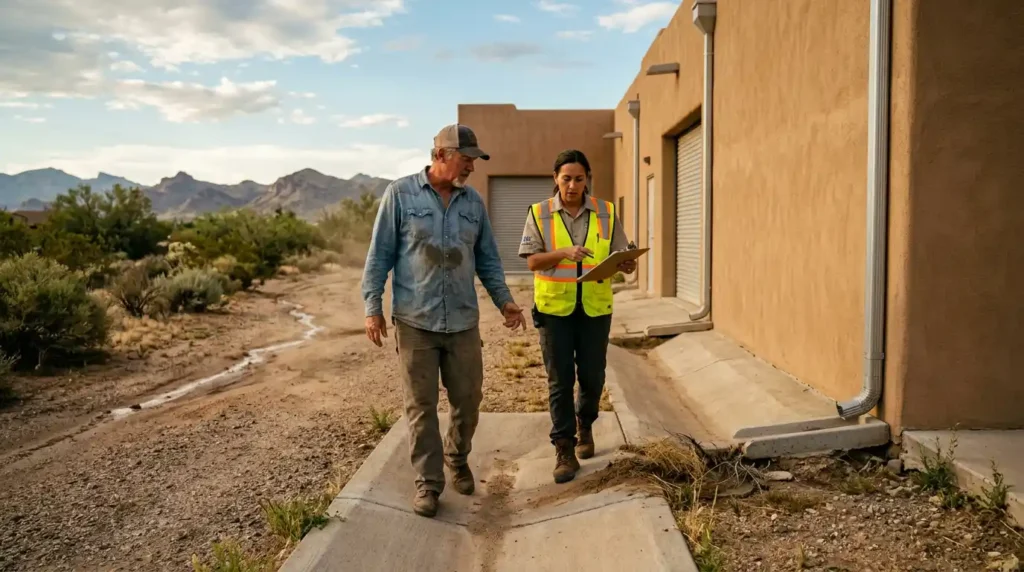
The region’s monsoon season runs from June through September, so drainage testing belongs on the pre-season checklist for homes, rental units, commercial corridors, agricultural properties, lake-adjacent buildings, and outlying desert communities.
Start where water lands first
Before you think about cleanup, look at the surfaces that receive stormwater first.
Roof drains, scuppers, and gutters
Flat and low-slope roofs often fail at the water exit points. Check scuppers, gutters, downspouts, collector boxes, and roof drains for dust, leaves, bird debris, roofing granules, and old patch material. A drain that looks open from a distance may still be restricted inside.
- Run a controlled water test only from a safe position.
- Watch whether water clears quickly or pools near parapets, roof penetrations, or rooftop equipment.
- If you manage a commercial building, take photos of drain locations and any ponding marks before the first storm.
- Pair this check with a flat roof storm inspection so drainage, coatings, parapets, and penetrations are reviewed together.
Downspout discharge points
A downspout that dumps water at the foundation line can create the same interior damage pattern as a wall leak. Make sure water exits away from doors, slab edges, window wells, finished walls, and tenant entries.
Splash blocks and extensions must stay aligned. Loose extensions can shift in the wind and send water back toward the building.
Parapet and roof-edge transitions
Water often finds the joint before it finds the room. Look for staining below parapet caps, separated sealant, rust marks, cracked stucco, or water trails down exterior walls. Those clues matter more when they line up with interior ceiling stains, damp drywall, or odor after storms.
Test the ground-level weak points
The next risk zone is where roof runoff, yard flow, parking-lot runoff, and patio water meet the building.
Slab edges and door thresholds
- Check every exterior door, roll-up door, storefront threshold, garage entry, and patio transition.
- Look for dirt lines, swollen trim, rusted door frames, soft flooring, or repeated staining. These details show where water has entered before.
For businesses, inspect customer entries, delivery doors, storage thresholds, and back-of-house areas. A small threshold leak can affect flooring, inventory, records, tenant use, or customer access.
Yard grading and low spots
Water should move away from the building, not rest against it. Walk the property after irrigation or a light hose test and look for pooling near walls, planters, walkways, curb cuts, and low gravel areas. Settled soil can redirect water toward the structure after years of foot traffic, vehicle movement, landscaping changes, or erosion.
The same visual clues used to separate irrigation overspray from a plumbing leak help here. Timing, location, residue, and repeated wetting patterns can tell you whether water is coming from the yard system, storm runoff, or an indoor source.
Landscape drains and channel drains
- Channel drains at driveways, patios, storefronts, and courtyards can clog before anyone notices.
- Lift grates if it is safe and practical.
- Remove sediment, leaves, trash, and compacted dust.
- Then run water and confirm it moves through the system instead of backing up.
If water backs up quickly, do not assume the grate was the only issue. The pipe beyond the drain may be blocked, crushed, undersized, or filled with sediment.
Watch outdoor water systems during storm prep
Exterior plumbing and drainage often overlap during hot weather.
Hose bibs, pool areas, and patio kitchens
Pool autofill systems, patio hose bibs, outdoor sinks, and outdoor kitchen drains can hide leaks before storm season even starts. When monsoon rain arrives, the new stormwater may make the older wetting pattern harder to diagnose.
Inspect damp gravel, mineral staining, soft deck areas, wet cabinet bases, and water marks near exterior walls. The guide on pool, patio, and outdoor kitchen water risks is useful when outdoor water use and seasonal storm exposure overlap.
Irrigation zones near walls
Sprinklers and drip lines should not keep stucco, wall bases, window frames, or foundation lines wet. Repeated overspray can create hidden moisture before a storm ever arrives. Then, storm runoff adds volume to materials that are already damp.
Turn on each zone and watch where the water actually lands. Adjust spray heads, repair broken emitters, and move water away from vulnerable transitions.
When drainage trouble becomes water damage
A drainage defect becomes a restoration concern when water reaches building materials, contents, or occupied space.
Interior warning signs
- Look for damp baseboards, bubbling paint, loose flooring, musty odor, stained ceiling tiles, swollen cabinets, wet carpet edges, and recurring marks after rain.
- Do not rely on surface dryness alone.
The EPA recommends that water-damaged areas and items dry within 24 to 48 hours to help prevent mold growth.
Contaminated water concerns
Not all stormwater is clean. Runoff can carry soil, debris, pesticides, waste, and other contaminants from exterior areas. Floodwater, sewer backup, and drain overflow situations should not be treated like a clean roof leak or a small supply-line spill.
Keep people away from unsafe areas and use qualified professionals when contamination, electrical exposure, or structural instability may be involved.
The practical guidance on what not to do after water damage applies before the monsoon season. The wrong first step can spread damage instead of limiting it.
Picking the right response before damage spreads
Once water enters, choose the response based on source, spread, and material impact.
What to ask before approving a restoration team
- Where did the water likely enter, and what evidence supports that?
- Which materials are wet now, and which areas may be at risk?
- Does the water source suggest clean water, storm runoff, sewage, or another concern?
- What documentation will be provided before removal or repair decisions?
- What needs to happen next to reduce repeat damage?
Red flags that can lead to secondary damage
- Clearing a drain but ignoring damp interior materials.
- Painting over stains before the moisture path is understood.
- Replace the flooring before checking the edges and subfloor.
- Treating storm runoff or drain backup like a simple surface spill.
What a sound recovery process should look like
A sound recovery process should start with source clarity, affected-area documentation, and a plain-language walkthrough. You should know what appears wet, what may be salvageable, what needs further evaluation, and what next steps help prevent repeat damage.
Frequently Asked Questions
1. What drainage weak points should be checked before the monsoon season?
Start with roof drains, scuppers, gutters, downspouts, slab edges, door thresholds, channel drains, and low yard areas. Then check outdoor water systems such as irrigation, hose bibs, pool equipment areas, and patio sinks. These points often decide whether stormwater drains away or enters the building.
2. How do I know if a drainage issue has already caused water damage?
Look for damp baseboards, stained drywall, bubbling paint, swollen trim, musty odor, or flooring that feels loose or cupped. Ceiling stains and damp cabinet bases can also point to a hidden spread. If the same mark returns after rain, treat it as an active moisture path.
3. Why are roof drains and scuppers so important on flat roofs?
Flat and low-slope roofs depend on clear exit paths. If drains, scuppers, or gutters clog with dust and debris, water may pond near parapets, penetrations, and roof edges. That can lead to ceiling leaks, wall moisture, and interior water damage.
4. Can dust storms make drainage problems worse?
Yes. Blowing dust can collect in gutters, roof drains, channel drains, and low yard areas. That buildup may not look serious during dry weather, but it can restrict water flow during sudden rain. Lower-desert properties should treat dust removal as part of storm preparation.
5. Should I test drains with a hose before storm season?
A controlled water test can reveal slow flow, backups, or misdirected discharge if it is done safely. Never climb onto unsafe roofs, work near electrical hazards, or force water into an unknown system. If a drain backs up quickly, the problem may extend beyond the visible grate or opening.
6. What should commercial property managers document before the monsoon season?
- Photograph roof drains, scuppers, downspouts, thresholds, storefront entries, tenant spaces, and known low spots.
- Note existing stains, ponding marks, and areas where debris collects.
This helps separate old conditions from new storm damage after heavy rain.
7. When does a drainage problem require restoration help?
Call for restoration help when water reaches flooring, drywall, cabinets, ceilings, insulation, carpet, or occupied areas. A plumber, roofer, or landscaper may correct the source, but interior materials may still need drying or cleanup. Hidden moisture can remain after the visible water is gone.
8. Is storm runoff different from a clean plumbing leak?
Yes. Storm runoff can carry soil, debris, chemicals, waste, and other contaminants from exterior surfaces. Floodwater, sewage backup, and drain overflow situations need more caution than a clean supply-line leak. Avoid direct contact when contamination is possible.
9. Can poor grading cause indoor water damage?
Yes. Soil that slopes toward the building can push stormwater against walls, slab edges, and thresholds. Over time, that repeated wetting can show up as staining, odor, swollen trim, or flooring damage inside. Correcting the water path matters before cosmetic repair.
10. What should I do first if water enters during a storm?
- Keep people away from wet electrical areas, slick floors, sagging ceilings, and contaminated water.
- Stop the source only if you can do so safely.
- Document what you can see, protect dry contents, and arrange qualified help if water has reached building materials.
11. Can mold become a concern after a short monsoon leak?
It can, especially when water remains in drywall, insulation, flooring, cabinets, or wall cavities. Surface drying does not always mean hidden materials are dry. Repeated leaks, musty odor, and dampness that return after cleanup deserve closer evaluation.
12. What is the best way to reduce repeat drainage-related damage?
Test the water path before storm season, clear debris, correct low spots, and keep water moving away from the structure. After any water entry, document the source and affected materials before covering stains or replacing finishes. Prevention and good follow-up both matter.
