


When shower grout turns black, the color alone does not tell you whether you are seeing embedded soil, fungal growth, a water stain, or moisture moving through the tile assembly. Even the everyday word “mildew” is imprecise. The EPA explains that mildew refers to certain molds, often with a flatter growth habit.
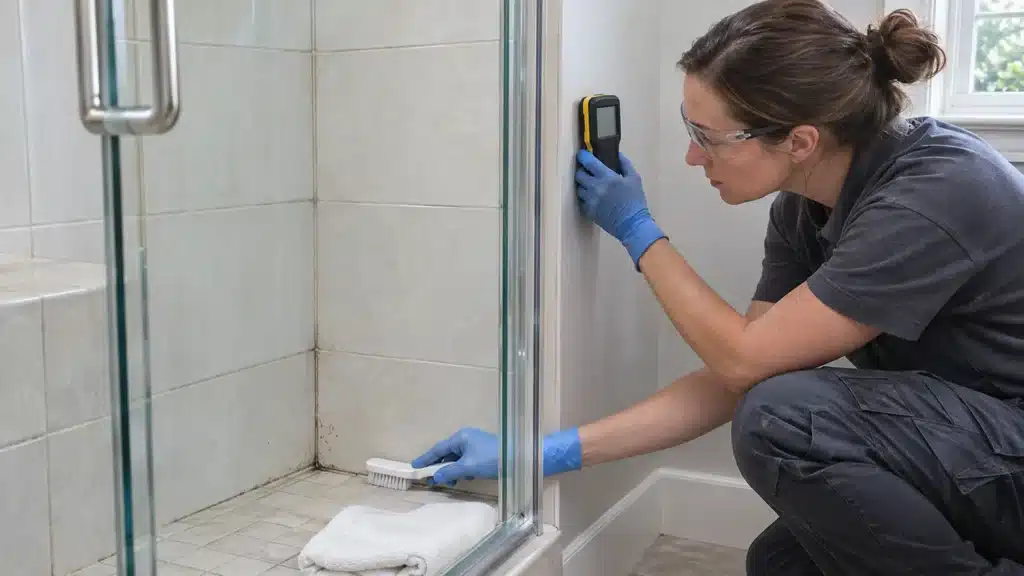
The better question is: How does the discoloration behave? Its pattern, texture, response to careful cleaning, drying time, and nearby damage provide more useful clues than color.
Start With the Pattern, Not the Pigment
Black grout is a symptom with several possible causes. Compare what you see across the whole shower before choosing a cleaner or assuming the wall must be opened.
To distinguish mold from dirt in grout, compare the distribution rather than judging one dark joint in isolation.
| What you observe | More consistent with | What it does not prove |
|---|---|---|
| Even gray or black dullness along splash paths | Soap residue, body oils, dust, or embedded soil | That mold is absent |
| Irregular dots or patches in corners and low-airflow areas | Surface fungal or mixed microbial growth | A particular mold species |
| Grout darkens when wet, then returns to its normal color | Normal wetting of some cement-based grout | A leak behind the tile |
| One area stays dark much longer than surrounding joints | Localized moisture retention, residue, or a drainage issue | The exact source of the moisture |
| Orange, pink, or reddish film in damp corners | A microbial biofilm may be involved | That the organism can be identified by sight |
| Orange or rust-colored streaks below fixtures | Iron, corrosion, or product residue may be involved | That the water is unsafe |
Surface Soil Usually Follows Use
Shower water can leave shampoo, soap residue, body oils, minerals, and dirt in grout joints. That buildup often looks broadly dull rather than distinctly spotted. A small test area may become noticeably lighter with a compatible tile-and-grout cleaner and gentle nylon brush.
Do not treat one successful cleaning test as a laboratory result. Soil and microbial growth can coexist because residue supplies material on which growth can collect.
Surface Growth Favors Places That Stay Damp
Patchy or speckled marks near caulk lines, corners, shelves, bottles, and the base of a shower are more consistent with surface growth than uniform traffic soil. Color still cannot identify the organism. The EPA notes that the same mold can vary in color and appearance, so “black mold” should not be diagnosed by sight.
The recurrence pattern matters. If spotting returns in the same damp locations after appropriate cleaning and complete drying, the moisture condition remains unresolved. Review our broader guide to mold, mildew, and material-specific clues for the terminology limits.
Wet Grout Can Look Dark Without Being Dirty
Some cement-based grout naturally darkens when it absorbs water. A joint that becomes darker during a shower and gradually matches the surrounding dry grout again may simply be showing its wet state.
Concern rises when one section remains dark after the rest of the shower dries, becomes progressively slower to dry, or darkens without direct spray. Those observations do not locate a leak, but they justify checking drainage, plumbing, joints, and the surrounding materials.
Use a Clean-and-Dry Check Before Drawing Conclusions
This limited check is appropriate only when the affected area is small, the grout and tile are sound, there is no sewage or floodwater history, and there are no signs of hidden damage.
- Photograph the shower in good light before cleaning.
- Choose a small test section and identify the tile, grout, and sealer if possible.
- Use a product labeled as compatible with those materials. Natural stone, colored grout, and some sealers can be damaged by the wrong chemistry.
- Follow the product label, ventilate the room, wear the stated protective equipment, and use gentle agitation rather than aggressive scraping.
- Rinse as directed, remove standing water, and let the shower dry fully without use.
- Compare the test area with the original photo and watch where, how, and how quickly discoloration returns.
The EPA’s household-cleaning guidance recommends fixing visible moisture problems, cleaning visible mold with water and detergent, and drying the area completely. It also warns that products can damage incompatible surfaces. Never mix cleaning products or add bleach to another chemical. Dangerous vapors can result.
Stop the test and seek qualified help if cleaning disturbs crumbling grout, exposes a cavity, releases extensive growth, or reveals soft or wet building material. CDC advises added caution for people with asthma, mold allergies, chronic lung conditions, or weakened immune systems; follow medical advice about exposure.
When Black Grout May Point Beyond the Surface
Grout discoloration by itself does not prove that water is behind the tile. Look for a cluster of changes that surface cleaning cannot explain.
The Tile Assembly Shows Physical Change
Have the shower evaluated when black or persistently dark grout appears with one or more of these conditions:
- Cracked, missing, powdery, or repeatedly failing grout
- Split, detached, or blackened sealant at corners and penetrations
- Loose, shifting, or bulging tile
- A shower floor that holds water or drains poorly
- Dampness, peeling paint, swelling, or staining outside the enclosure
- A stain on the ceiling or wall below the shower
- A persistent musty odor that remains after the visible surfaces are clean and dry
These signs can come from different sources, including plumbing, the drain connection, failed joints, or the waterproofing system. They require diagnosis rather than another coat of sealer.
Grout Is Not the Shower’s Waterproofing System
The Tile Council of North America states that grout joints are not waterproof. A properly built wet area relies on the installation method and substrate or membrane to protect adjoining materials. This distinction matters because resealing surface grout may reduce staining, but it cannot repair failed waterproofing or stop a plumbing leak.
Avoid removing tile simply because grout is black. An experienced tile or building professional can first inspect accessible plumbing, adjacent rooms, joint failures, drainage, and material moisture. Opening the assembly may be appropriate when the evidence supports it, not as the first diagnostic move.
Orange Grout Needs Its Own Diagnosis
Shower grout turning orange is not simply an early stage of black mold. The texture and distribution help separate two common possibilities.
A Slimy Pink-Orange Film Can Be a Biofilm
Damp bathroom surfaces can support mixed microbial films. Serratia marcescens is one organism associated with pink, orange, or red bathroom discoloration, but appearance alone cannot confirm that it is present. Treat the film as an unidentified surface buildup unless appropriate testing establishes otherwise.
Rust-Colored Streaks Can Point to Iron
Orange or reddish streaks that follow water flow, collect below metal fixtures, or also appear in sinks and toilets may be mineral or corrosion staining. The EPA lists reddish or orange staining as a noticeable effect of iron. Ask the water supplier or a qualified plumber about widespread fixture staining rather than assuming the grout has fungal growth.
Match the Next Step to the Evidence
If a compatible test cleaning removes uniform buildup and the grout dries normally, routine maintenance may be enough. Reduce residue, remove standing water after showers, and use a bathroom fan that vents outdoors during and after bathing.
If the grout is sound but deeply soiled, our tile and grout cleaning service may be a relevant next step. If discoloration returns quickly or appears with physical damage, persistent dampness, or moisture outside the enclosure, investigate the water source and tile assembly before treating the problem as cosmetic.
The practical rule is simple: cleaning results tell you about the surface; drying behavior and surrounding damage tell you whether to look deeper.
Frequently Asked Questions
Is black shower grout always “toxic black mold”?
No. Black discoloration can be soil, soap residue, a microbial film, mineral or metal staining, wet grout, or material deterioration. Color cannot identify a mold species or establish toxicity. Focus on moisture, recurrence, affected materials, and the extent of growth.
Why is my grout turning black even though I clean the shower?
Routine wiping may leave residue inside textured or porous joints. Discoloration can also return when corners remain damp, ventilation is ineffective, caulk has failed, or a local moisture source persists. Document where it returns instead of repeatedly changing chemicals.
How long should grout take to return to its dry color?
There is no universal time. Grout type, sealer, joint depth, shower design, ventilation, temperature, and water exposure all affect drying. Compare similar joints in the same shower. One area that stays dark far longer than the rest is more informative than an arbitrary hour limit.
Does recurring black grout mean the tile must be removed?
Not by itself. Begin with compatible cleaning, drying, ventilation, and inspection of accessible joints and plumbing. Tile removal becomes more reasonable when discoloration appears with loose tile, damaged substrate, moisture outside the shower, persistent odor, or measurements that support hidden wetness.
Can grout sealer stop black discoloration from coming back?
Sealer may reduce absorption and staining on compatible, clean, sound, dry grout. It is not waterproofing and should not be applied over active growth, trapped moisture, deteriorated joints, or an unresolved leak. Follow the grout and sealer manufacturers’ instructions.
Why is my shower grout turning orange instead of black?
Pink-orange slime can be a microbial biofilm, while harder rust-colored streaks may relate to iron, corrosion, or a metal item left wet. Product dyes can also stain. Pattern, texture, and whether similar marks occur on other fixtures help determine the next check.
Should I test black grout for mold?
Testing is not automatically necessary when visible growth can be cleaned and the moisture source is apparent. It may be useful when the material cannot be identified, the source or extent is unclear, health concerns require professional input, or the result would change the remediation plan. Sampling design and interpretation should be handled by someone qualified.
What should renters do about recurring shower grout discoloration?
Clean only within the lease and product-care instructions, photograph the condition, and report failed caulk, loose tile, leaks, soft walls, or moisture outside the enclosure promptly. Avoid opening the wall, removing tile, or sealing over a damp joint without the property owner’s authorization.
