


Heavy foot traffic can leave dark lanes, dull patches, uneven grout color, and worn-looking joints. Those symptoms do not all point to the same service. A dirty floor may need deep cleaning, cracked grout needs repair, and worn stone may need refinishing. The Sealer is protective, but it cannot reverse damage.
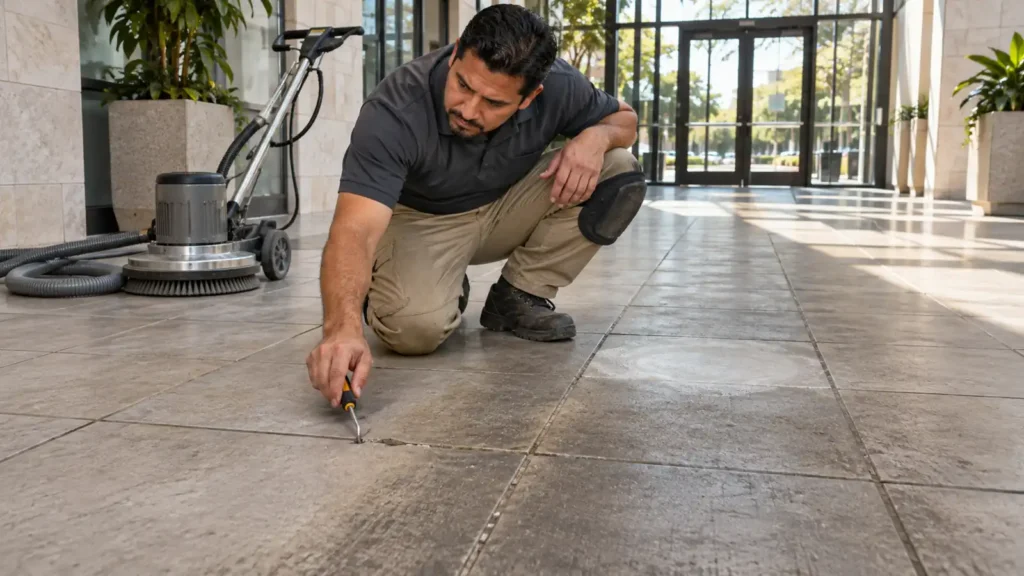
Tile floor restoration starts by identifying what changed: soil, grout, tile surface, or the assembly below.
Read the Traffic Pattern Before Choosing a Treatment
The problem’s location and behavior provide better clues than age alone. Inspect the floor when it is clean and dry.
| What you see | What it may indicate | Best first step | What will not solve it |
|---|---|---|---|
| Dark paths through entries or hallways | Embedded soil, oily residue, or dirty cleaning solution repeatedly deposited in the same route | Test a material-compatible deep clean | Applying sealer over soil |
| Grout that is cracked, loose, powdery, or missing | Joint failure, improper installation, or movement in the tile assembly | Determine the cause before repairing the joint | Cleaning or sealing alone |
| Sound grout that absorbs spills or stains quickly | Porous cement-based grout or reduced sealer performance | Clean, dry, and evaluate for a compatible sealer | Assuming every grout type needs sealer |
| Dull tile faces that stay dull after residue is removed | Scratching, etching, worn finish, or coating failure | Identify the tile and finish, then assess refinishing, repair, or replacement | Repeatedly using stronger cleaner |
| Loose, raised, or cracked tiles | Bond, substrate, movement, or impact damage | Have the installation assessed | Treating the symptom as a grout-only problem |
When Professional Tile Cleaning Is Enough
Cleaning is the appropriate restoration step when the tile is stable, grout joints are intact, and the unwanted change is mainly soil or residue.
The Floor Improves in a Controlled Test Area
A small test can separate removable buildup from permanent surface change. Glazed ceramic, textured porcelain, unglazed clay, and natural stone do not share one cleaning process.
The IICRC consumer tile, stone, and grout guide notes that grout soil that has not penetrated too deeply can often be removed or visibly improved by thorough cleaning. Professional tile cleaning can also recover dirty solutions rather than redistribute it.
The Dullness Is a Removable Film
Too much cleaner, dirty rinse water, or a residue-forming product can create haze along traffic patterns. Compatible cleaning and thorough rinsing may restore an even appearance without repair.
Stop experimenting with stronger chemicals if the material is unknown or the test area becomes lighter, rougher, or less glossy. The Natural Stone Institute warns that acidic products can etch calcium-based stones such as marble and limestone, while abrasive products can scratch some stone surfaces.
When Grout Repair Must Come Before Sealing
Grout repair addresses missing or failed material. Grout sealing protects suitable material that is already intact. Reversing that order only covers the evidence temporarily.
The Joint Has Lost Material
Repair should be evaluated when grout is:
- Cracked through the joint
- Crumbling or powdery
- Missing in sections
- Pulling away from tile edges
New grout should not simply be wiped over a shallow, contaminated joint. The Tile Council of North America explains that failed grout may need substantial removal before replacement and that recurring cracks can be caused by substrate movement or installation conditions.
The Crack Keeps Returning in the Same Place
A repeating crack is a diagnostic clue. Movement, deflection, poor bond, or missing movement accommodation may be involved.
If tiles move, rise, or crack along with the grout, pause cosmetic work and have the assembly assessed. The Tile Council of North America’s guidance on loose tile cautions that repairs may not last if the cause of failure remains. Sealer does not stabilize a moving floor.
When Grout Sealing Is Actually Useful
Sealing is preventive, not a universal final step. Its value depends on the grout, surface, exposure, and product.
A combined tile cleaning and grout sealing service makes sense when:
- The floor and joints have been cleaned thoroughly
- The grout is sound rather than cracked or crumbling
- The surface has dried as required by the sealer manufacturer
- The grout or stone is compatible with the selected sealer
- The goal is improved resistance to staining and easier maintenance
Cement-based grout often benefits from sealing, but some epoxy and other low-absorption grouts do not require it. LATICRETE’s cement-grout guidance makes that distinction and directs users to follow the sealer manufacturer’s cure requirements.
Sealing does not make grout maintenance-free or repair physical damage. The IICRC guide also explains that reduced water beading does not necessarily mean reduced stain resistance. Judge performance by the product instructions rather than one visual test or a universal calendar.
When the Tile Surface Needs a Different Kind of Restoration
Sometimes cleaning reveals that the dirt was hiding wear. The next step then depends on the material itself.
Natural Stone May Be Refinished
Marble, limestone, and travertine can develop etched or worn traffic paths. A stone-care specialist may be able to refinish the surface, depending on the stone and finish. Sealer can improve stain resistance, but it cannot remove etching or restore lost polish.
Glazed Ceramic and Porcelain Need a Different Assessment
A factory glaze cannot automatically be ground and polished. If glazed tile remains scratched, chipped, or worn after residue is ruled out, aggressive abrasion may enlarge the damage. Local repair or replacement may be more appropriate.
Use the Right Order of Operations
The sequence prevents one service from hiding a problem that another service should address.
- Identify the tile, finish, grout, and any existing coating.
- Inspect for loose tiles, cracks, missing grout, lippage, and moisture-related symptoms.
- Test the least aggressive compatible cleaning method in an inconspicuous area.
- Reassess after soil and residue are removed and the floor is dry.
- Diagnose recurring grout or tile movement before completing cosmetic repair.
- Repair failed joints with a compatible system and allow the required cure time.
- Apply sealer only to clean, sound, compatible material under the product’s stated conditions.
- Base maintenance on traffic and observed performance, not an arbitrary annual deadline.
For a structurally sound floor with persistent traffic lanes or stained grout, our tile and grout cleaning service includes an initial surface assessment, professional cleaning, and optional grout sealing when appropriate.
Keep the Traffic Lane From Returning So Quickly
Restoration lasts longer when maintenance removes grit and soil instead of redistributing them.
- Place slip-resistant mats at exterior entries and clean beneath them regularly.
- Vacuum or dust-mop abrasive grit before wet cleaning.
- Use a cleaner approved for the exact tile, grout, and sealer.
- Follow dilution and rinse instructions.
- Change the cleaning solution, rinse water, and mop heads before they become dirty.
- Address spills promptly, especially on porous grout and natural stone.
- Watch high-use lanes and adjust maintenance there first.
A sound restoration scope follows the affected layer: clean soil, repair failed grout, seal compatible porous material, and investigate damage within the tile or assembly.
Frequently Asked Questions
Does Dark Grout Always Need to Be Replaced?
No. Dark grout may be holding soil, cleaner residue, oil, or a stain. Begin with a material-compatible test clean. Replacement or color restoration becomes more relevant when staining remains after proper cleaning or when the grout is physically deteriorated.
Can Grout Be Sealed Immediately After Professional Cleaning?
Not automatically. The grout must be clean, sound, and dry enough for the specific sealer. Existing coatings, moisture, repair work, grout type, and manufacturer cure instructions can all change the waiting period.
Does Every Grout Floor Need Grout Sealing?
No. Traditional cement-based grout commonly benefits from an appropriate penetrating sealer, while many epoxy and low-absorption grouts do not require one. Confirm the installed grout type and follow its manufacturer’s instructions.
Will Sealer Stop Grout From Cracking Again?
No. Sealer helps limit absorption and staining; it does not add structural support. Recurring cracks should be evaluated for movement, deflection, poor bond, or another installation issue before the joint is repaired again.
Why Does Tile Still Look Dull After It Has Been Cleaned?
The dullness may be cleaner residue, but it may also be etching, scratches, worn stone polish, coating failure, or damage to a glazed surface. A small compatible cleaning test and material identification help distinguish removable film from surface damage.
Can Only the Busiest Part of the Floor Be Restored?
Sometimes. Local cleaning or grout repair may be practical, but old and newly treated sections can differ in color or sheen. A test area can show whether spot work will blend acceptably or whether the full connected area should be treated for consistency.
How Often Should a High-Traffic Tile Floor Be Professionally Cleaned or Resealed?
There is no reliable interval for every floor. Traffic, tracked-in grit, spills, grout type, cleaning chemistry, sealer product, and maintenance all matter. Use visible soil buildup, observed stain resistance, and the manufacturer’s instructions to set the schedule.
